

In principle, the owner of the building is liable for any damage caused by avalanches of snow falling off the roof. If there are paths, entrances, public circulation spaces, or buildings such as canopies, conservatories or balconies under the eaves edge, precautions must be taken to prevent the snow and ice masses from slipping onto them. Signs are not an appropriate safety measure over a longer period of time.
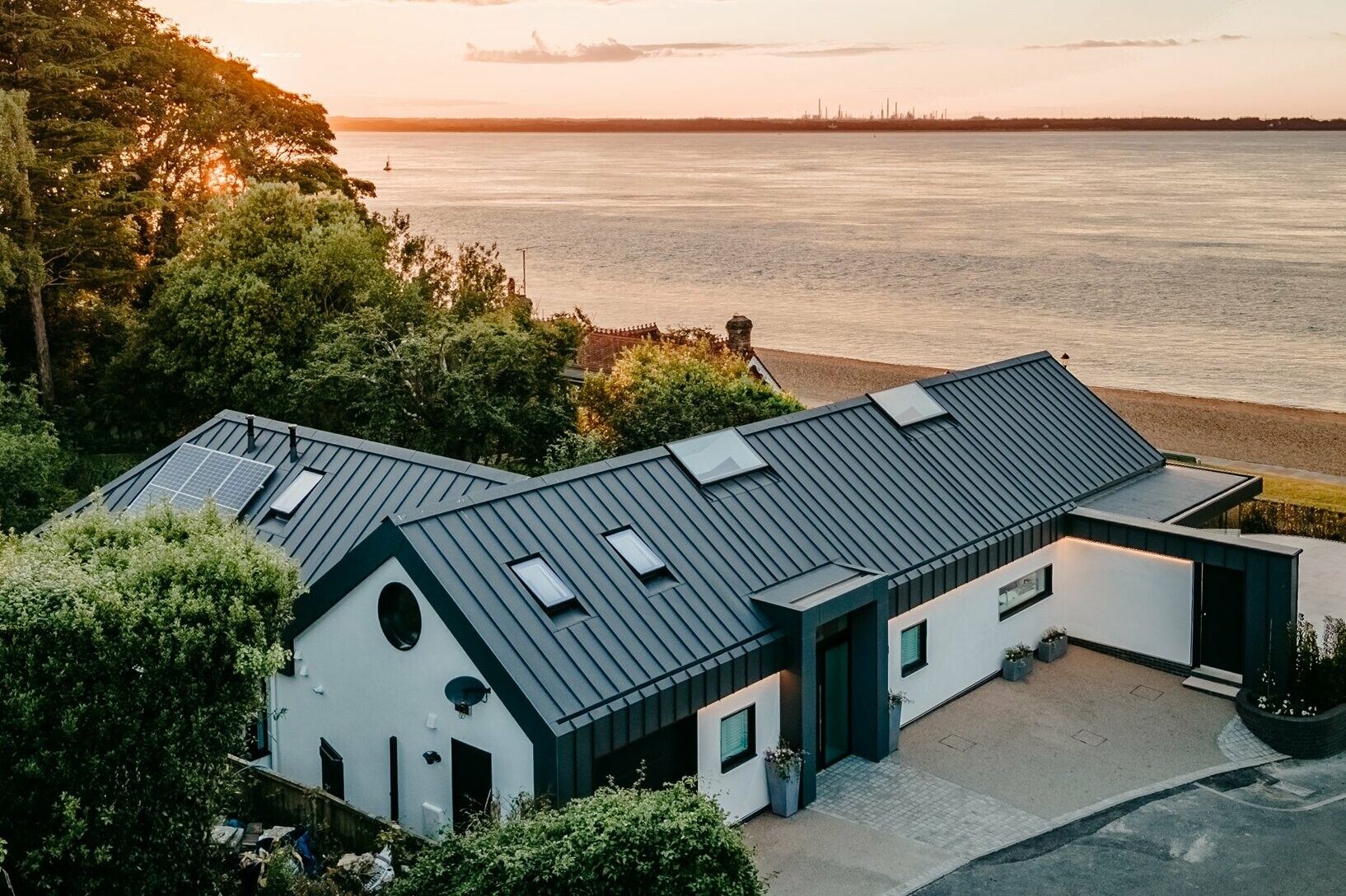
Whenever a structural solution, such as a solar panel, is integrated into a functioning pipe-style snow guard system on the roof, the existing equipment must be adapted and brought up to date with current technology. A snow guard system designed according to the relevant standard may lead to a situation where the roof surface cannot be fully covered with solar panel modules.
A structurally functioning snow guard system on roofs with energy generation systems can be best implemented with linear snow guard systems.
Depending on the building and location, it may be necessary to mount several rows of snow guards. The maximum permissible row spacing is to be calculated depending on the snow load, the roof pitch and the rafter distance. If the calculated constraint length of the snow guard is less than the rafter length, a row of snow guards on the eaves will be insufficient.
You can only download content from one product category. If you require content from multiple categories, please create a separate download for each product area.