


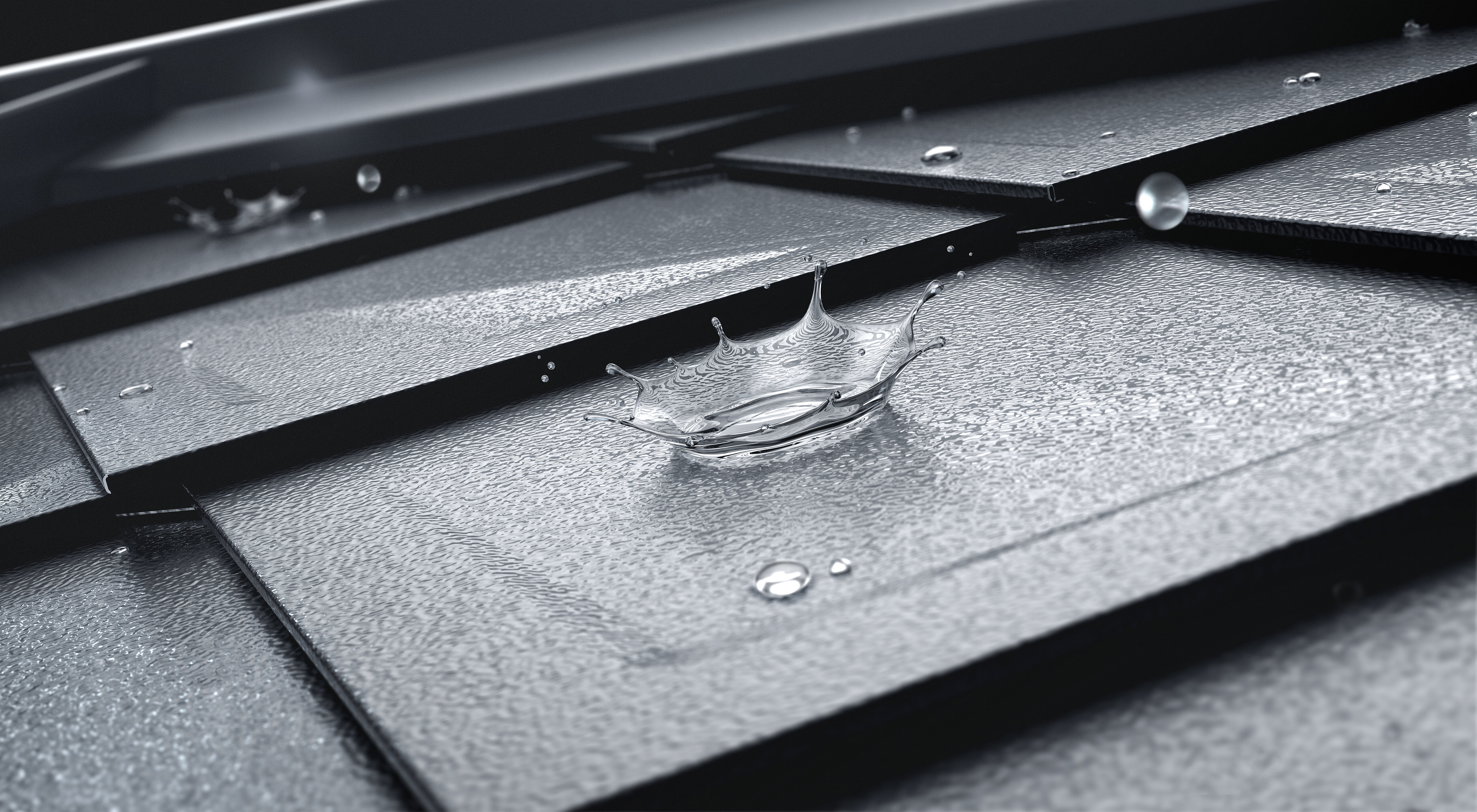

Separation layers arranged directly under the roof covering can fulfil a variety of tasks. Whether a separation layer is used or which separation layer is to be used should thus be already taken into account in the planning phase.
Separating layers can:
Separating layers must not absorb or store water, must not allow driving rain to pass through and must withstand temperatures directly beneath the metal roof. Depending on the function that a separating layer is to assume, a suitable product must be agreed with the manufacturer of the separation layers.
If, for example, the separation layer’s function is to provide additional sound insulation, the use of stronger, heavier bituminous separation layers is recommended by PREFA.
Note
PREFA recommends the use of suitable separation layers under PREFA roof coverings. PREFA advises against using structured separation layers in combination with PREFA roof products.
In addition to the framework conditions specified above, the manufacturer’s information on the arrangement of separation layers is defined by PREFA as follows:


You can only download content from one product category. If you require content from multiple categories, please create a separate download for each product area.