
we like it pleasantly warm in winter and not too hot in summer. Pollutants and mould must not be an issue. In addition, heating costs should be reduced and structural damage avoided. In addition to the building shell, the roof structure plays a central role, as it significantly influences thermal performance and moisture regulation. Careful planning and professional execution are crucial for the functionality and longevity of the entire structure. Only in this way can comfort, energy efficiency and building safety be ensured in the long term.
A distinction is made between ventilated roof structures (also called cold roofs) and non-ventilated roof structures (also called warm roofs).
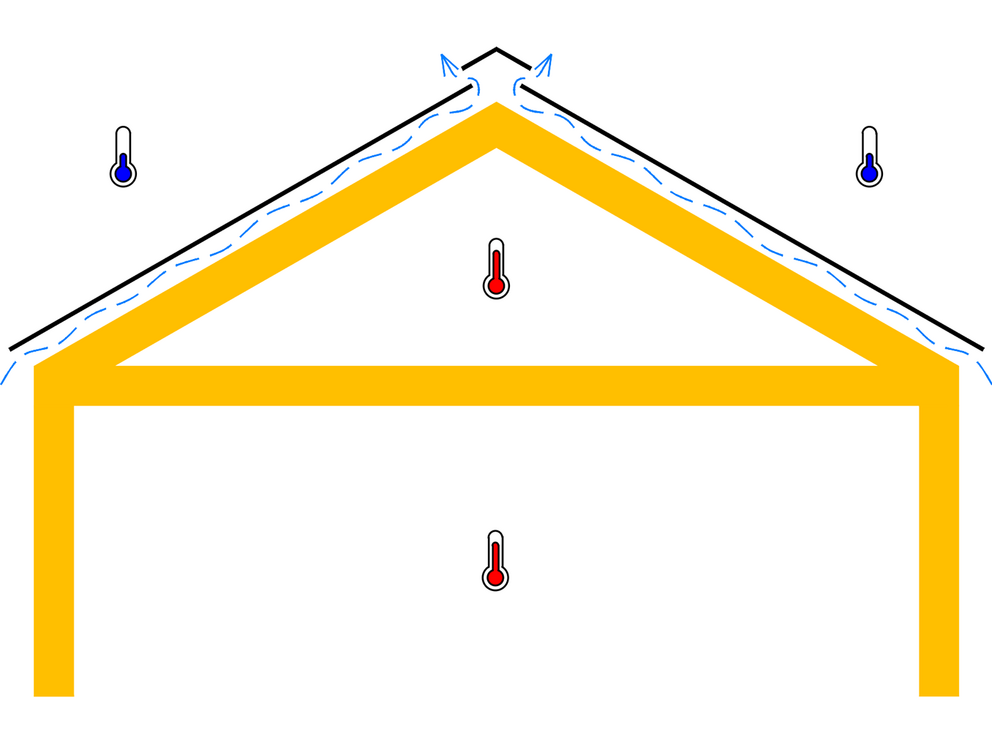
Ventilated roof structures have an air layer between the thermal insulation and the roof covering. The ventilation layer ensures the removal of heat and moisture entering the roof structure via diffusion from the interior. This has a positive effect on the indoor climate and reduces the risk of condensation water and structural damage.
Ventilated roof structures have been used for many decades and have proven themselves in all climatic conditions. We recommend designing PREFA aluminium roofs with a ventilated substructure.
Note
National standards and regulations may include requirements for air intake sections as well as necessary supply and exhaust openings and must be taken into account.
Depending on the use of the roof space, ventilated structures can be executed in different ways. For example, the roof space can be ventilated. If, on the other hand, the roof space is used as living space, the roof covering is ventilated.
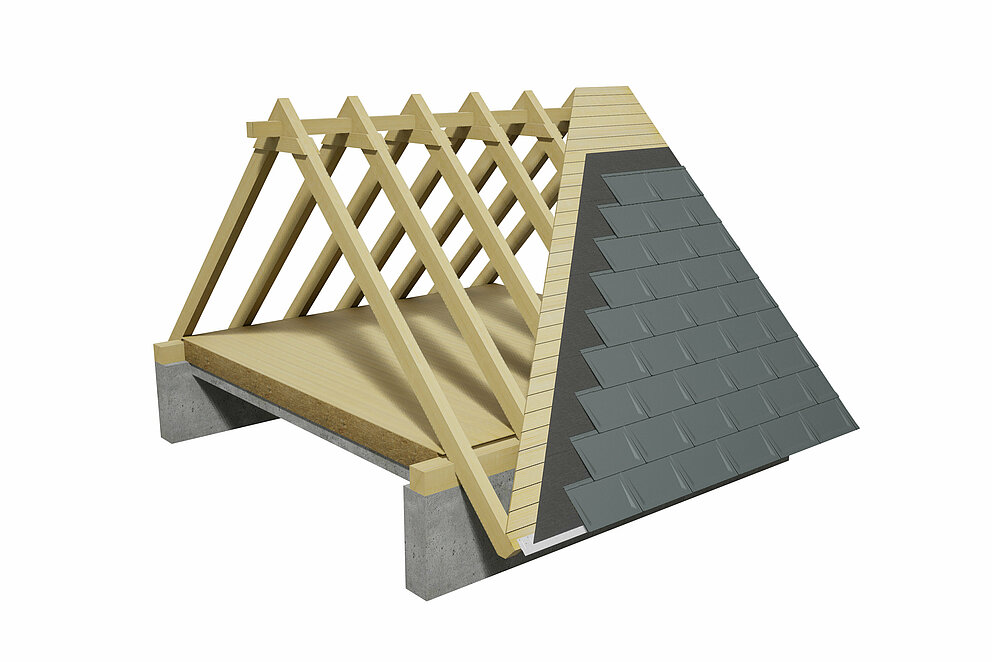
In a ventilated (unheated) roof space, the thermal insulation is arranged at the level of the top floor. The roof space above remains without insulation and fully ventilated. Outside air can enter through openings in the eaves and gable areas and exit again at the ridge.
Note
If later use of the roof space for residential purposes is being considered, it is advisable to provide an additional ventilation layer already at the planning stage. A roof structure with a separate ventilation layer (ventilated roof covering) enables flexible use and prevents later structural interventions with high effort.
In a roof structure with a ventilated roof covering, a ventilation layer (counter battens) is arranged, in contrast to a (single-shell) roof structure with an unheated roof space. This measure can also be used to thermally insulate between the rafters, and the entire roof space becomes usable for residential purposes.
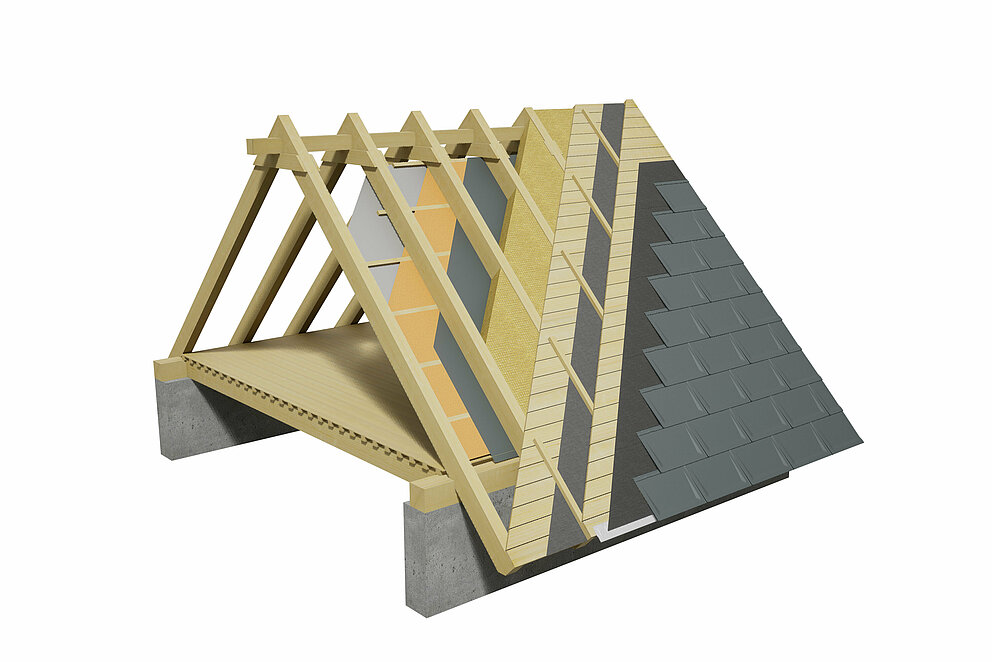
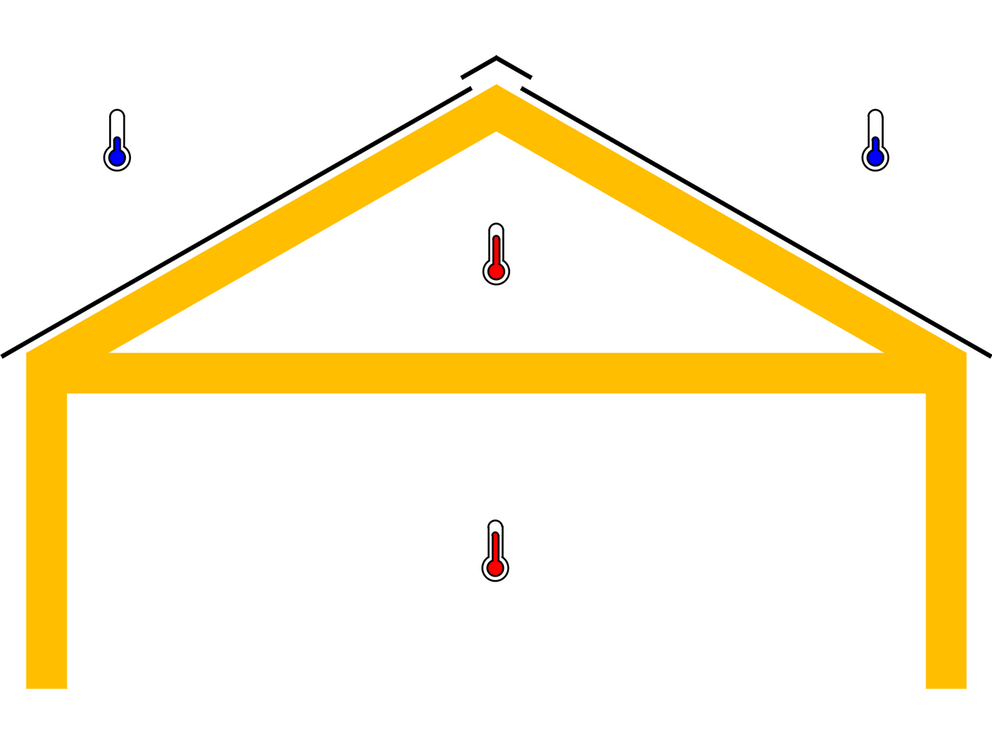
In non-ventilated roof structures, no ventilation layer is arranged between the thermal insulation and the roof covering. The entire roof structure is closed and thermally insulated, whereby all layers of the roof are thermally connected to each other.
The system requires precise planning, as no air exchange takes place within the structure. The enclosed moisture from the interior and materials can only escape to a limited extent, which, in the case of inadequate planning and execution, can lead to damage in the roof structure.
Note
We recommend a structural-physical analysis for non-ventilated roof structures in accordance with national regulations to demonstrate the functionality and durability of the structure.
You can only download content from one product category. If you require content from multiple categories, please create a separate download for each product area.