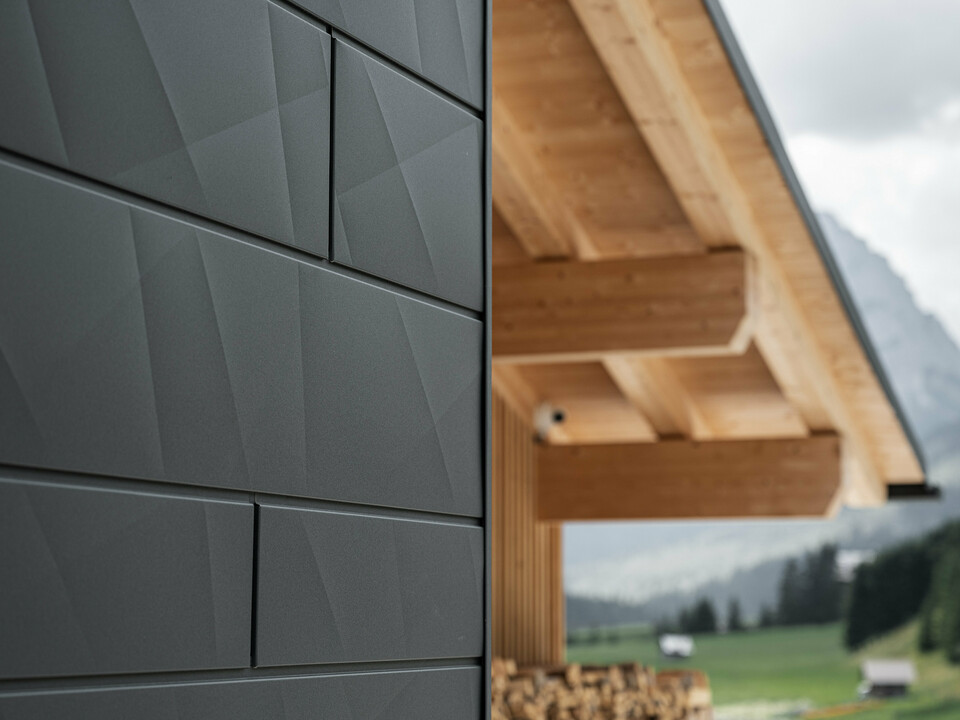



The rainscreen cladding system combines functional, economic and aesthetic properties. It provides protection against noise, cold and heat, and prevents the load-bearing structure from being affected by atmospheric conditions. The construction of the rainscreen is characterised by a clear, functional separation of the individual component layers. Ventilated rainscreen cladding is primarily made up of multiple components that have been structurally coordinated. Moisture is diverted via the ventilation gap, which keeps the insulation and brickwork dry.
Depending on the structural-physical requirements, rainscreens can be installed on insulated or non-insulated walls.
The supporting sstem should be planned in such a way that takes into account the load-bearing base, the static requirements, the building physics and the cladding, as determined by the structural stability requirements.
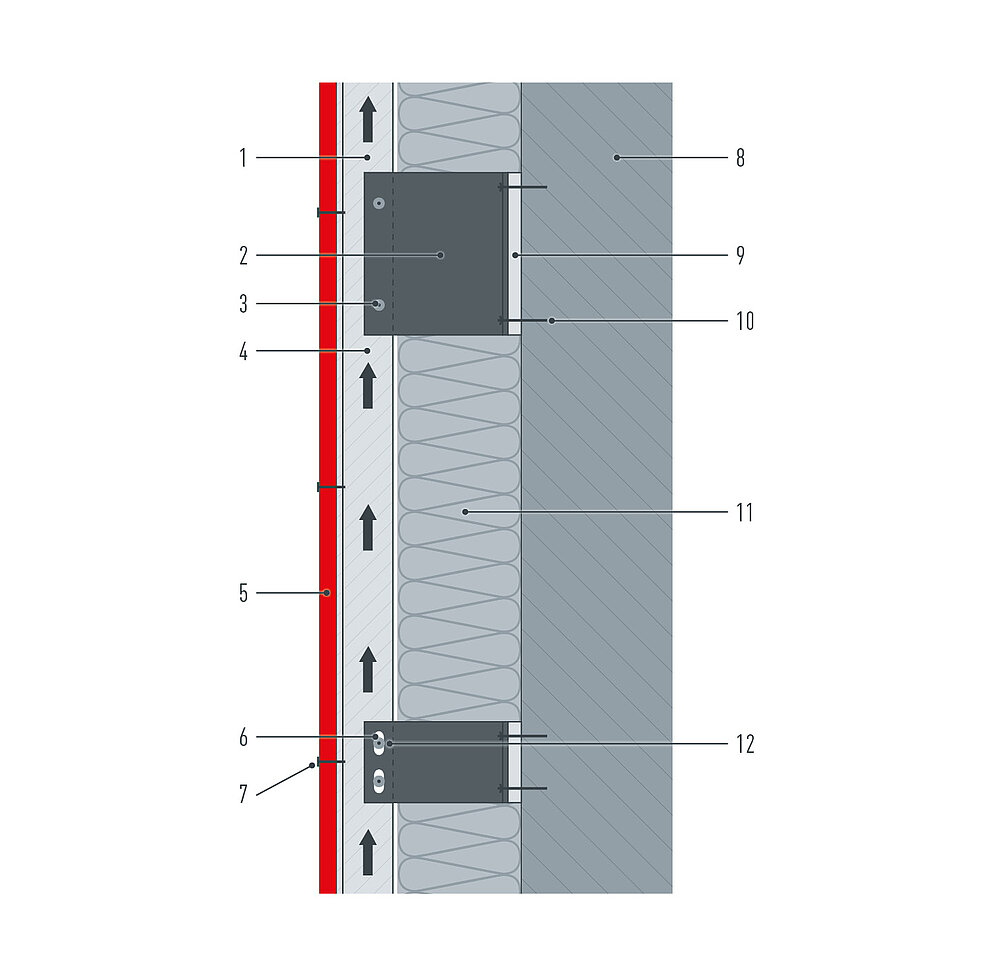
1 Back ventilation cavity |
8 Anchor base |
The rear ventilation cavity must comply with the national requirements applicable to the material selected for the substructure. The support profiles must be aligned with the profile installation in order to guarantee unobstructed air circulation on the ventilation level. Depending on the direction in which the profiles are installed, the substructure may be constructed as a 1-layer or multi-layer structure.
Note
When installing sidings vertically, the cross-section of the panel along the siding, siding.X and perforated siding can be considered as a ventilation gap.
Perforated siding is considered an open façade cladding. PREFA recommends using a breathable membrane and a supporting sub-structure(rail and bracket system) made of metal.
You can only download content from one product category. If you require content from multiple categories, please create a separate download for each product area.