
The hidden fixed tongue-and-groove installation system for the ripple profile and serrated profile comprises a sliding clip and a special screw for an aluminium sub-structure framework.
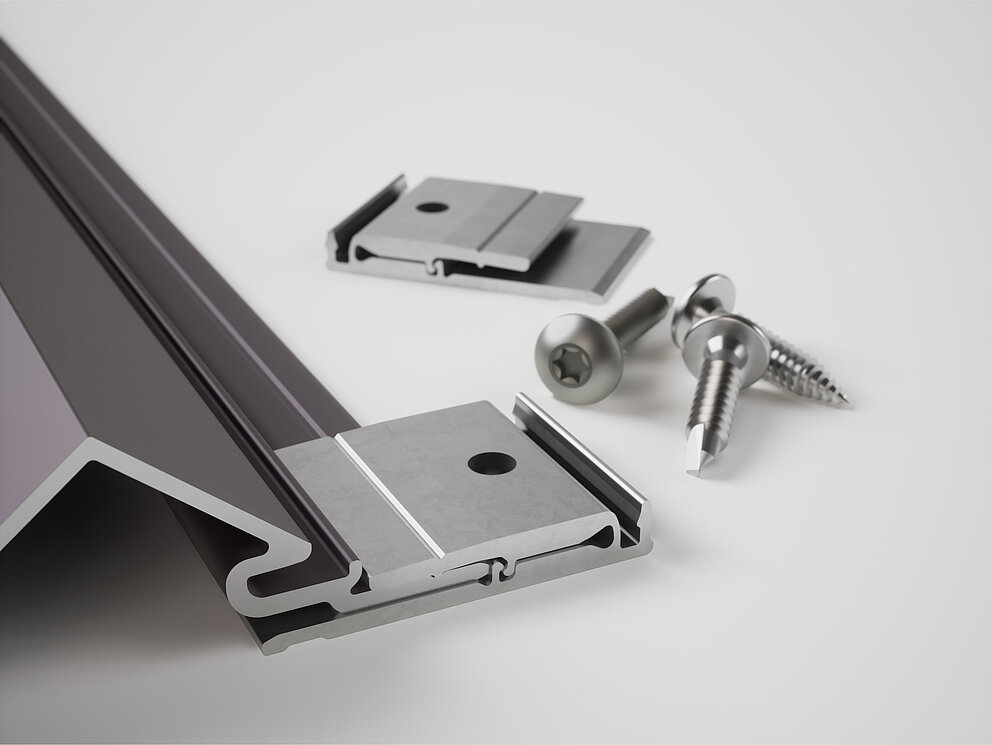
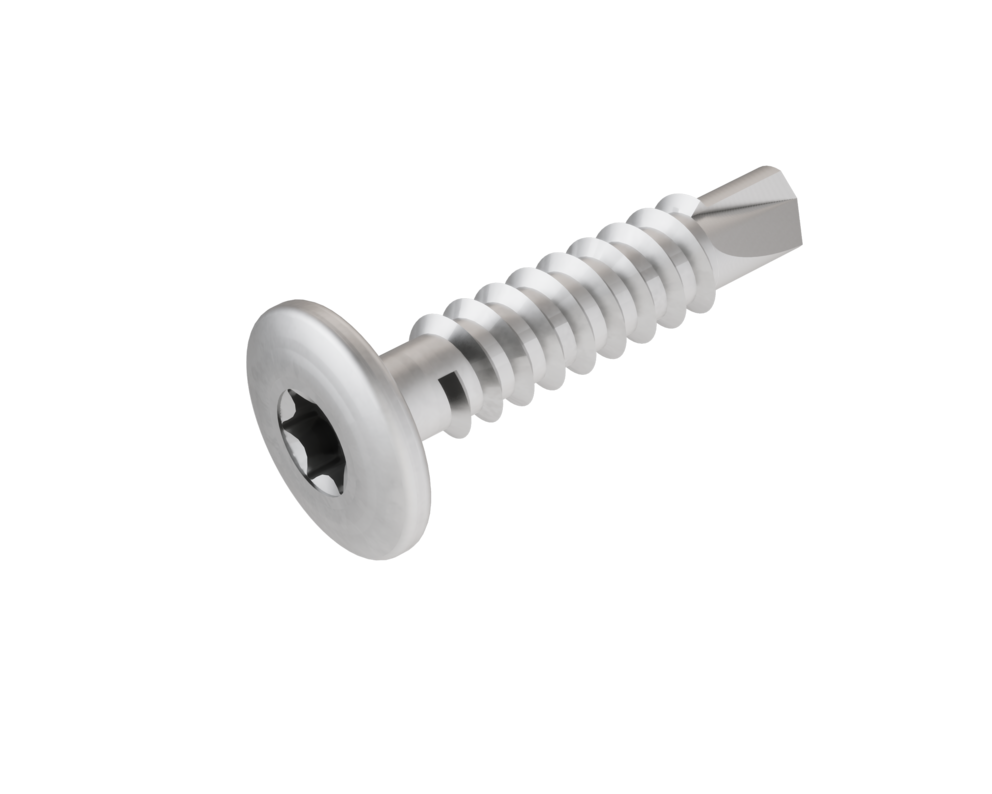
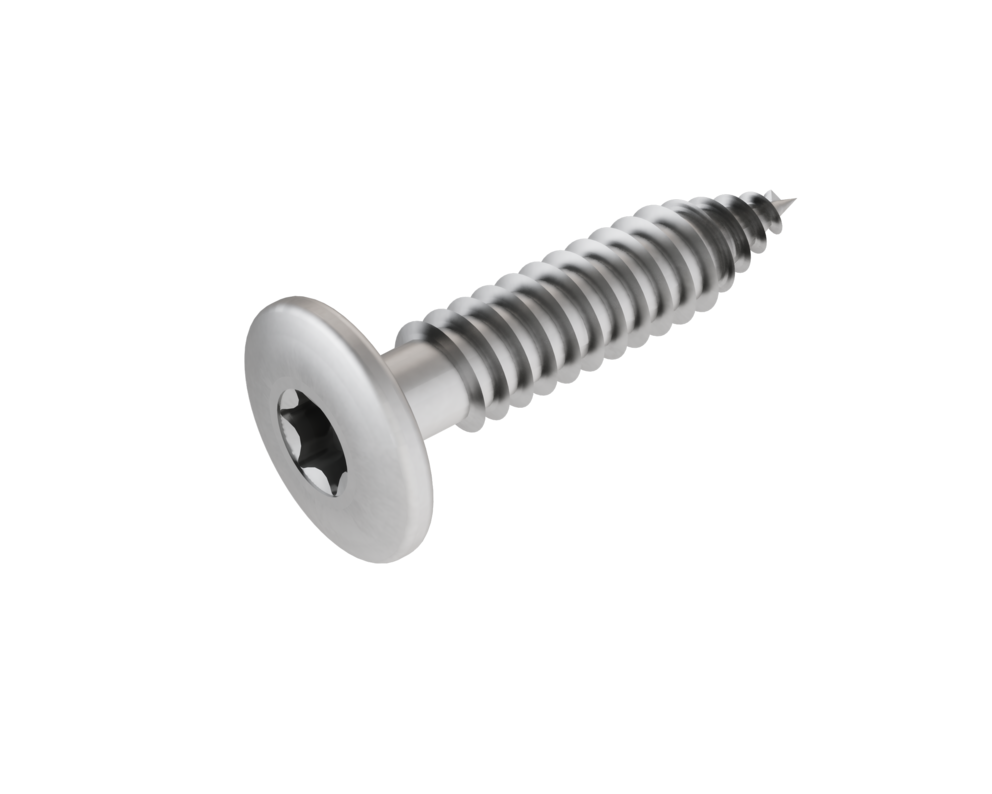
Special screw for aluminium sub-structure framework Fastening to aluminium support profiles (L- or T-profiles) |
Special screw for steel sub-structure framework Fastening to steel profile sheets 0.4-1.0 mm |
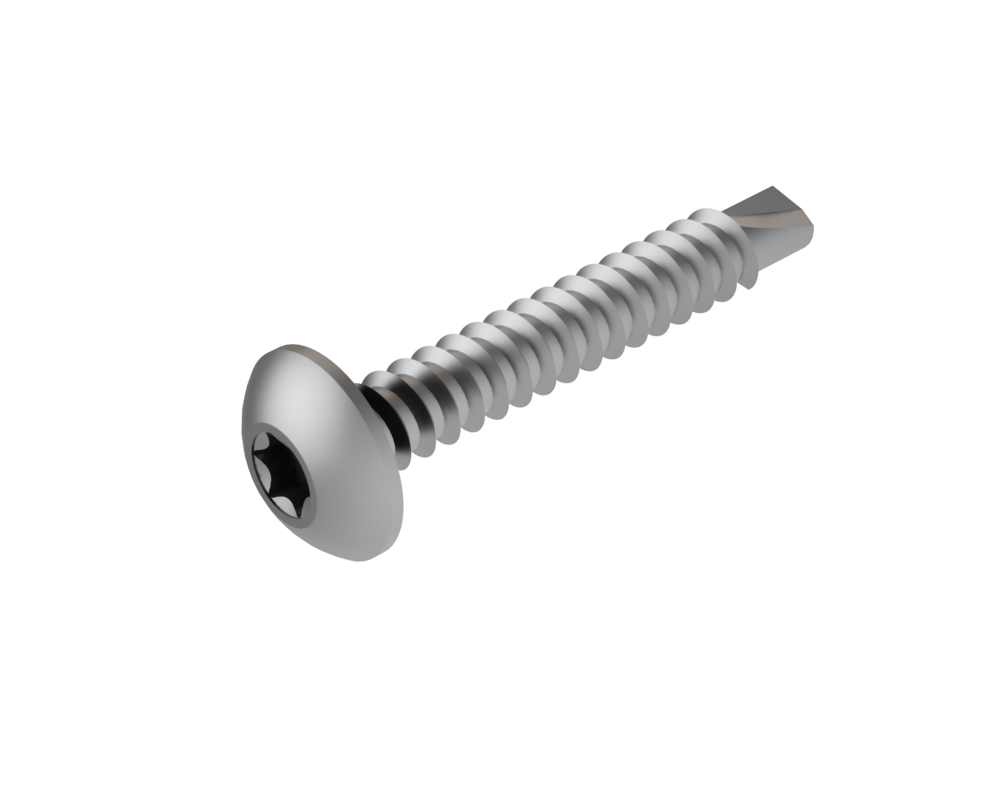
Special screw for timber sub-structure framework Fastening on timber sub-structure |
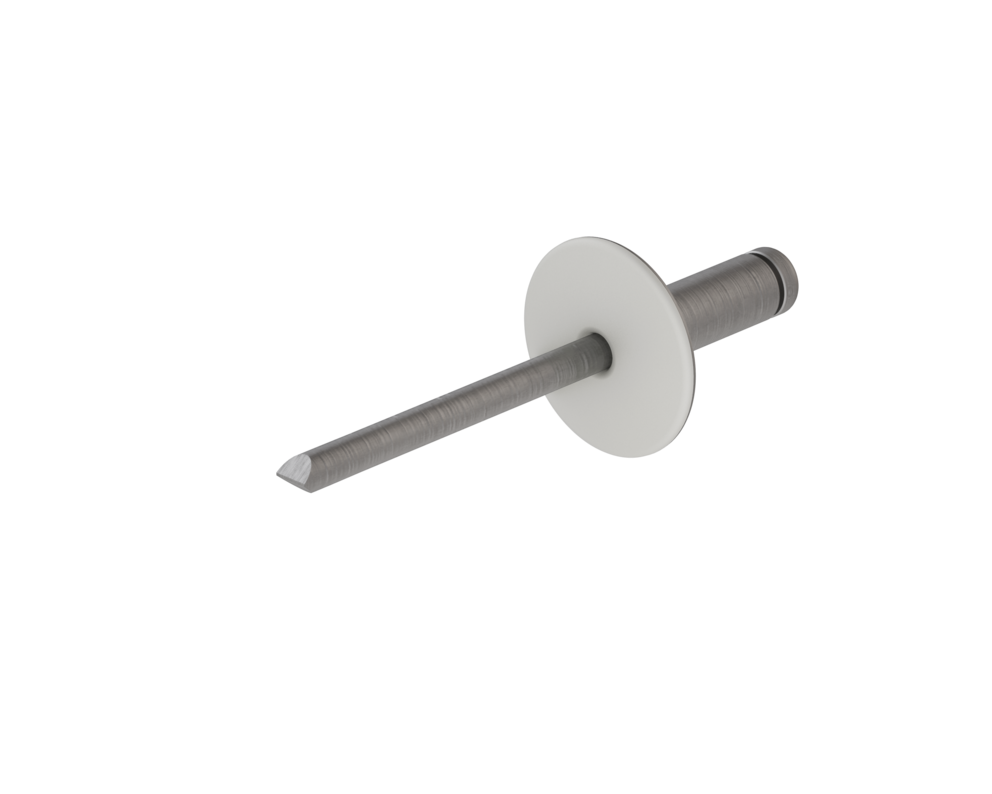
Balcony rivet stainless steel with stainless steel pin |
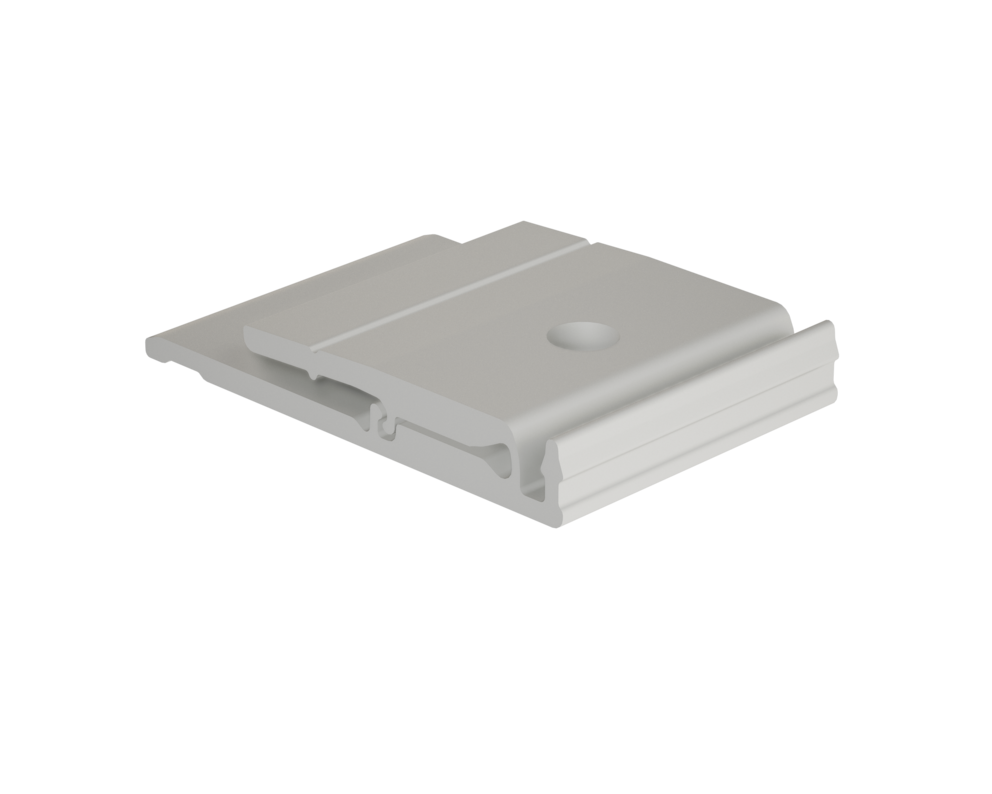
Sliding clip for extruded profiles For sufficient expansion |
Insert the extruded profile with a slight inclination away from the sub-structure framework into the groove of the pre-installed starter profile or into the profile below. Once it has fully engaged with the tongue side into the groove side, press the profile onto the bearing profiles of the sub-structure framework and begin fastening.
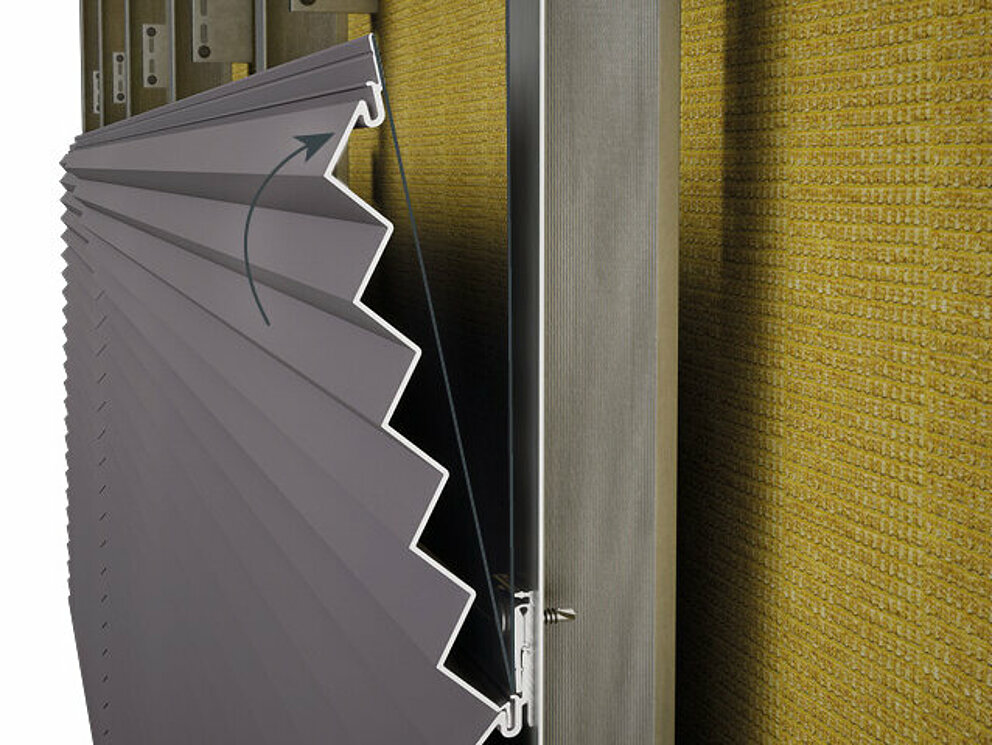
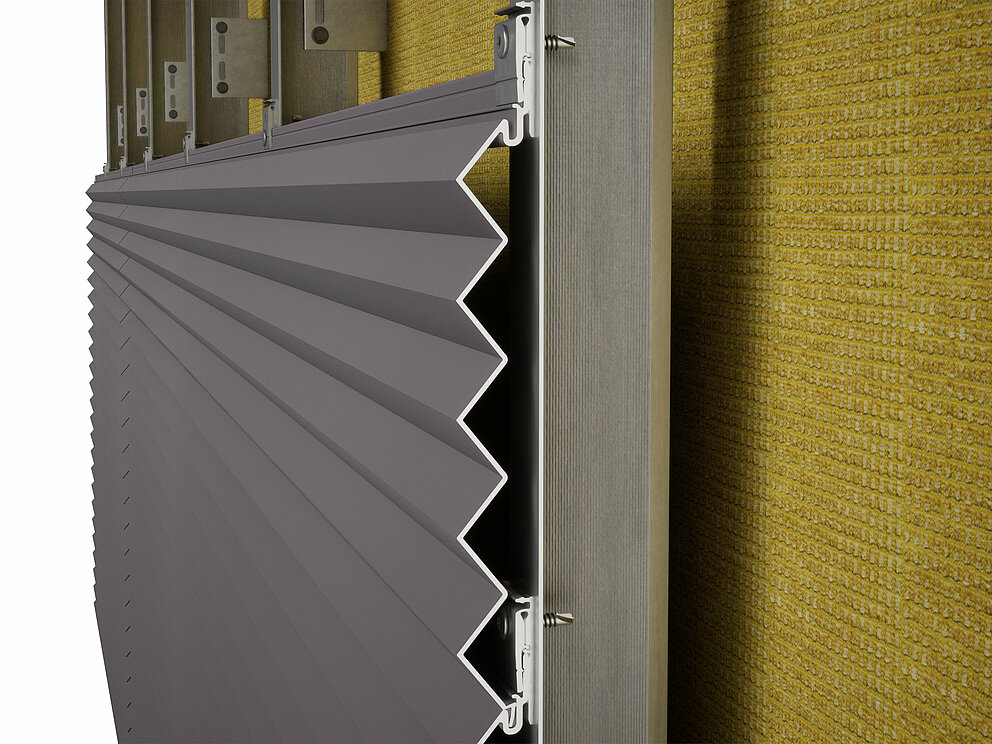
Profiles up to ≤ 2,500 mm can also be fastened directly to the sub-structure framework along the drill groove.
If the profiles are installed without sliding clips, the starter profile must also be fastened without a sliding clip in order to maintain the distance to the bearing profile of the sub-structure framework, as specified by the 2.1 mm construction height of the sliding clip.
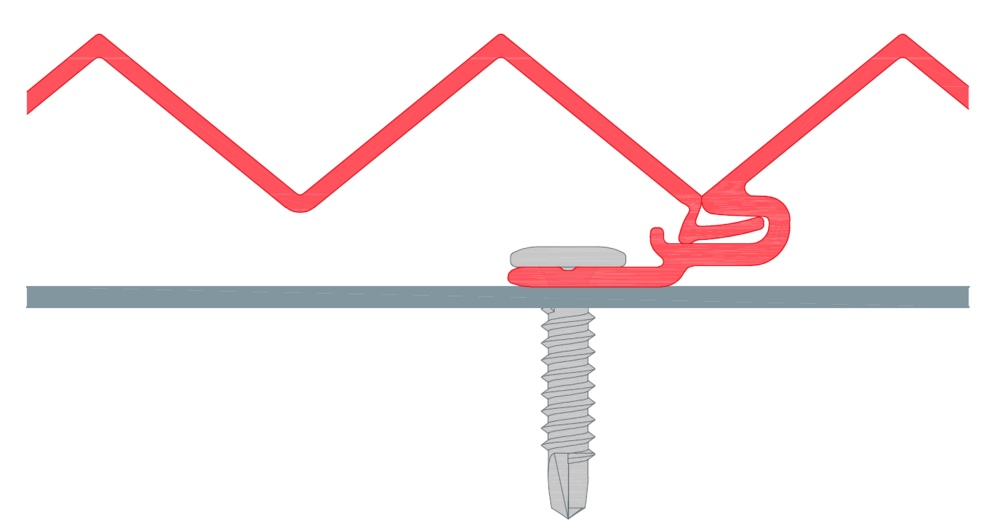
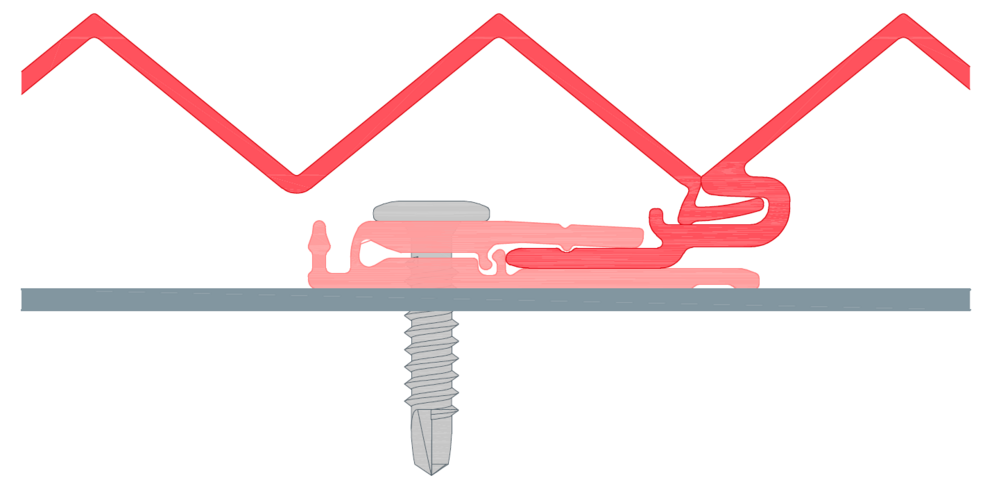
Note
A combined installation of profiles with and without sliding clips is not permitted, as the construction height of the sliding clip (2.1 mm) creates different installation planes.

PREFA extruded profiles can also be installed on rounded subsurfaces even with vertical profile installation. For the construction width of 200 mm, the minimum radius of r ≥ 1,250 mm must be observed.
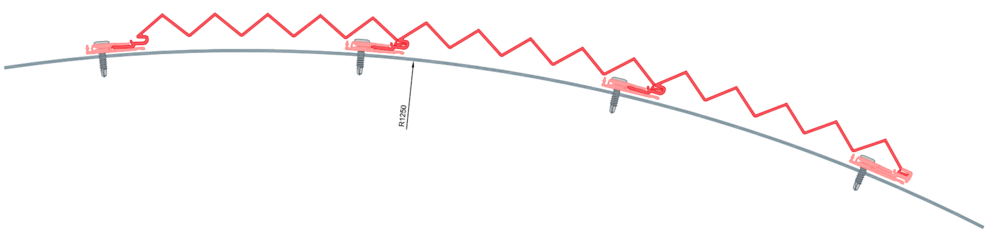
Note
Horizontal curving of the profiles is not possible due to the profile geometry.
Depending on the installation method, with or without a sliding clip, the fixed point that secures the position of the profile is executed differently. If installation is carried out without sliding clips, the self-drilling screw can be screwed in directly without pre-drilling the profile and sub-structure framework.
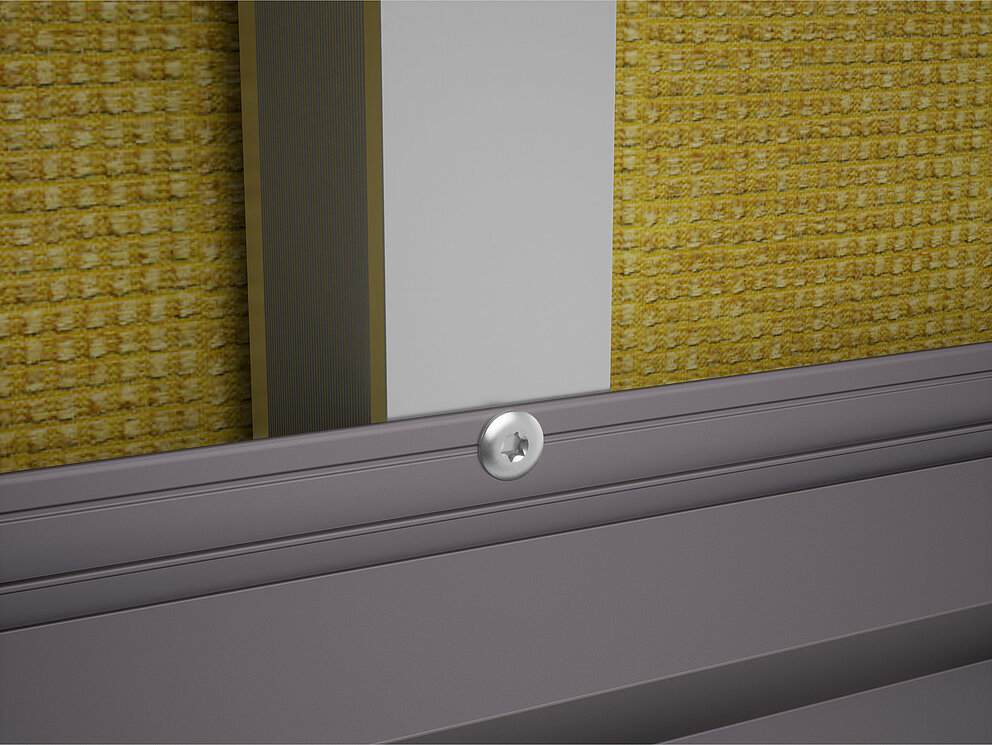
If the profiles are installed with sliding clips, it is essential to ensure that a sliding clip is also used at the fixed point. Only in this way is the distance to the bearing profile of the sub-structure framework maintained, as specified by the 2.1 mm construction height of the sliding clip. The special screw is not guided through the pre-punched drill hole, but placed into the underlying drill groove, which must first be pre-drilled with a metal drill bit Ø 3.0 mm.
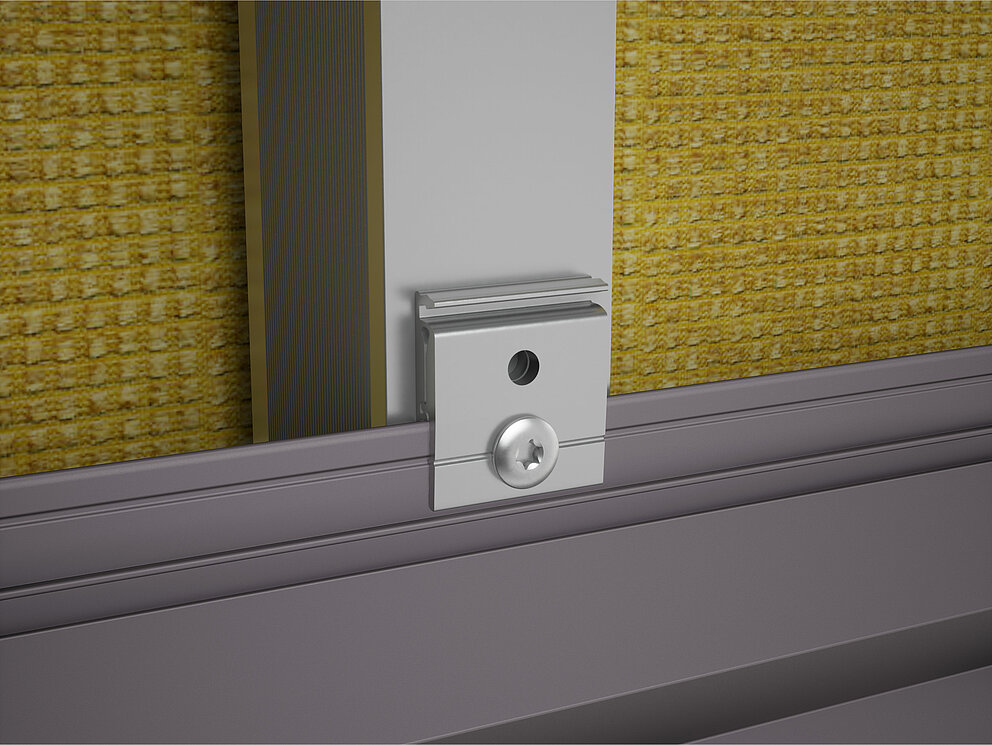
The drilling screw is screwed through the pre-punched drill hole in the clip, allowing the extruded profiles to be installed in such a way that they can expand.
Make sure that the clip is always flush with the support profile and that the recessed grooves of the clip and profile are precisely aligned with each other.
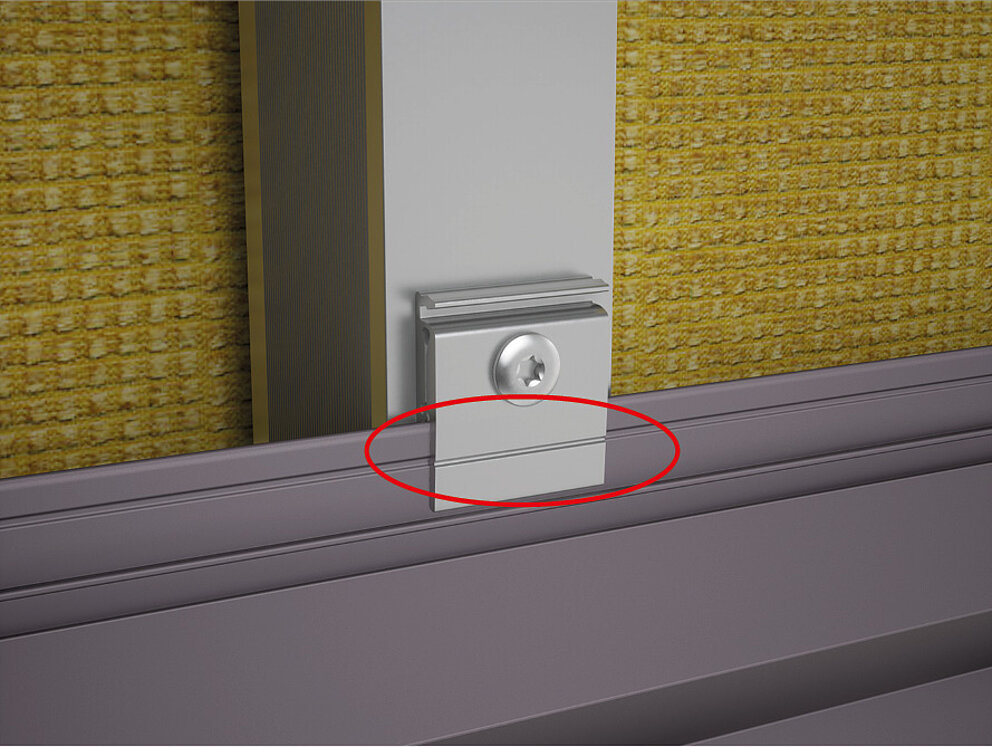
Make sure that, in the case of interruptions such as butt joints, the alignment and straight line of the extruded profiles are maintained. We highly recommend using chalk lines with a regular spacing for checking at regular intervals and at the latest after every five profiles.
The installation system allows a compensation of +1.5 / -0 mm per cladding width. If compensation is required, it is recommended to distribute it across several profiles to ensure the straightness of the row and to avoid creating prominent joints. In this way, the compensation remains concealed and is almost imperceptible visually, resulting in a uniform and unobtrusive appearance.


You can only download content from one product category. If you require content from multiple categories, please create a separate download for each product area.