

The supporting sub-structure forms the static connection between the structure and the façade cladding. Preferred materials used for the substructure are aluminium, steel and timber, or a combination of both. Basically a structural analysis for supporting system is required, this applies to new builds as well as to restoration works.
The structural-physical requirements must be taken into account. Fixings method and material is dependent on the material of the substructure, expected loads and fire safety requirements. The function and dimensions of the substructure should be verified on both new-builds and renovations.
Generally speaking, the structural stability analysis covers the supporting system, including anchors and connectors, as well as the cladding and its fastenings.
PREFA can provide a verified span table for conducting a structural analysis of the extruded profiles.
Note
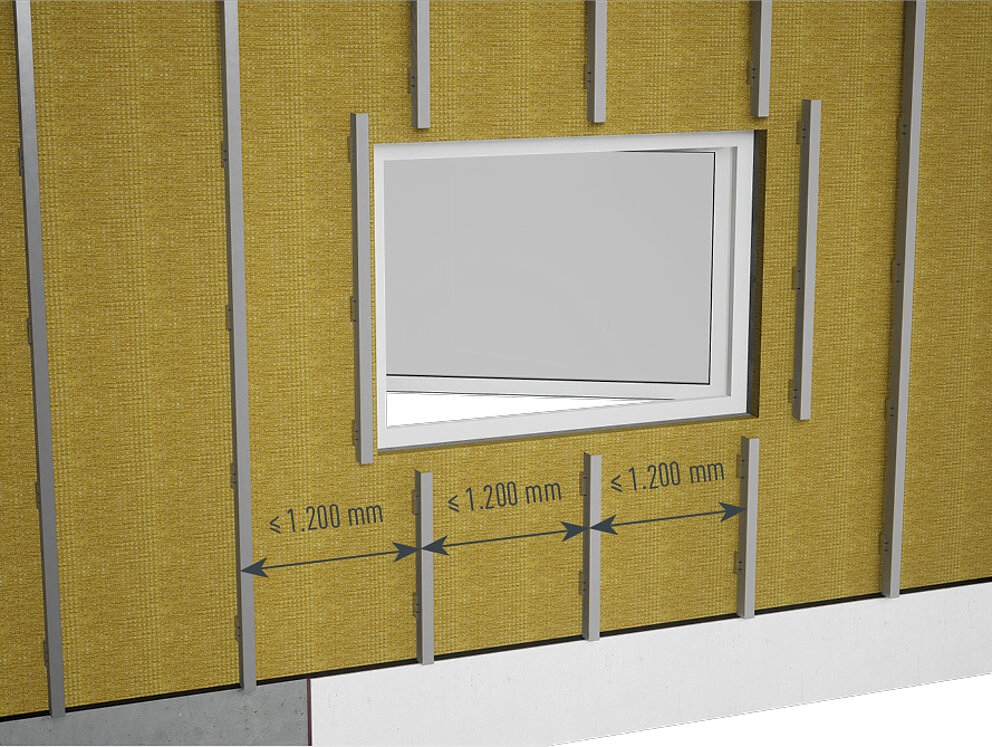
We recommend choosing a rail spacing not bigger than 1,200 mm.
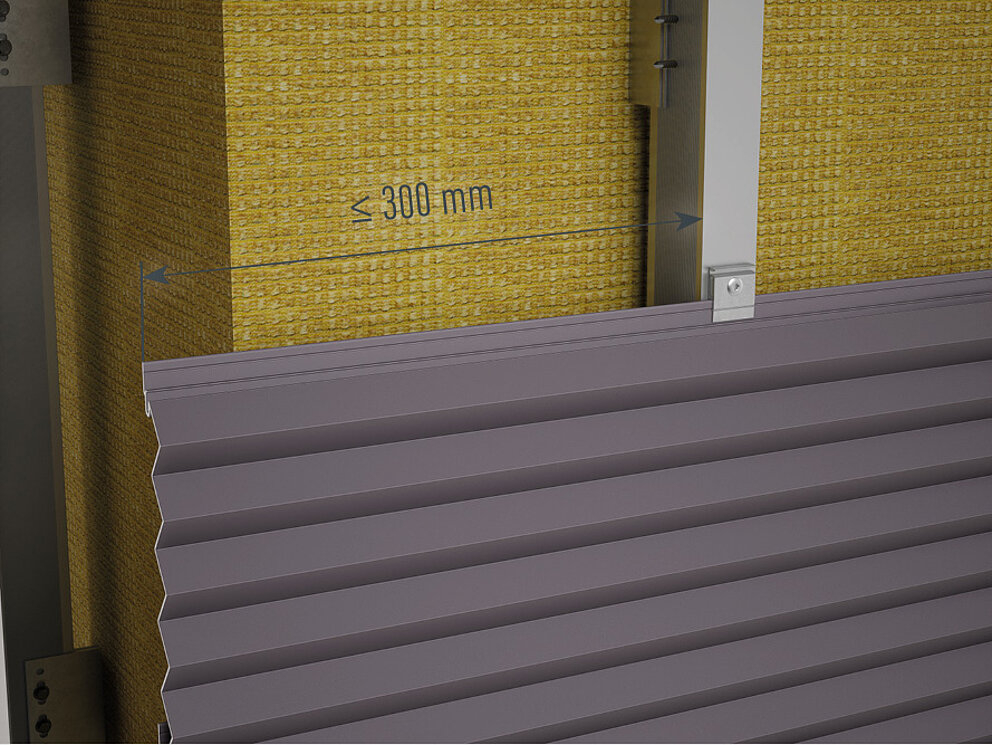
Pay attention to the recommended max. overhang for PREFA Extruded Profiles as specified in the static requirements for unsupported corners/edge zones of max. one quarter of the substructure spacing:
The back-ventilation cavity must comply with the national requirements applicable to the material selected for the supporting system. The support profiles must be aligned with the profile installation in order to guarantee unobstructed air circulation on the ventilation level. Depending on the direction in which the profiles are installed, the substructure may be constructed as a 1-layer or 2-layer structure.
Note
When installing profiles vertically, the rear-side profile cross-section can be allowed for lengthwise along the extruded profiles.
You can only download content from one product category. If you require content from multiple categories, please create a separate download for each product area.