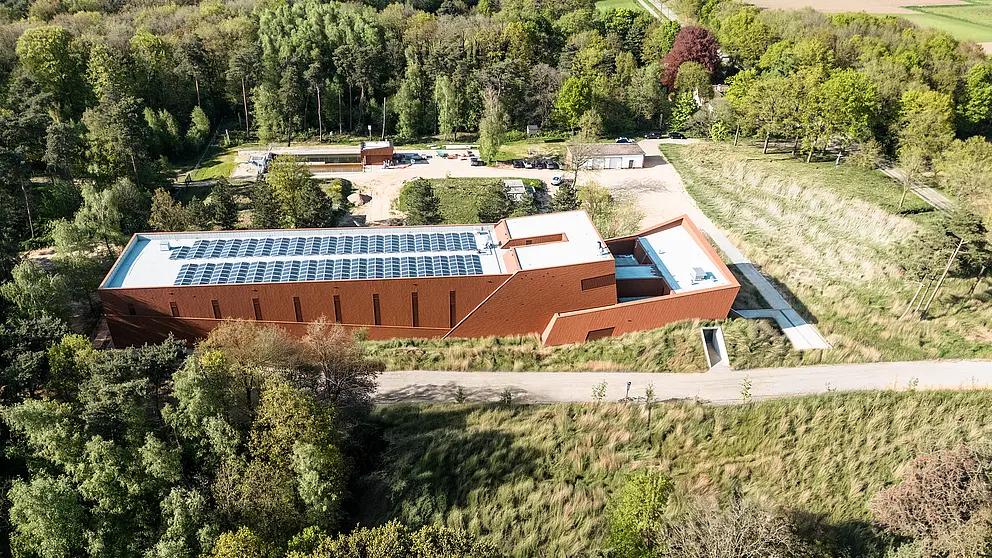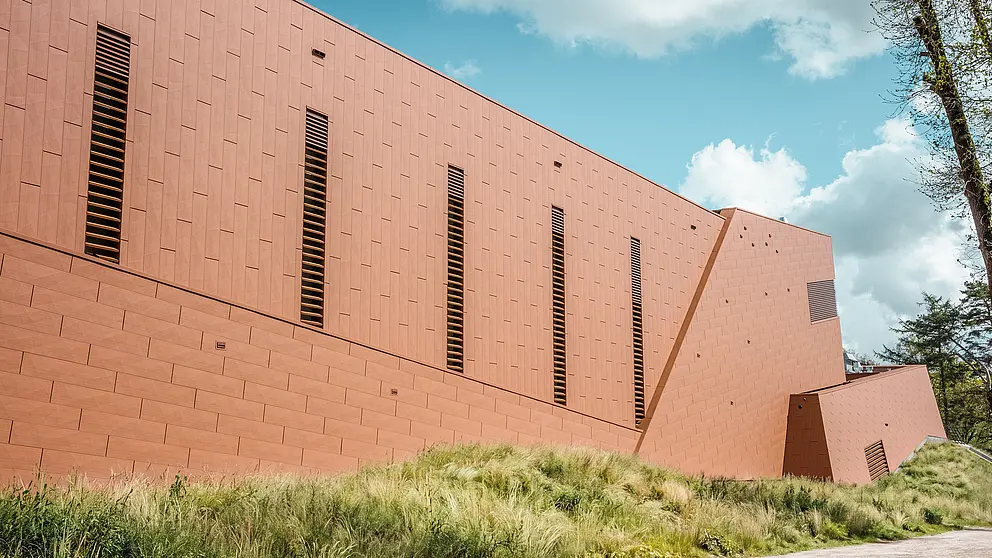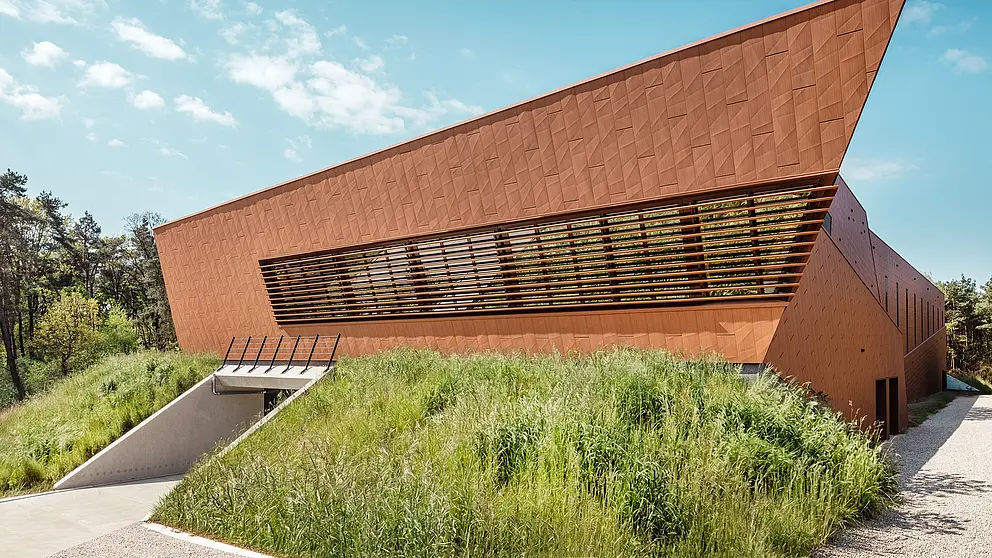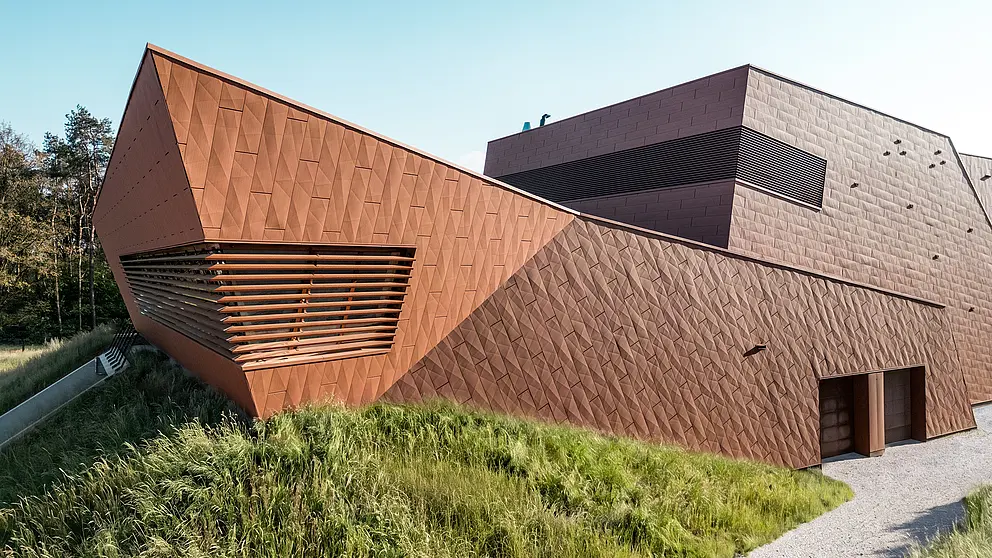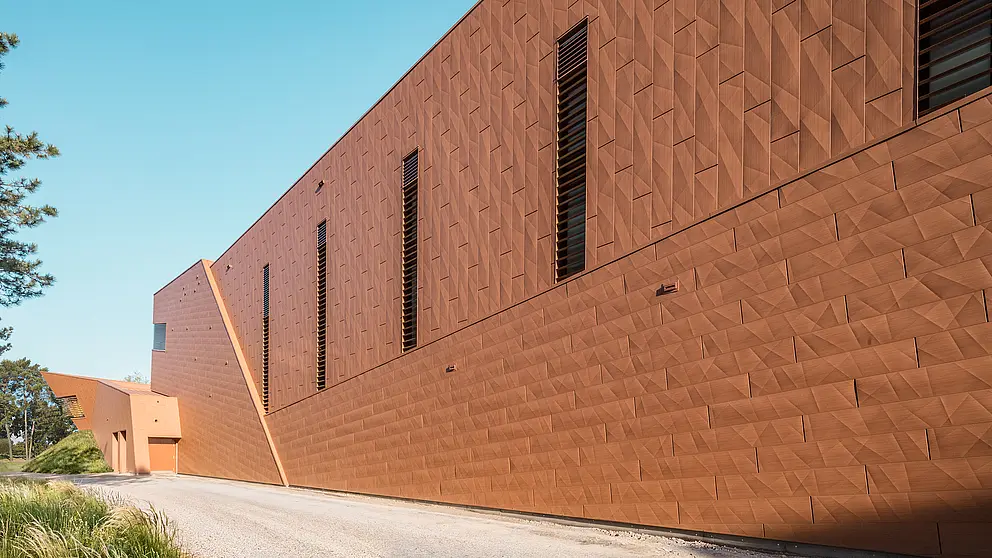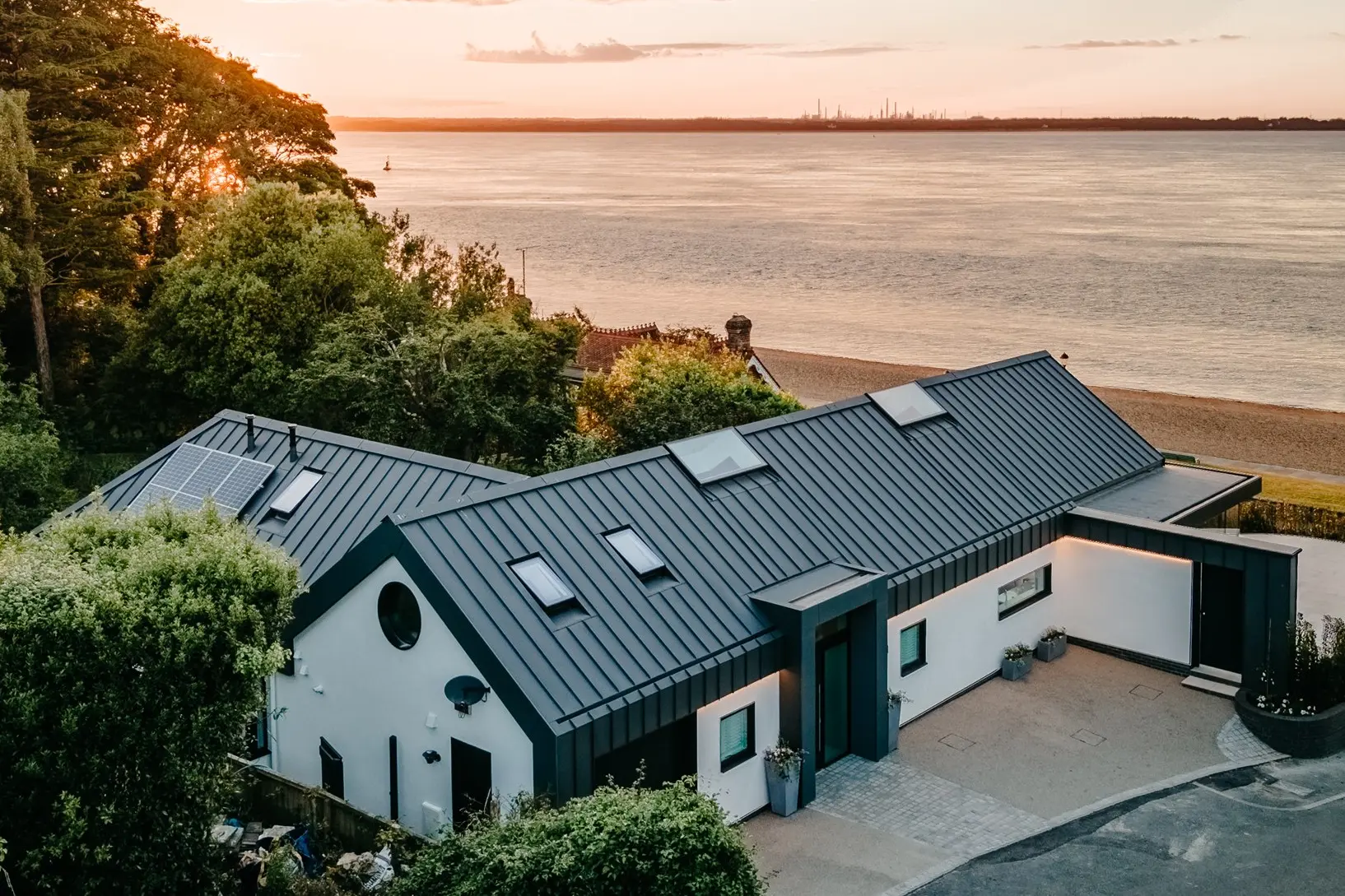
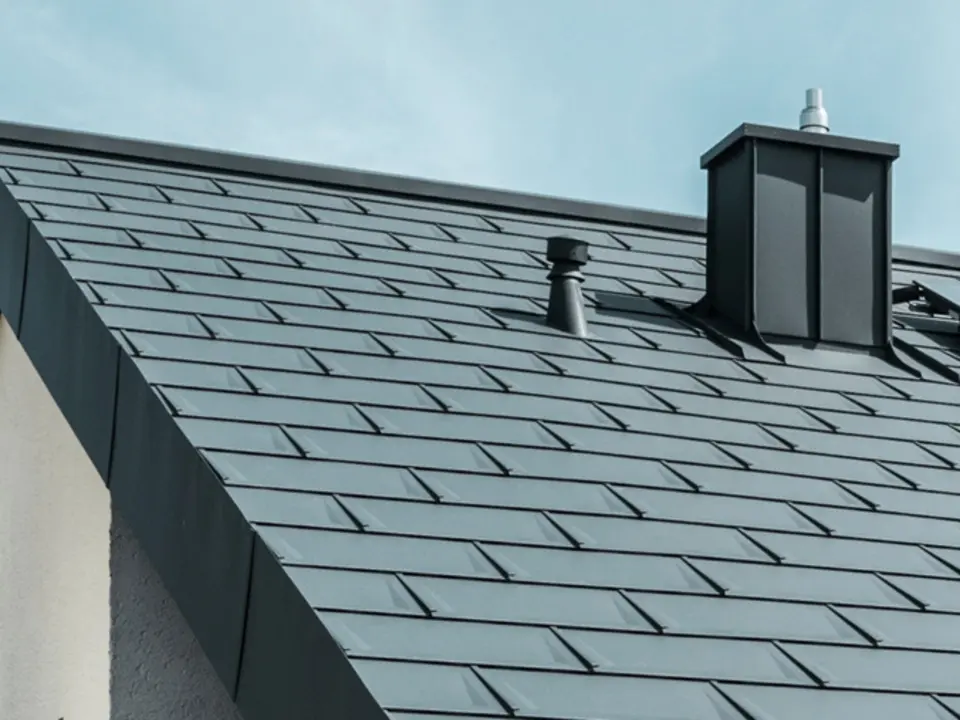
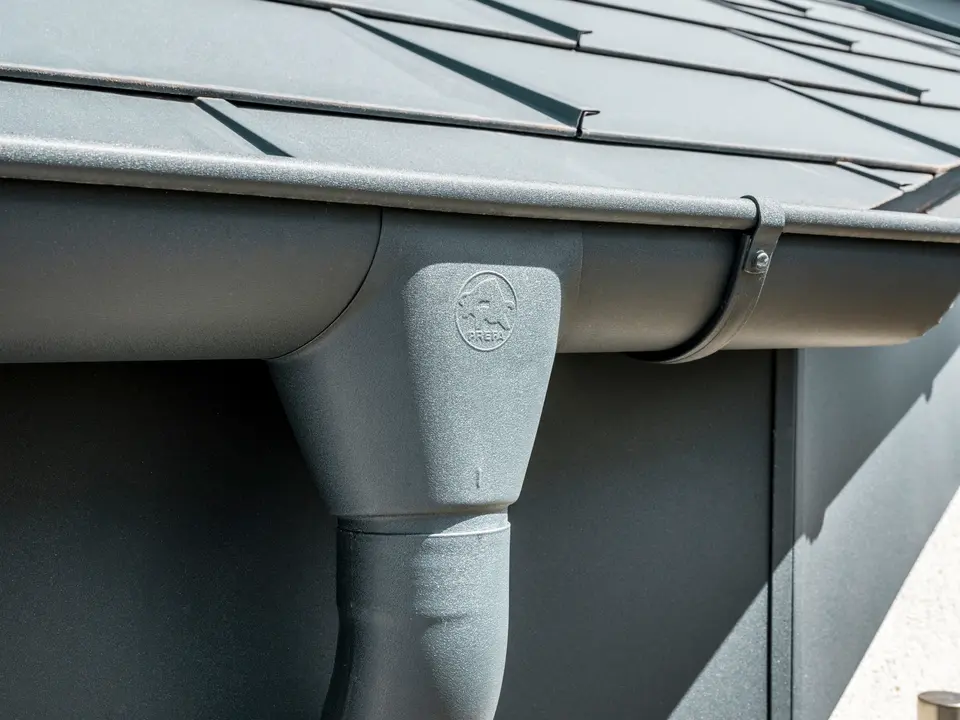
A technical building doesn’t have to be boring. The new WML drinking water pumping station in Lottum (Netherlands) proves that infrastructure today can be a combination of architecture, technology and sustainability.
Data & facts
Products: |
|
Color: |
custom colour |
Architecture: |
Volantis Architecten Venlo |
Processing: |
Stevacon Bouw Wessem |
Location, Country: |
Lottum, Netherlands |
Object type: |
Pumping Station |
Architecture meets technology and sustainability
Typical pumping stations tend to be unremarkable. Not this one: the project combines security of supply, circular thinking, material innovation and landscape-sensitive design to create a model of modern infrastructure. It was developed by Volantis, an interdisciplinary team of architects, engineers and site managers.
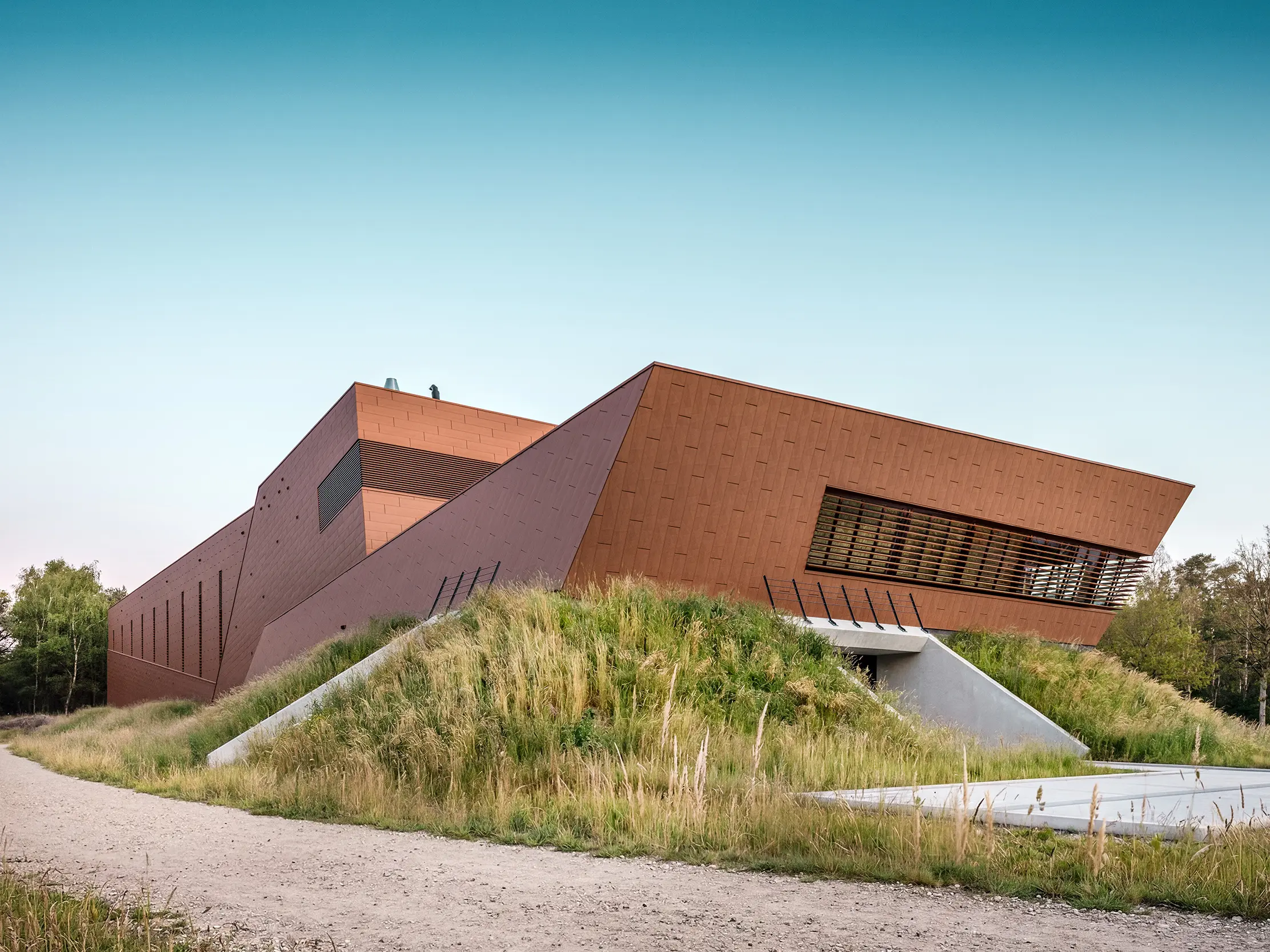
Construction in progress – step by step
During the construction of the new facility, the existing plant had to continue operating without interruption. For this reason, the pumping station was built in phases: new equipment was installed in parallel, and the old equipment was only dismantled afterwards. In this way, the architecture successfully integrated engineering, the construction process and the reliability of supply.
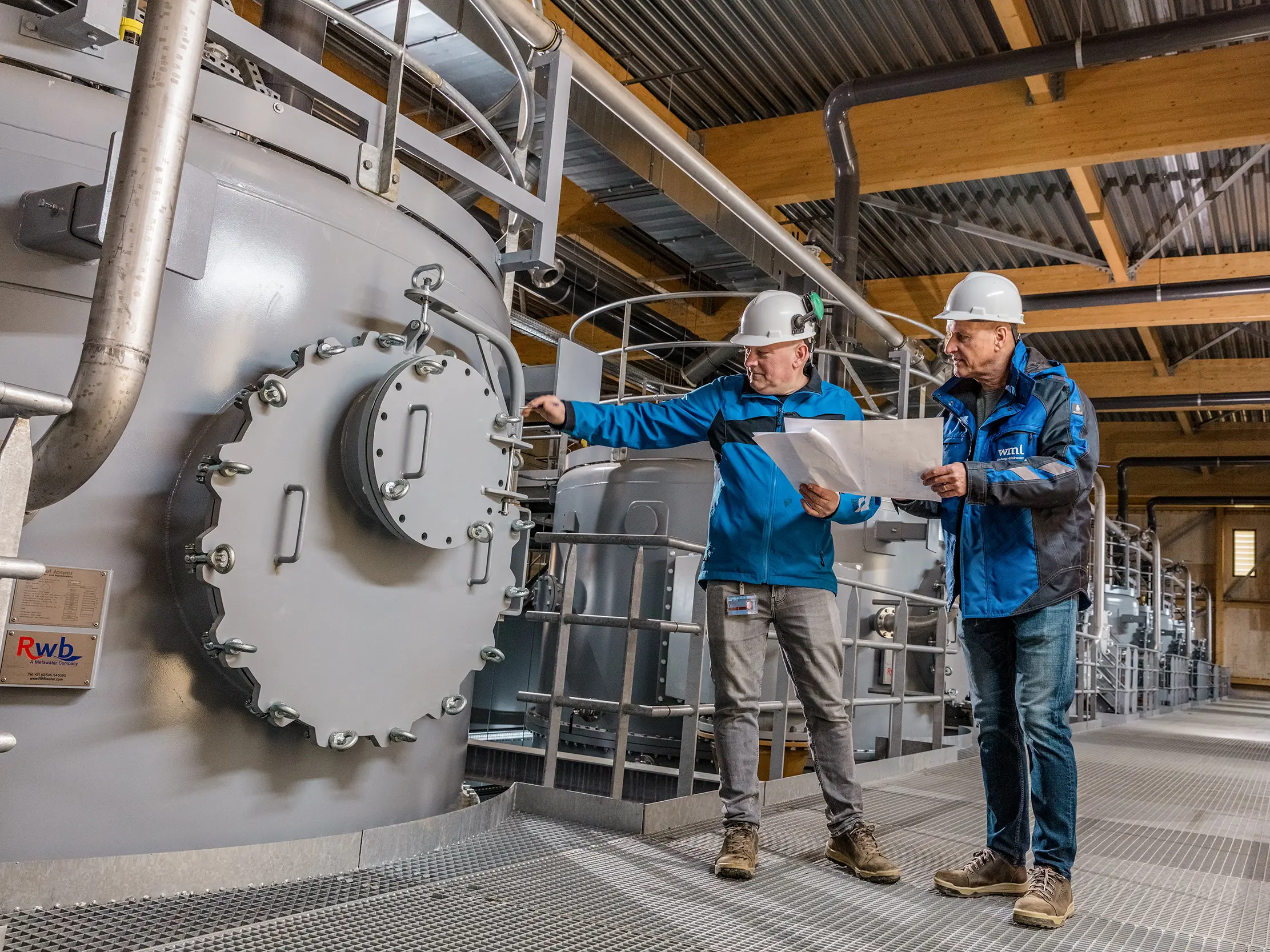
Location and resource
The large 2-hectare site is situated in a former meandering area west of the Meuse, nestled within a landscape and water conservation zone. Since 1947, a groundwater reservoir has ensured the supply of drinking water. Modernisation and modular water treatment are preparing the pumping station for future challenges, such as groundwater salinisation or micropollutants.
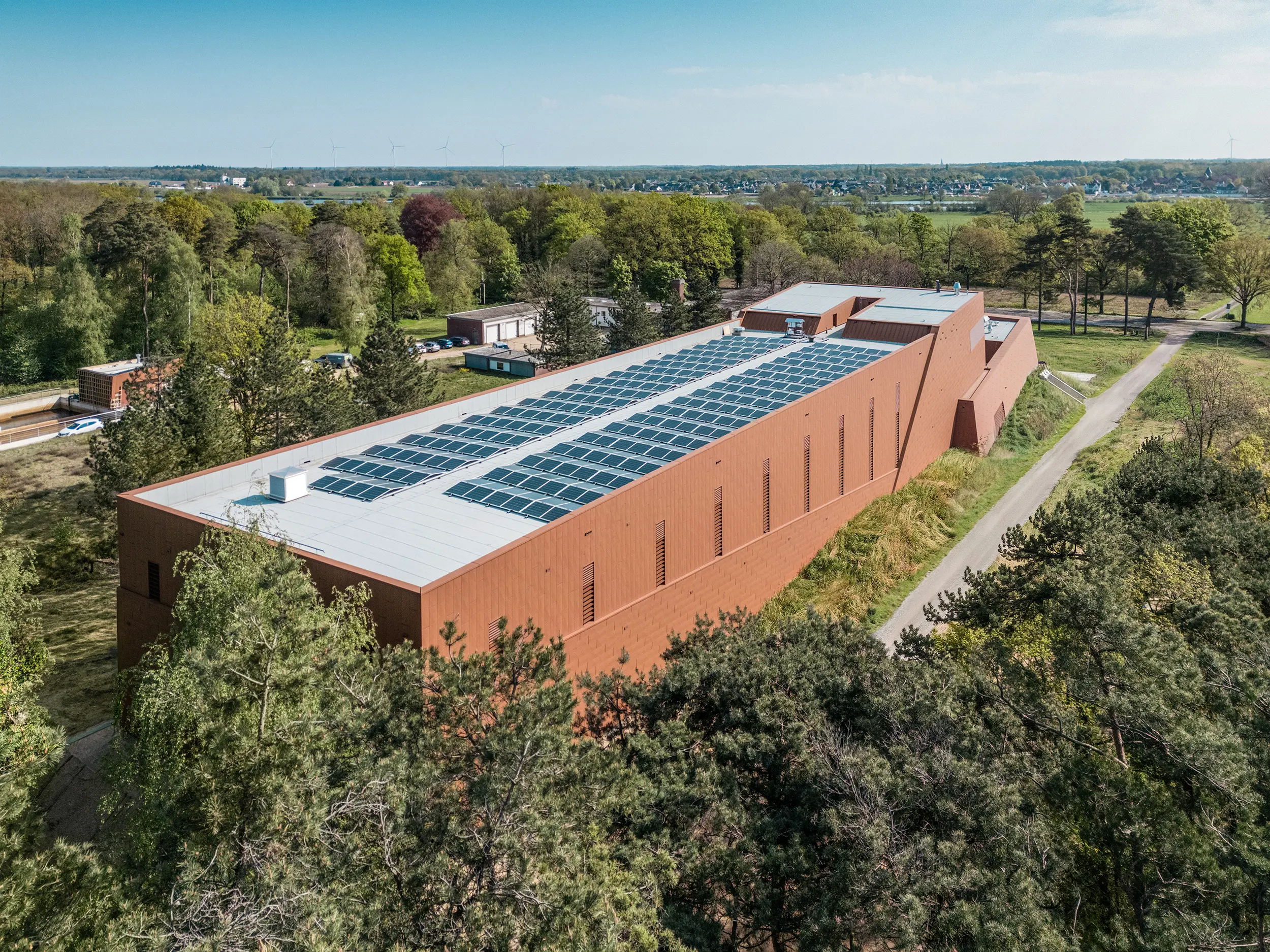
Visible in the landscape
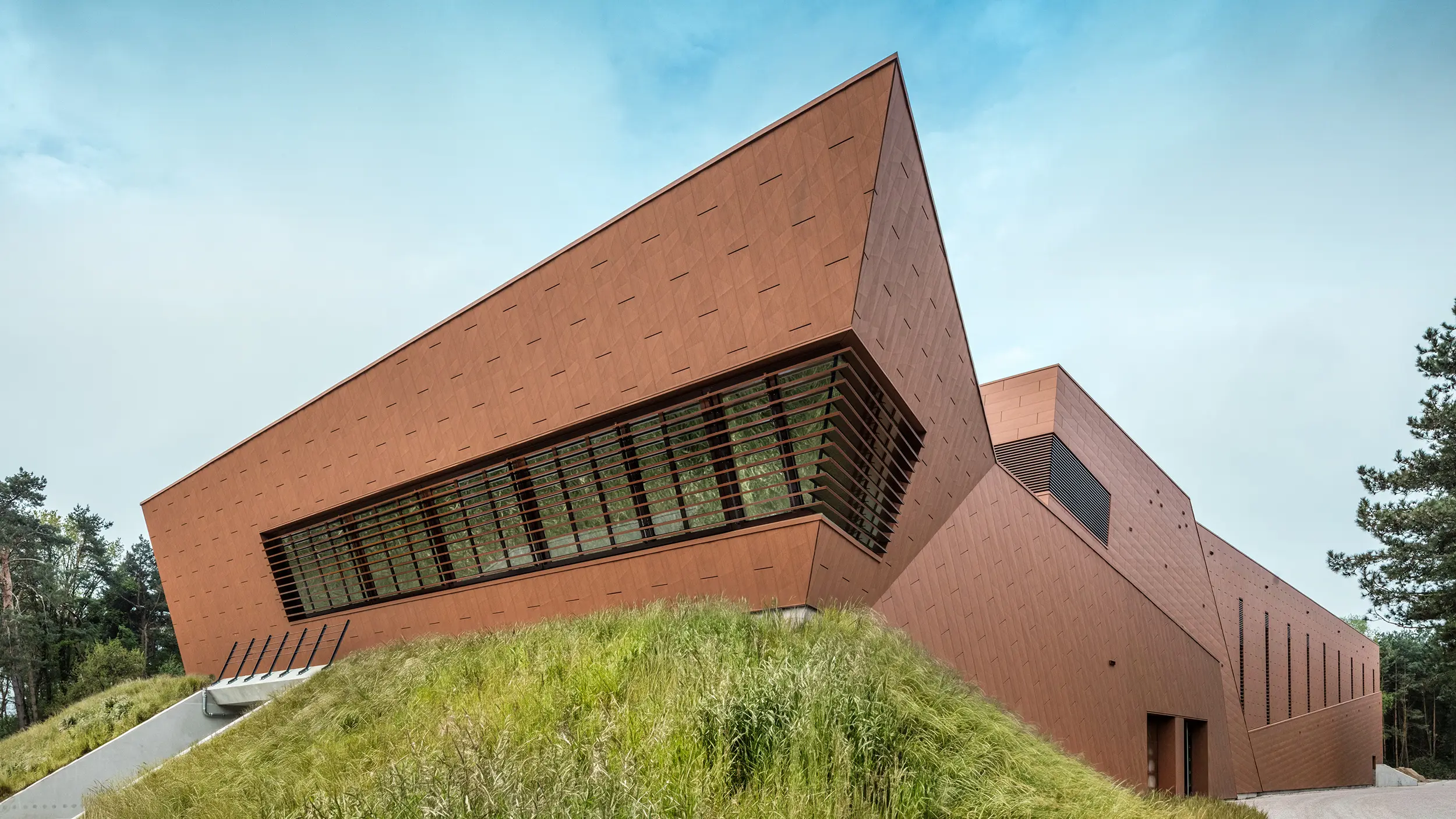
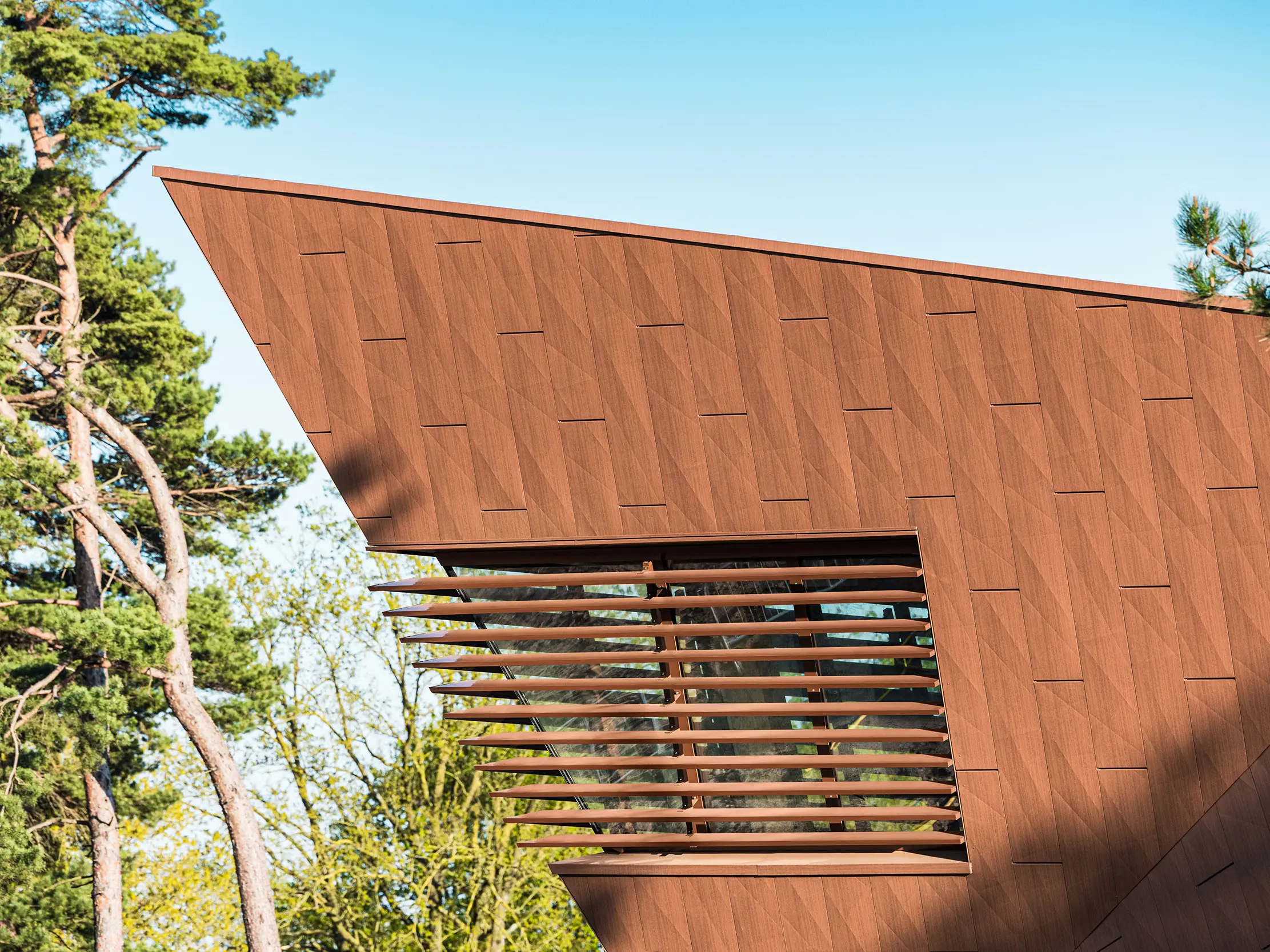
The 100-metre-long building consists of four interlocking volumes that are gently integrated into the landscape. Sloping embankments, sculpted forms and a varied façade design help to scale down the building’s presence and anchor it within its surroundings. Passers-by and cyclists encounter a thoughtfully designed structure that combines function and aesthetics.
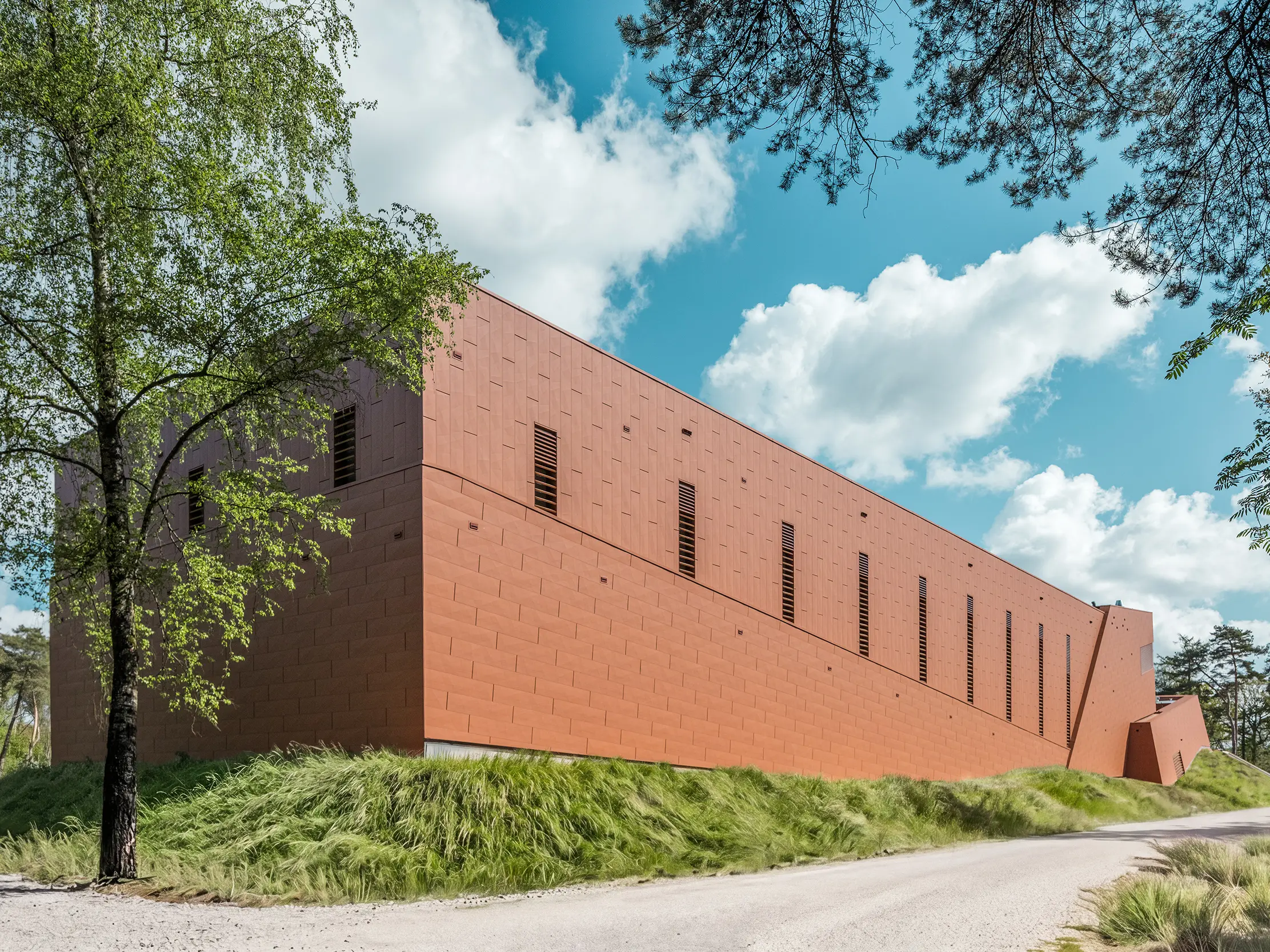
Materials with character
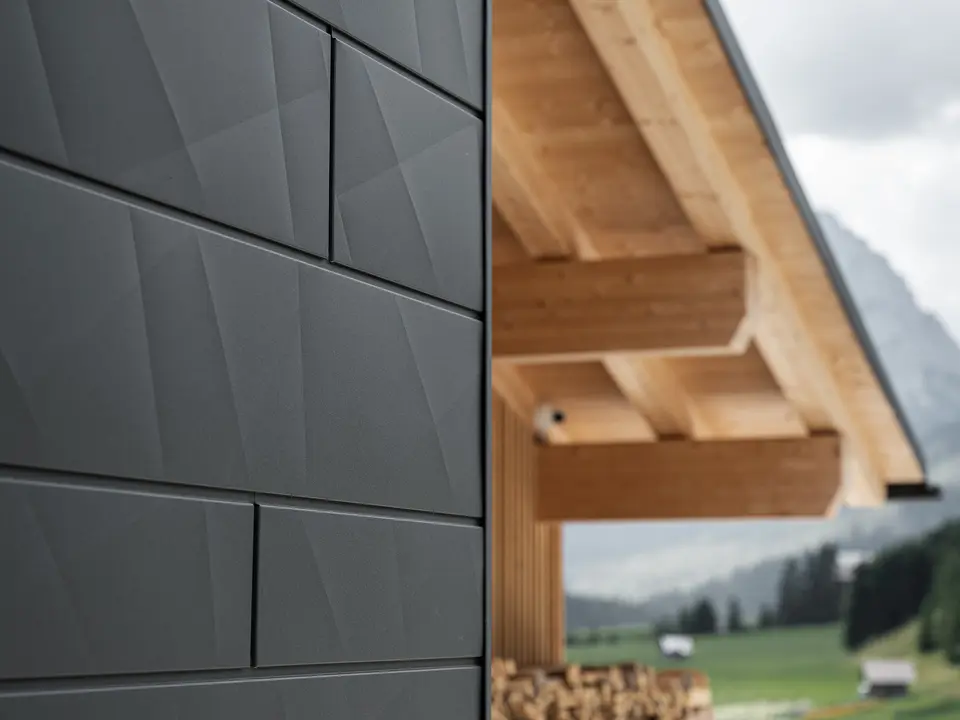
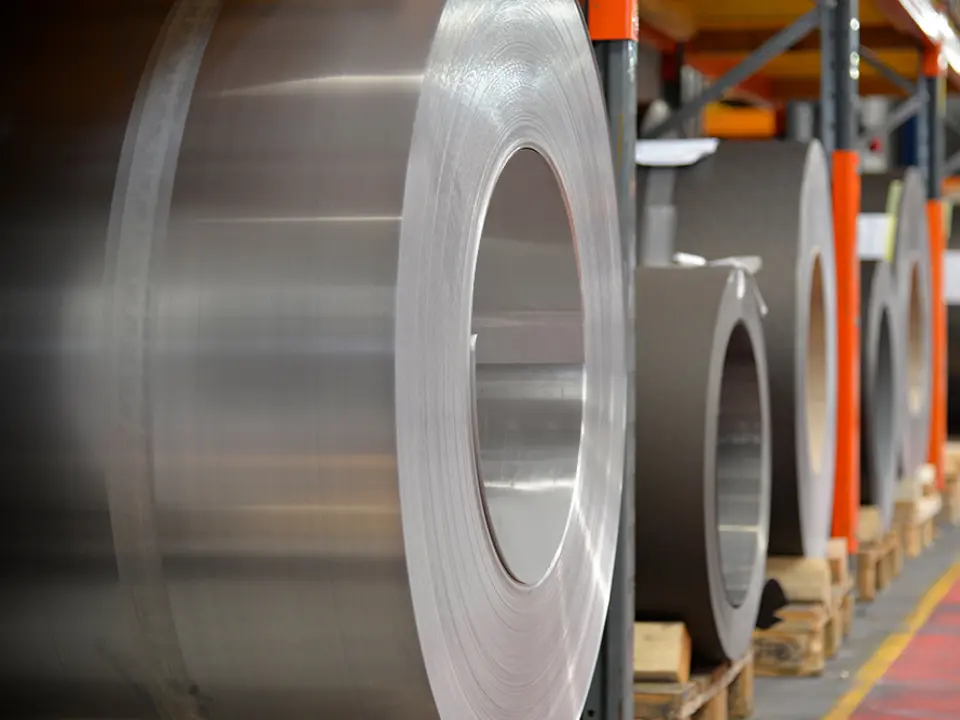
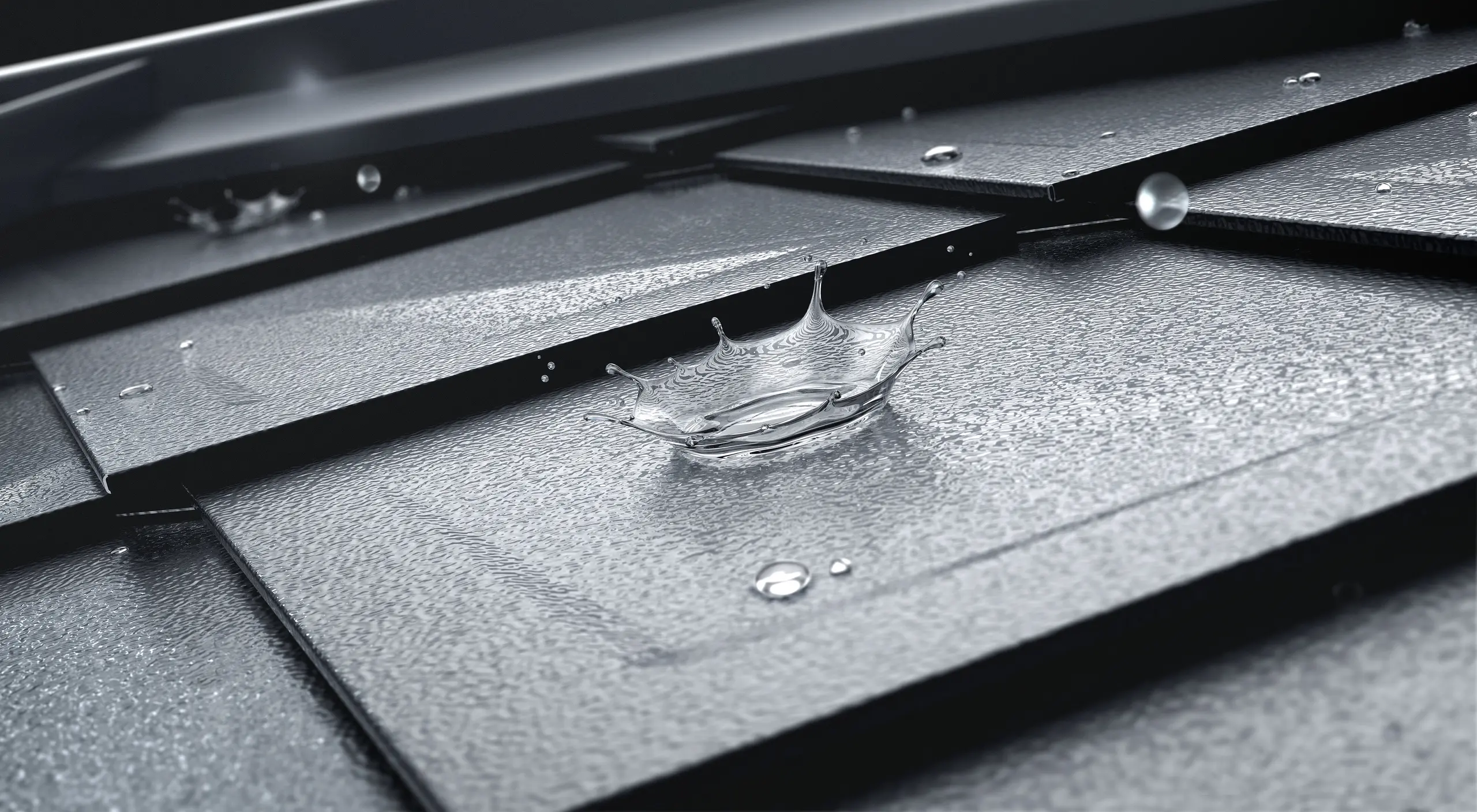
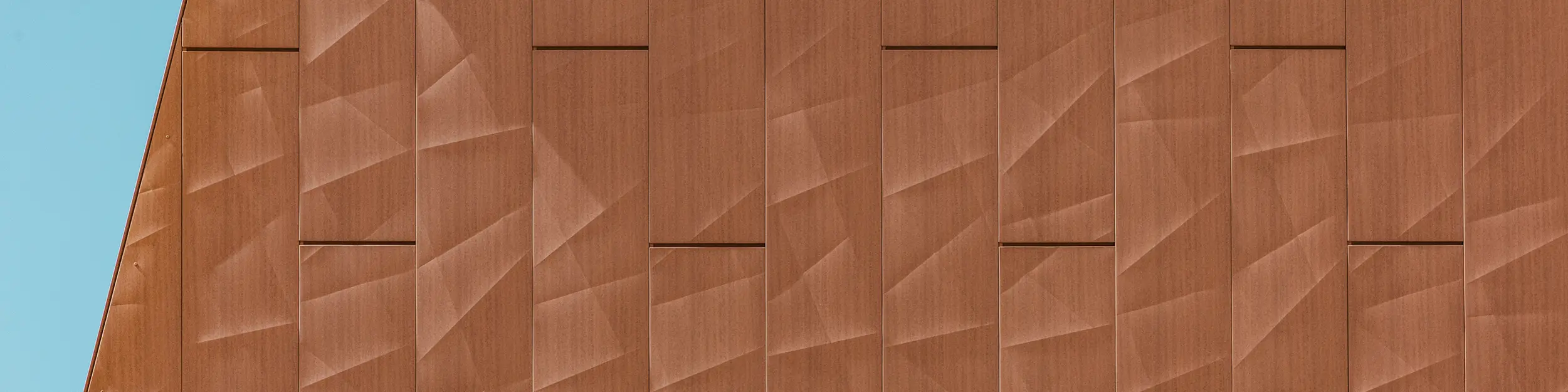
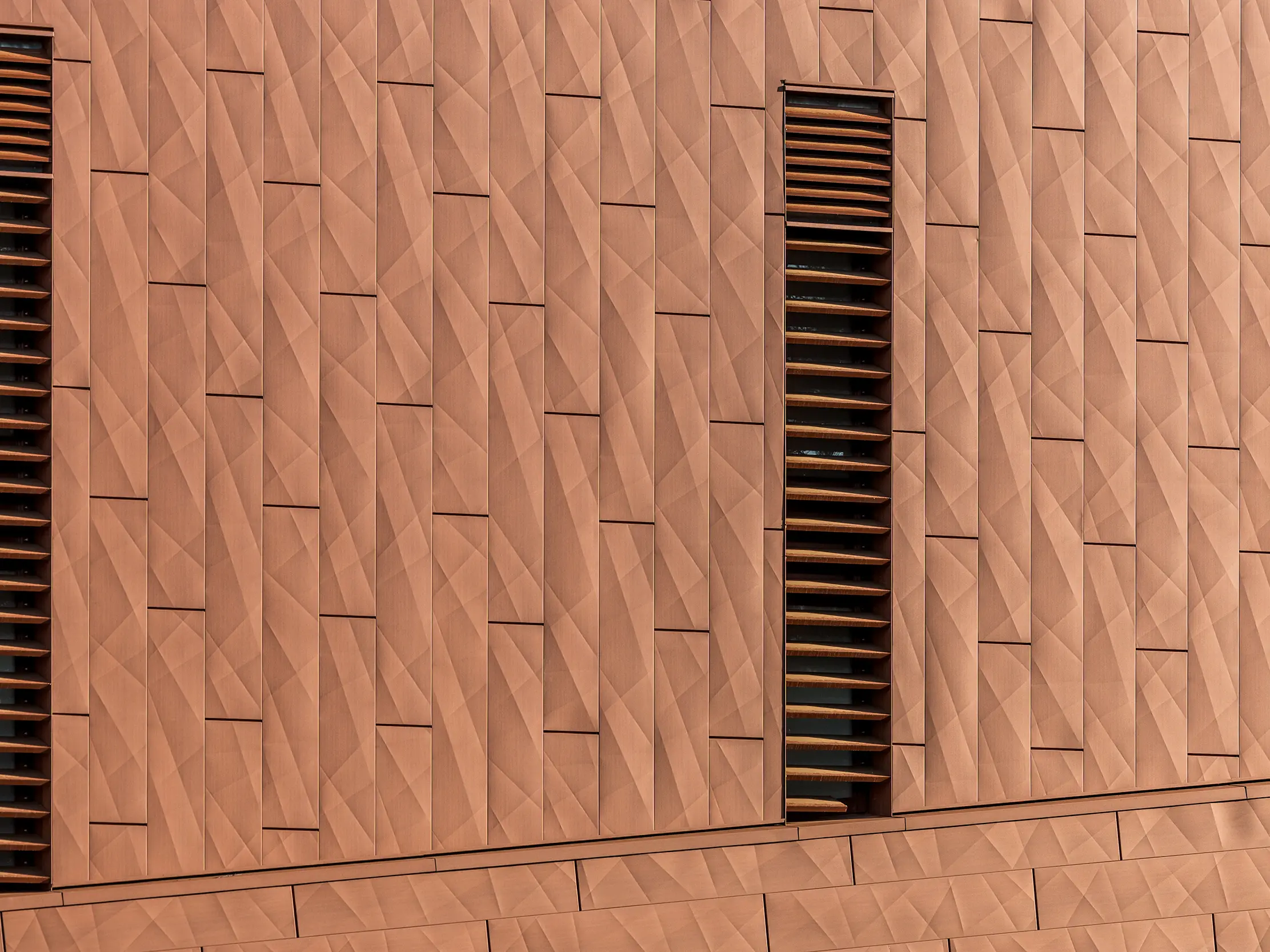
Instead of Corten steel, the choice fell on PREFA Siding.X made from recycled aluminium: it looks like rusting steel, but has a significantly better carbon footprint. The façade panels can be dismantled and recycled. The interiors, too, combine high-tech materials with wood, which impresses with its load-bearing properties, hygienic qualities and atmospheric appeal.
Flexibility and dismantling
Every construction part is designed for ease of dismantling and reuse. Material passports document all resources. The water treatment system, roof and outdoor facilities are modular, adaptable and sustainable – a building that can respond to new requirements.
A model for the future
The pumping station demonstrates that technical infrastructure can combine design, sustainability and functionality. For architects and those interested in design, this means: Even unassuming buildings today offer scope for innovation, character and inspiration.