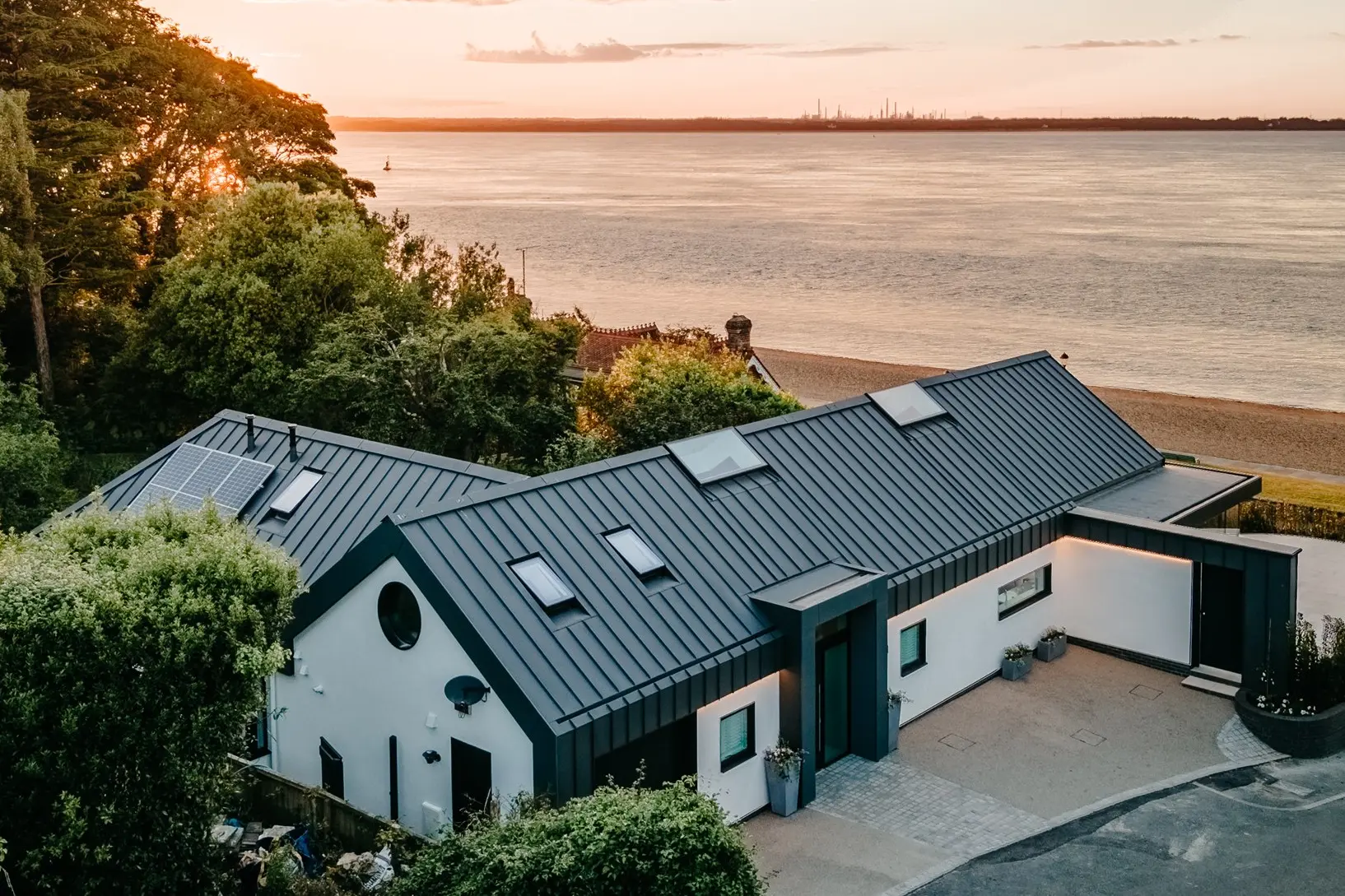
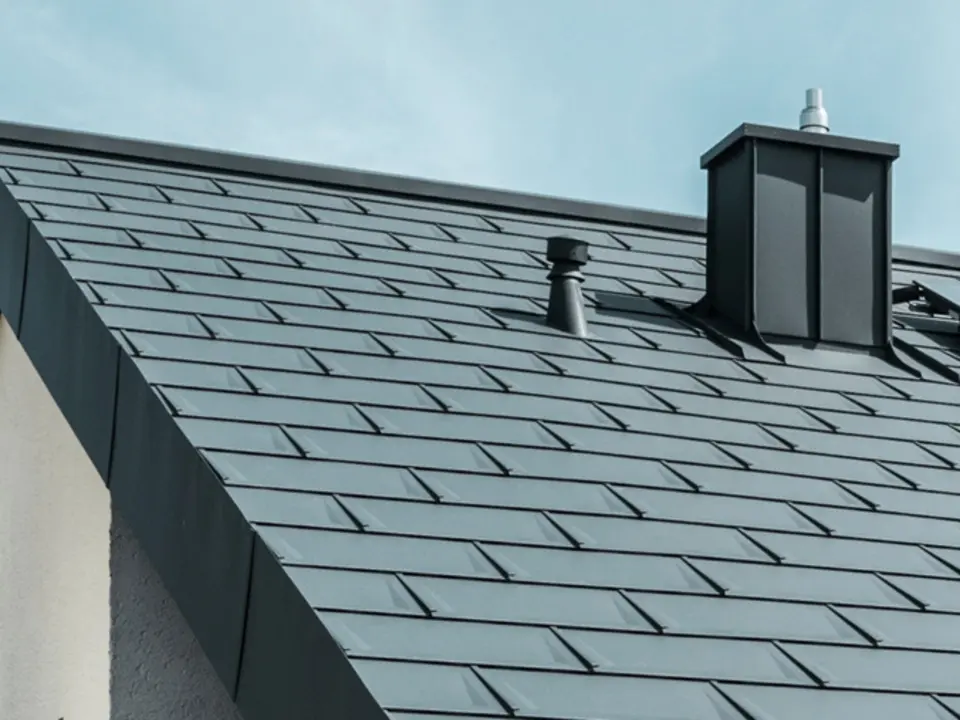
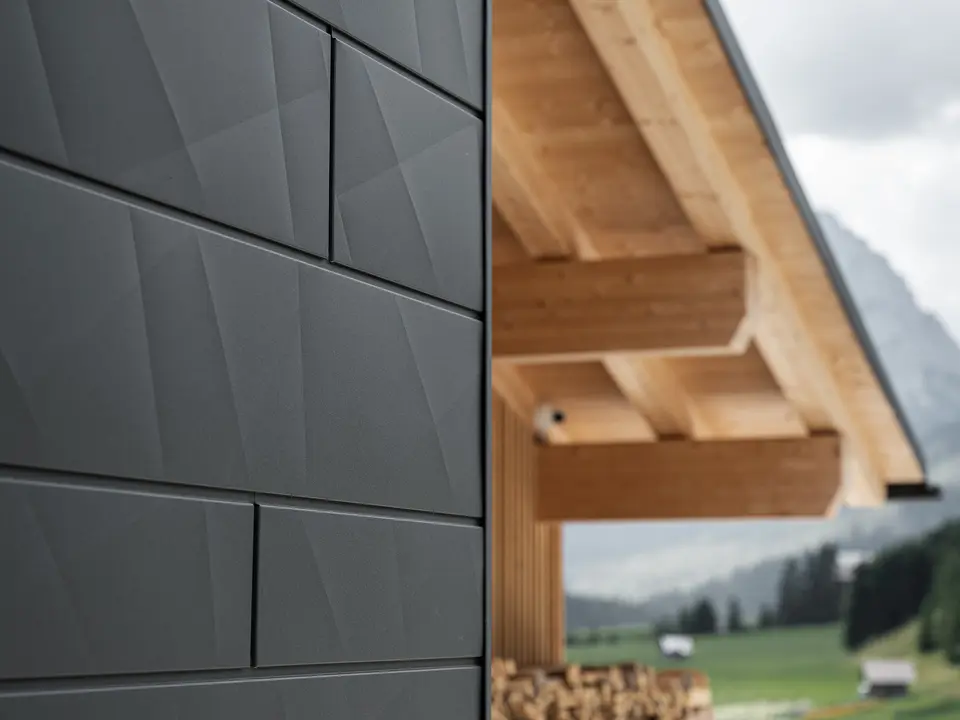
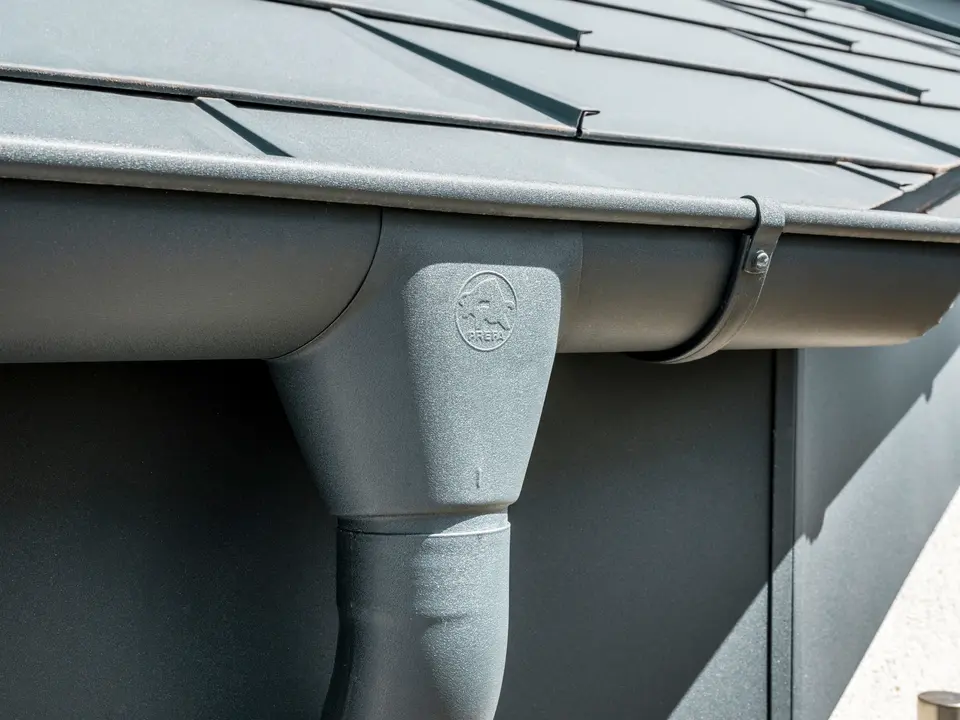
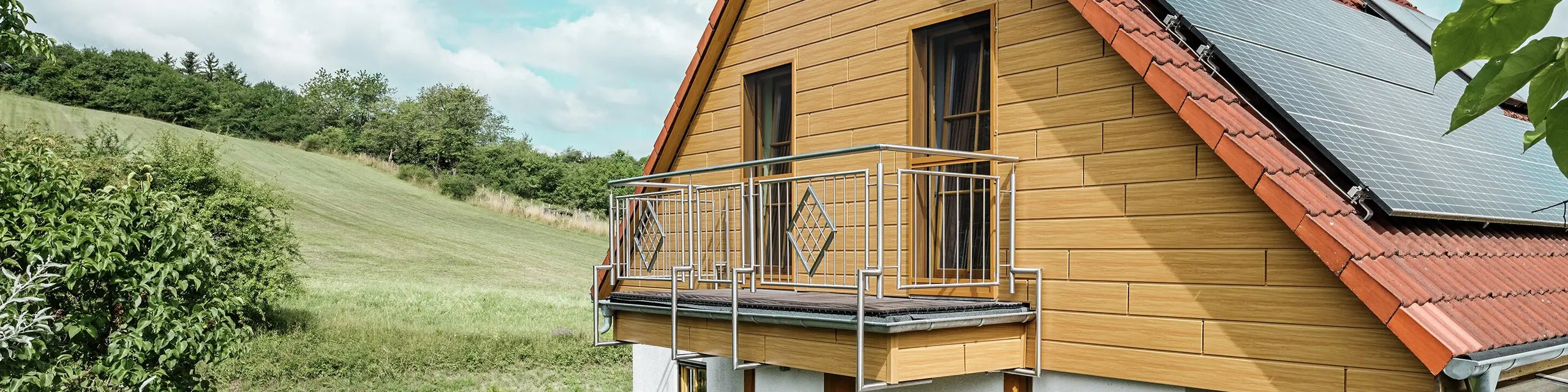
An old or damaged house façade not only affects the appearance of your home but can also endanger the building structure in the long term due to water ingress. With a professional façade renovation, you not only increase the value of your property but also improve thermal insulation and reduce your energy costs in the long term. PREFA aluminium façades offer a particularly durable, low-maintenance and stylish solution for façade renovations.
When is a façade renovation meaningful?
A façade renovation is meaningful for various reasons and can offer both functional and aesthetic benefits. There are several indicators suggesting that a façade renovation is necessary:
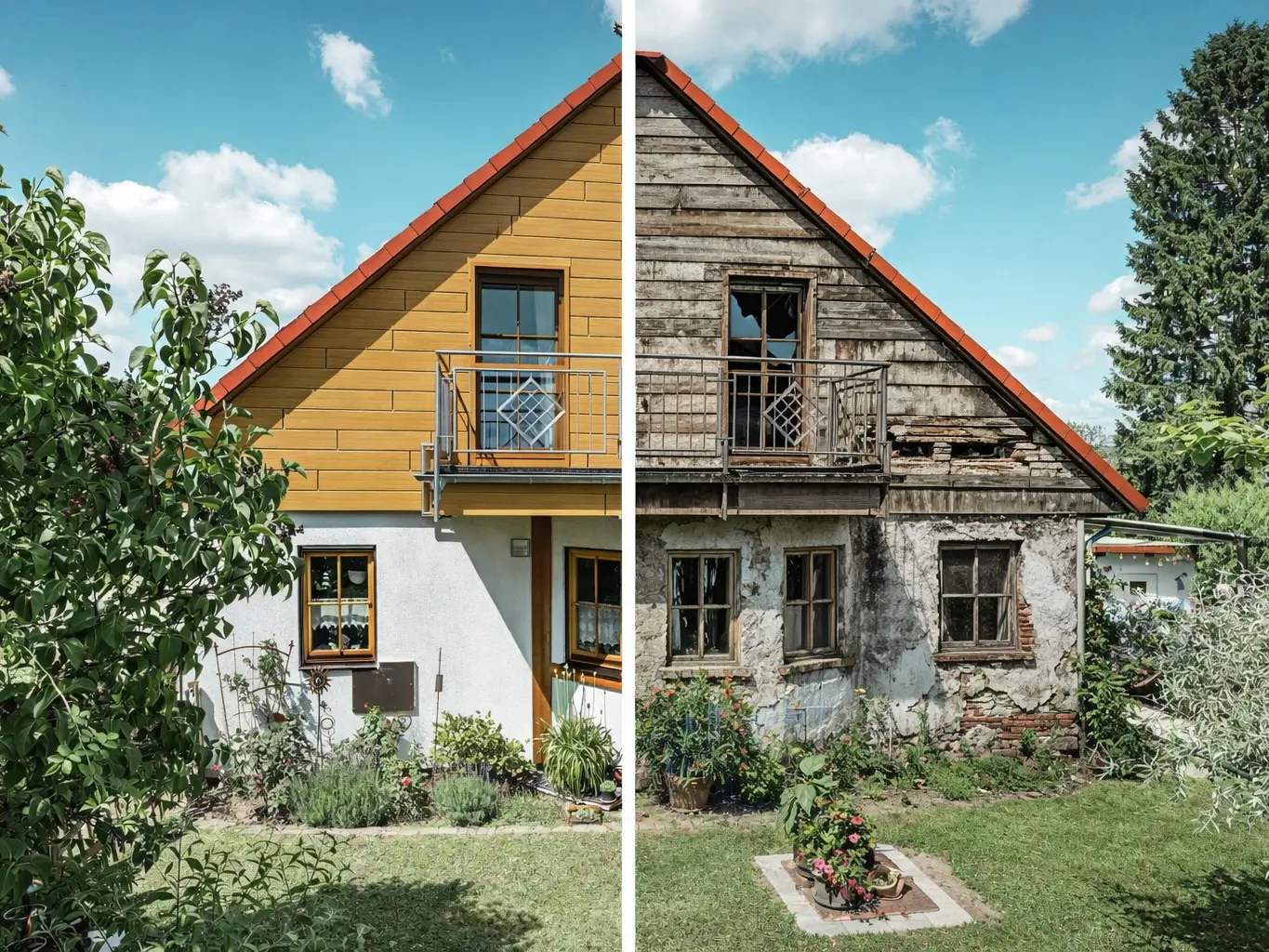
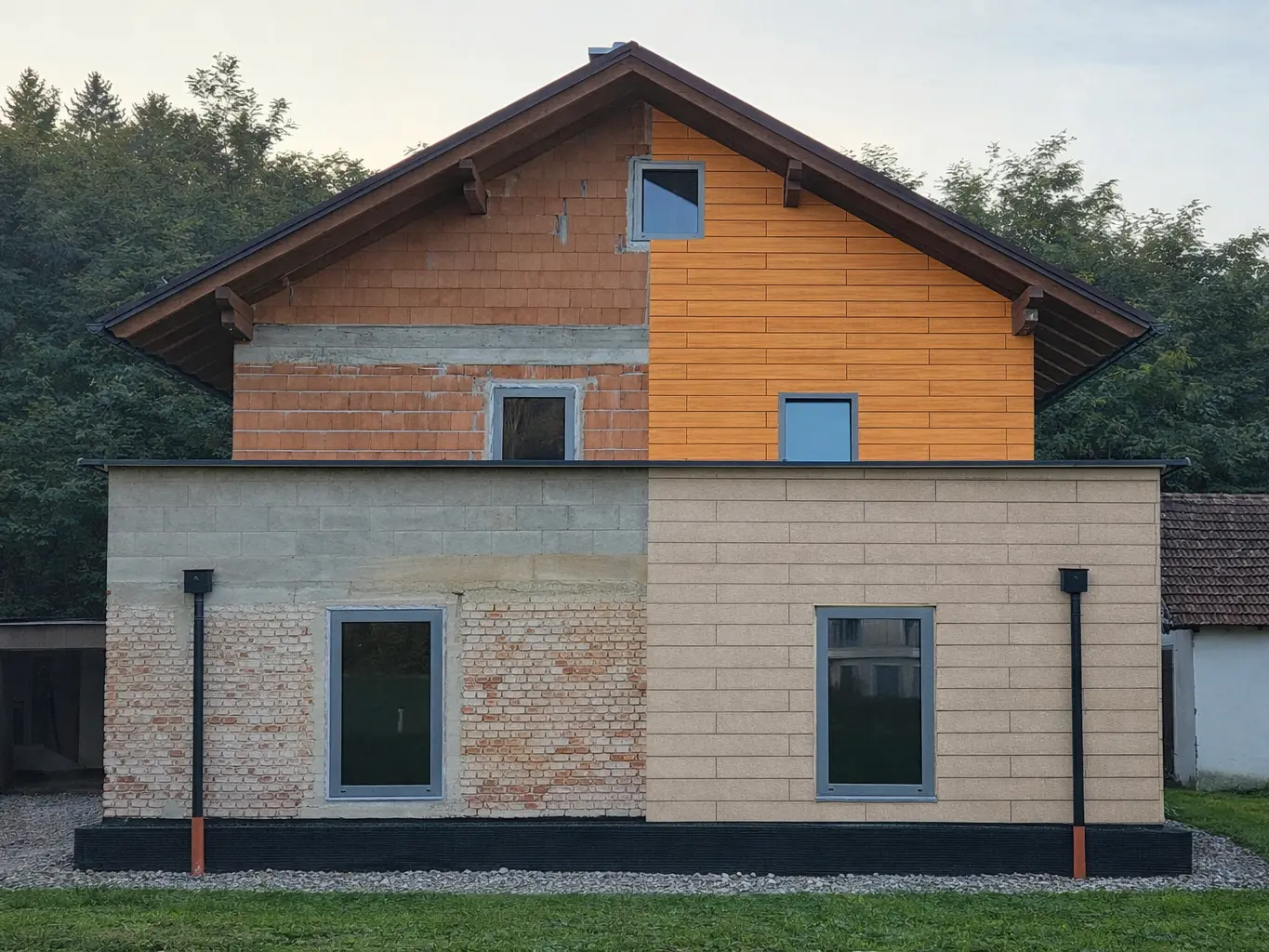
Left: newly renovated façade with PREFA sidings in wood look Right: façade in need of renovation (AI-generated)
High heating costs and poor insulation
One of the most common reasons for façade renovation is high energy or heating costs. If the insulation of the façade is insufficient or completely absent, valuable heat escapes from the interior of the house. This leads to unnecessarily high heating costs and increased energy consumption. By renovating the façade, especially with modern, highly-insulating materials, you can reduce energy consumption and lower your heating costs in the long term. A rear ventilated rainscreen also contributes to a pleasant indoor climate.
Cracks, chipped plaster and moisture
Cracks in the plaster or chipping on the façade are not only unsightly but are also a sign of structural problems. Moisture can penetrate the walls, leading to mould growth and can cause damage to the building structure. A façade renovation would be the first step to fix these issues and thus to protect your home against long term damages.
Visual wear and tear and need for modernisation
Over the years, many façades lose their original beauty. Worn plaster, faded colours or outdated designs make the exterior appearance of the house unattractive. A façade renovation offers the opportunity to give the house a new, modern look while simultaneously increasing its functionality. This is particularly useful if you would like to adapt the appearance of the house to current architectural trends or increase the property’s value.
Damage caused by severe weather, violence or animals
External influences such as storms, hail, animals or vandalism can damage the façade. This type of damage not only affects the aesthetics but can also reduce the protective function of the façade. In such cases, a renovation is necessary to ensure the functionality and safety of the building.
Increase in value upon sale or rental
If you want to sell or rent your house, a façade renovation can make a significant difference in the sale price or rental potential. A well-maintained and modern façade not only creates a better first impression but also signals that the building has been kept in good condition. This can increase the property’s value and appeal to buyers looking for a well-maintained, energy-efficient property.
Benefits of a PREFA aluminium façade
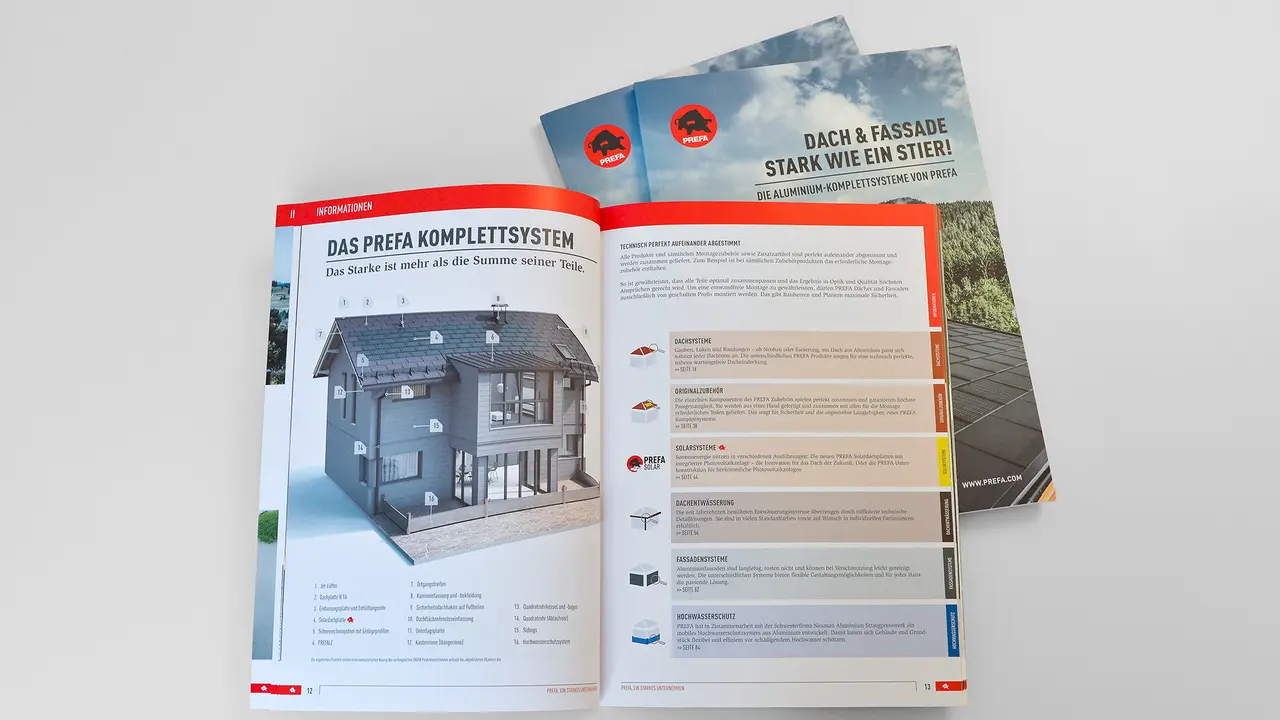
With PREFA aluminium façade products, you are opting for a high-quality, visually appealing and well-thought-out complete system for generations – produced in Austria and Germany. Browse our brochure and choose from our wide range of aluminium rear-ventilated façade solutions.
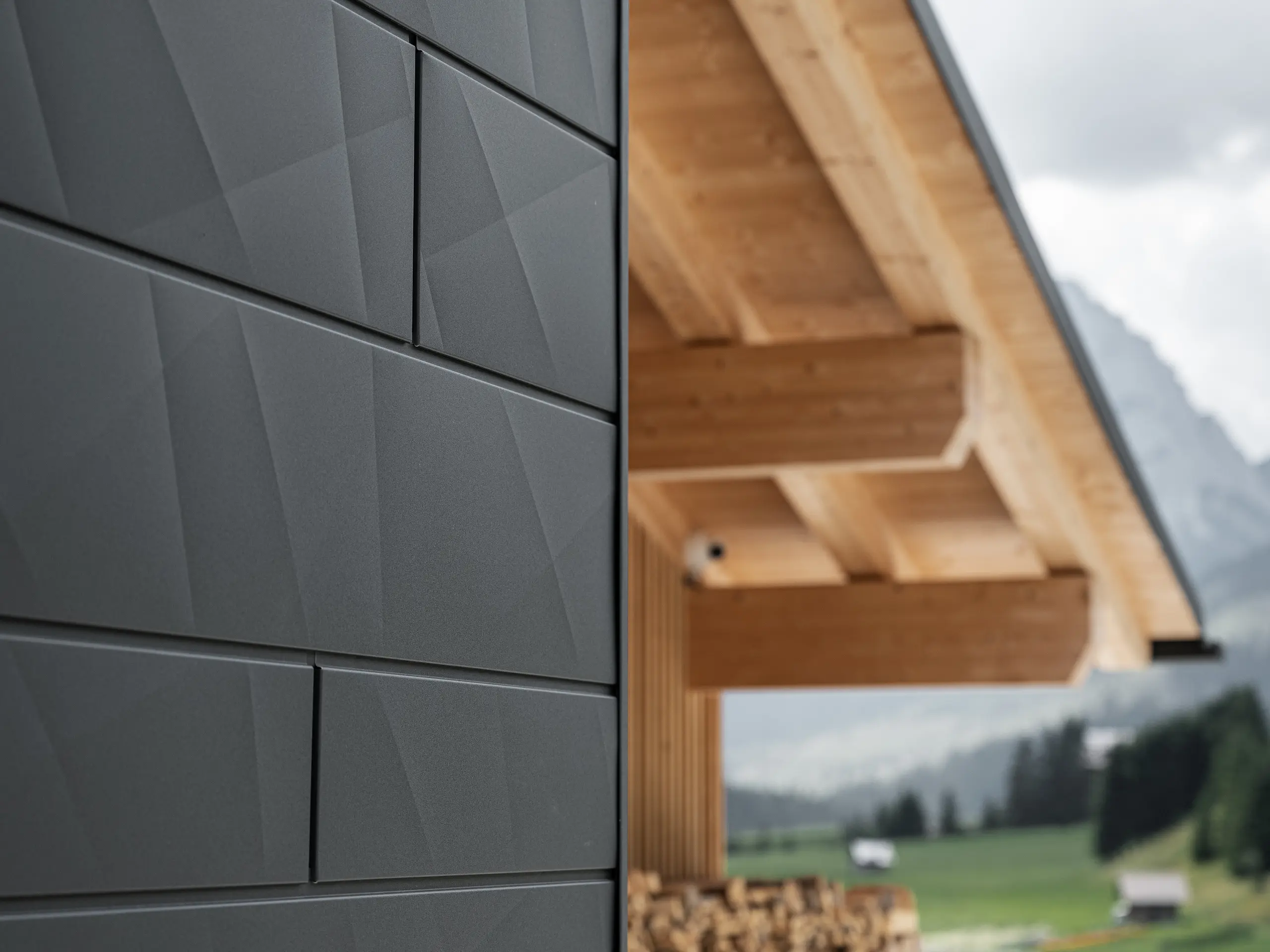

How is the PREFA façade designed?
All PREFA aluminium façade systems are designed as rear-ventilated rear-ventilated façades (RVF). This is a system that has been tried and tested over hundreds of years and has a positive effect on the indoor climate due to its special build up. Air can circulate between the masonry and the PREFA façade, allowing any moisture and accumulated heat from sunlight behind the metal façade to be dissipated (and not transferred to the living space). Summer overheating can be reduced by up to 20%.
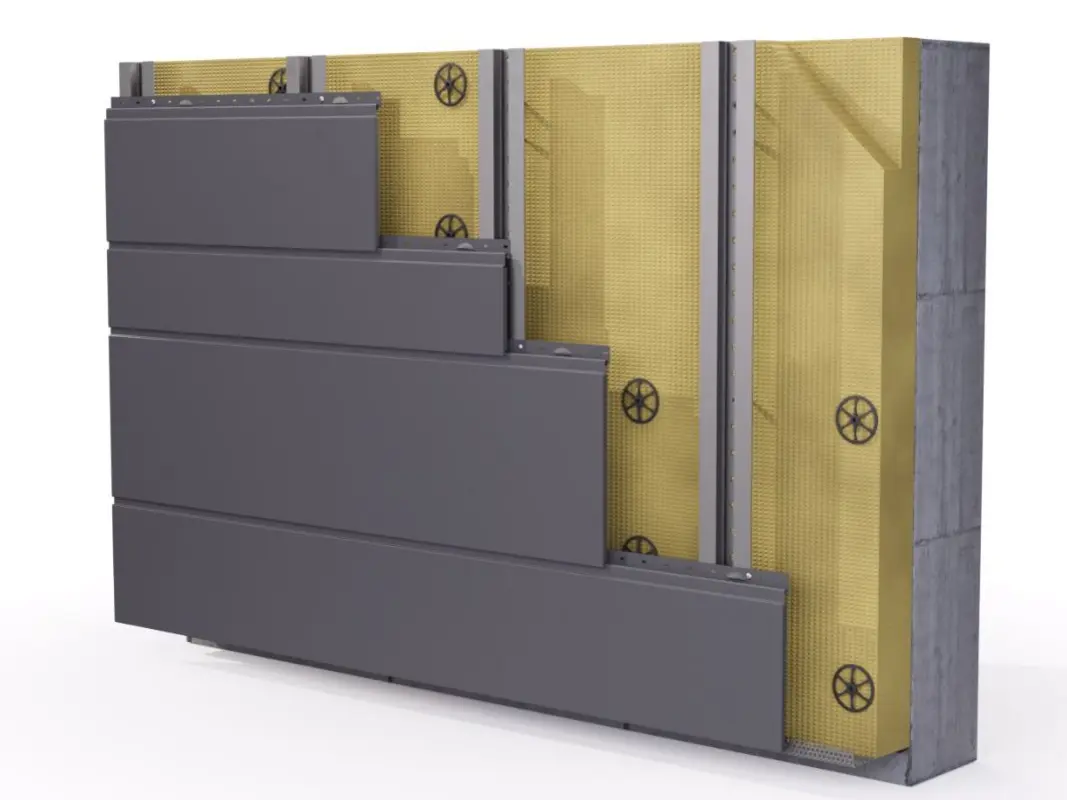
Construction of a ventilated curtain wall façade comprising a supporting structure, insulation, an aluminium substructure and cladding with PREFA Sidings in various widths.
Build up of a rear-ventilated façade (RVF), fully or self supported
A rear-ventilated façade consists of four components: the bearing structure, the thermal insulation, the supporting sub-structure and the rear-ventilated façade cladding. The components are explained in detail below.
Bearing structure
The bearing structure (masonry, timber frame construction, etc.) bears the majority of the weight and also contributes to the insulation. If it is a brick structure, and depending on the thickness and material of the masonry, it may even be the case that no additional insulation is required.
Thermal insulation
The thermal insulation is installed to the bearing structure behind the visible façade cladding. It mainly consists of mineral materials such as glass wool or rock wool. Even if you want to build ecologically and value sustainability, however, a variety of alternative insulation materials such as hemp or cork are available. The thickness of the insulation varies and depends primarily on the desired insulation value. It should be noted that each building material has its own insulation values. Depending on the thickness and in combination with the respective façade material, you ultimately achieve the desired target value. The main purpose of thermal insulation is to minimise the heat flow between the living space and the exterior and to prevent the formation of thermal bridges. This means that heating energy cannot be lost and the wall does not cool down in winter. If the insulation is insufficient, thermal bridges can still occur. Due to the special design of a rear-ventilated façade , the thermal insulation is protected from weather conditions. Furthermore, it provides effective protection against external sound and noise.
The U-value (thermal transmittance) is the most important figure in connection with thermal insulation. It indicates the heat output per square metre of a building element when the temperature difference between the interior and exterior of a building is constantly one degree Celsius or one Kelvin. The better the thermal insulation of a component, the lower the resulting U-value.
Supporting sub-structure
The supporting sub-structure forms the connection between the bearing structure and facade cladding. The ventilation gap is at this installation level. The façade profiles are fixed to the supporting sub-structure at a sufficient spacing from the insulation, thus creating a constructive separation of the two components and resulting in an air gap. The gap between the two components regulates the moisture balance in the building structure. The sub-structure framework can be made of wood or aluminium or a combination of both materials. If a sub-structure framework made of aluminium is chosen, there is the possibility of permanently compensating for any unevenness in the exterior wall.
The rear-ventilated façade
The rear-ventilated façade serves as protection against rain and weather conditions and is the outermost component of the façade, which can be designed in a variety of creative ways.
The PREFA rear-ventilated façade (RVF) not only provides excellent protection against weather conditions but also improves the energy efficiency of your house. The innovative ventilation gap effectively removes moisture while ensuring ideal insulation. Discover how you can not only protect your property with this façade system but also enhance its appearance!
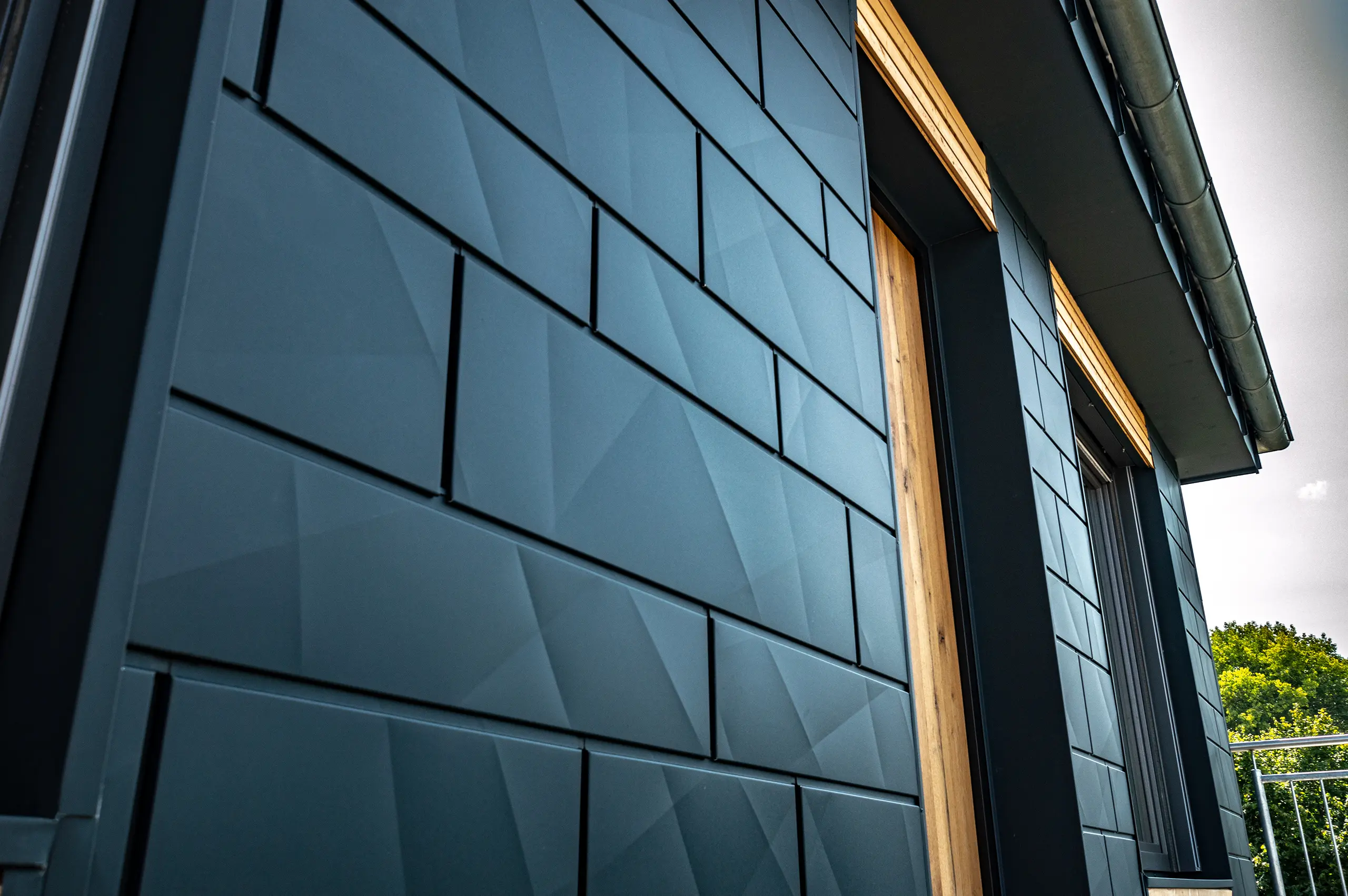
How much does a façade renovation with PREFA cost?
The cost of a façade renovation with PREFA cannot be quoted as a flat rate, as it depends on several factors. Decisive factors include, among others, the size and geometry of the building, the structural condition of the existing façade, the desired type of façade, as well as details such as window connections, corner constructions or special design solutions. The question of whether additional thermal insulation will be incorporated during the renovation also affects the overall cost.
As a rule, an aluminium façade from PREFA is a long-term investment in value retention, protection and energy efficiency for your home. Thanks to its high durability, maintenance-free nature and colourfastness, significantly lower maintenance and follow-up costs arise compared to traditional plaster façades. For a realistic assessment, we recommend booking an individual consultation with a PREFA specialist partner who will analyse your property and create a customised offer.
How does a façade renovation with PREFA proceed?
A façade renovation with PREFA proceeds in several clear steps, ensuring its smooth and efficient implementation. First, your building will be thoroughly analysed by a PREFA installation partner to assess the state of the existing façade and to find the best solutions for a renovation. You will then discuss the scope of the renovation:
- Is a thermal renovation desired?
- Will the windows also be replaced?
- Which product suits your house?
- etc.
During the planning phase, you will receive, if desired, a visualisation of the new façade – for example, via the PREFA photo service, which will offer you a realistic preview of the design. You will then receive a detailed quote tailored to your individual needs and desires.
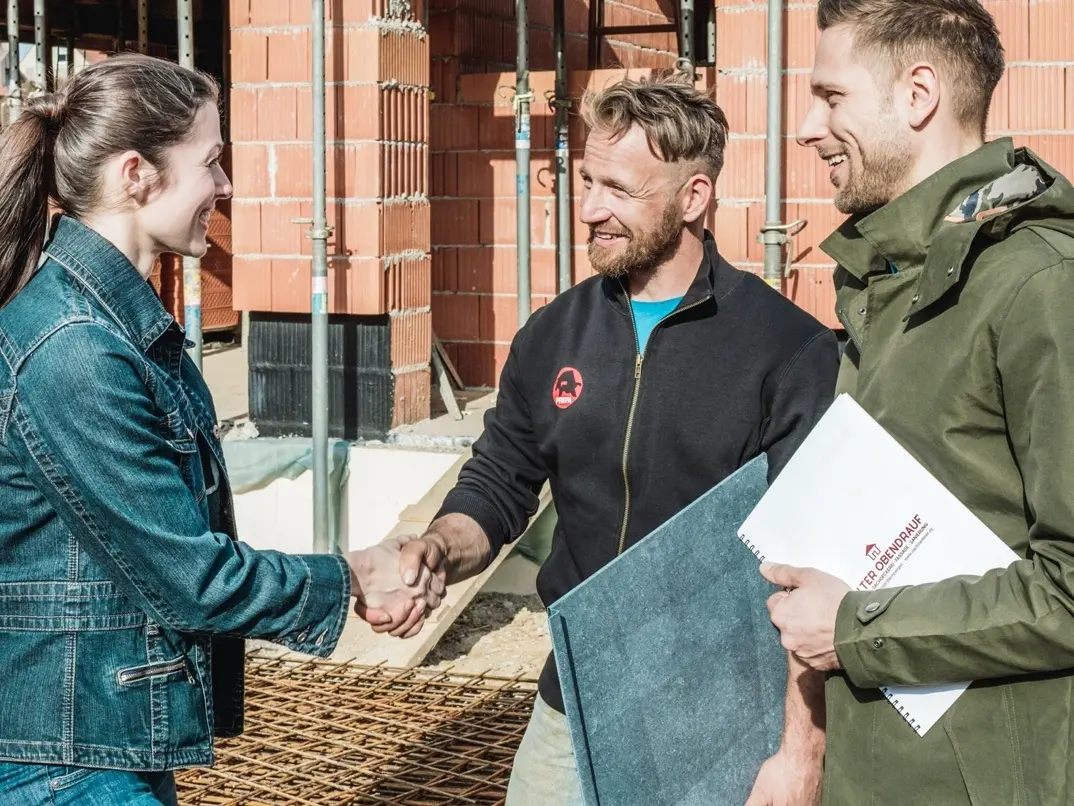
Once you have decided on the quote, the implementation will begin. First, the dismantling of the old façade may take place if necessary. If an old plaster or cladding layer is present, it will be carefully removed to create a clean base for the new materials. In the next step, new insulation will be installed to improve the building’s energy efficiency. An aluminium or wooden sub-structure framework will then be installed. This stable structure ensures that the façade is securely and permanently fastened to the wall of the building. It also allows the necessary ventilation, which is crucial for the functioning of a rear-ventilated façade (RVF), fully or self supported. Finally, the new rear-ventilated façade will be installed. It consists of durable, weather-resistant aluminium elements that are not only visually appealing but also effectively protect against the weather conditions.
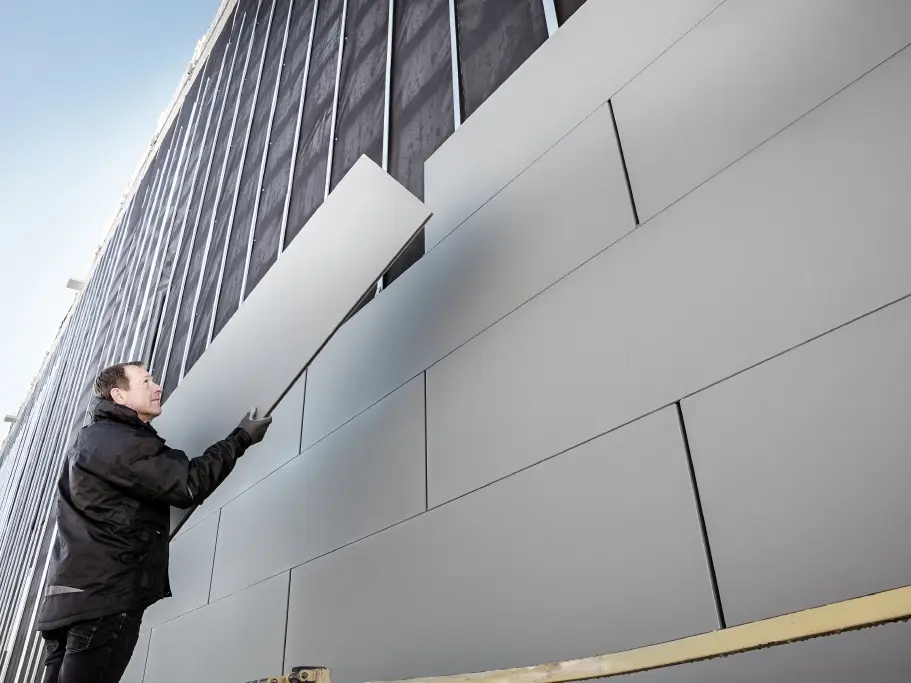
Installation of PREFA sidings on aluminium sub-structure framework
Upon completion, you can request your Guarantee Certificate, which guarantees the quality and durability of your new façade. You can thus rely on the protection and durability of your PREFA façade in the long term.
All steps of a façade renovation are clearly summarised here:
- Analysis & Advice – Your PREFA partner will examine the state of the existing façade and work with you to develop the ideal solution for your renovation.
- Planning & Visualisation – On request, you will receive a realistic visualisation of your new façade via the PREFA photo service, which will help you make your decision.
- Provision of Quote & Commissioning – After all details have been discussed, you will receive a transparent quote tailored to your needs.
- Implementation & Installation of the Aluminium Façade – Old façade material will be removed if necessary, and then the insulation, sub-structure framework and façade cladding will be quickly, precisely and neatly installed.
- Completion & Handover – Upon successful installation, you can request your Guarantee Certificate.
Frequently asked questions (FAQ) about the PREFA façade
Do you have any further questions about façade renovation with PREFA? In our frequently asked questions (FAQ), you will find answers to the most important topics relating to the PREFA façade. Find out everything important for your façade renovation here!
PREFA products cannot be purchased and assembled by end users themselves, as they are not suitable for self-installation. They are available exclusively through our trained specialist companies who also perform the proper installation. Our material and colour guarantee can only be used if the product has been installed by one of our partner companies.
PREFA is not a rendered façade. It is a high-quality aluminium façade which is installed as a non-bearing, rear-ventilated façade.
Fears of rusting are completely unfounded because aluminium cannot rust. If the surface of the PREFA aluminium façade is damaged, a new protective oxide layer is formed and the durability of the PREFA façade remains unchanged.
PREFA façades are installed as non-bearing, rear-ventilated façades. This means that there is a gap for rear ventilation between the aluminium façade cladding and the insulation. In summer, the hot air cannot accumulate behind the façade because it rises through the rear ventilation and is transported away. In the winter, this structure provides thermal protection, as the heat transfer resistance is increased in the rear-ventilated space. This temperature buffering in the rear-ventilated space ensures a comfortable indoor climate all year round.
The PREFA façade is the outermost protective layer of your house and simultaneously serves as a visual design element to improve the look of your home. Not only is it nice to look at, it also protects your home from the weather. In addition, durable PREFA aluminium cladding protects the underlying layers (supporting structure, insulation and substructure) from the effects of the weather. Owing to the fact that your PREFA façade is particularly weather-resistant, you can enjoy its beautiful appearance for decades.
It should be noted that PREFA façade products must not be confused with sandwich panels or other products with integrated insulation, as they are exclusively specialised for the functions mentioned above (protection and visual design). If you would also like to have a high-quality aluminium PREFA façade, the skilled workshop will be able to provide you with a suitable substructure and, if desired, suitable insulation in addition to improving the appearance of your home with PREFA façade cladding.
Non-bearing, rear-ventilated façades are designed to prevent moisture from forming. By separating the insulation and façade cladding, there is a constant air flow in the rear-ventilated space which regulates the moisture balance and ensures dryness. Thanks to the permanent ventilation, professional installation will not result in mould formation underneath the façade.
If the PREFA façade is installed properly, a perforated plate or ventilation grid will be installed at the ventilation inlet and outlet which protects against animals. As long as it is installed properly, small animals such as birds or mice will therefore be unable to damage your façade.
PREFA products are exclusively available through our trained, independent ‘partner companies’, who also perform the installation. This way, we can ensure that our products are installed properly. We offer regular training sessions for our tradesmen at the PREFA Academy, as we want to ensure that our products are handled with consistent quality.
Aluminium can be recycled 100% without loss of quality. In the recycling process, only 5% of the original manufacturing energy is required. PREFA largely uses recycled aluminium, which is also referred to as secondary aluminium. Therefore, aluminium is also an ideal material from an ecological point of view.
PREFA offers a 40-year colour and material guarantee on its products with the exceptional P.10 surface against breaking, corrosion (rust), frost damage, chipping and blistering.
All PREFA aluminium façade systems are produced as rainscreens. A system that has stood the test of time for over a century, and also has a positive impact on the indoor climate thanks to its special structure. Air is allowed to circulate between the masonry and the PREFA façade, wicking away any occasional moisture behind the metal façade.
Façade examples with PREFA
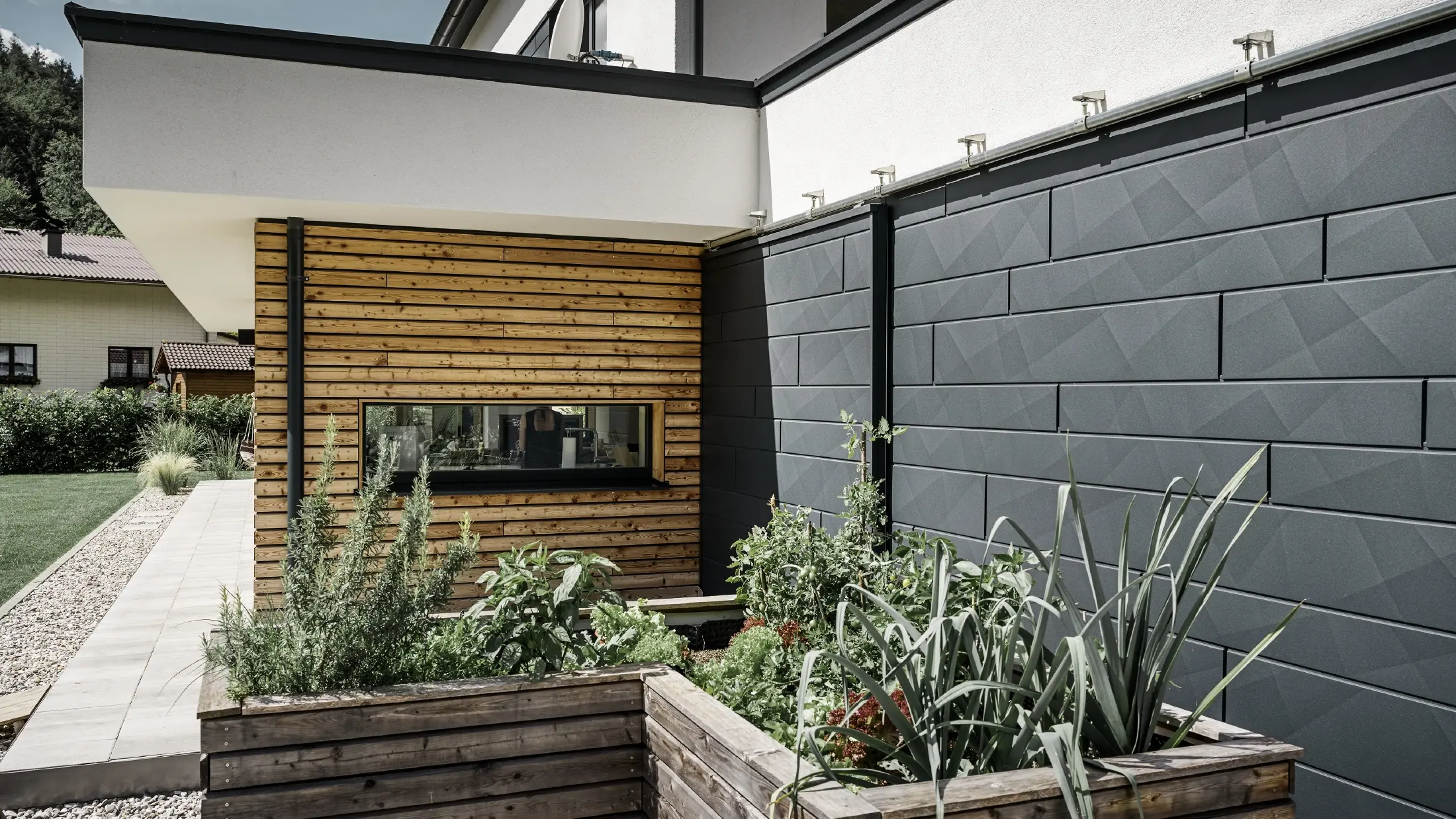
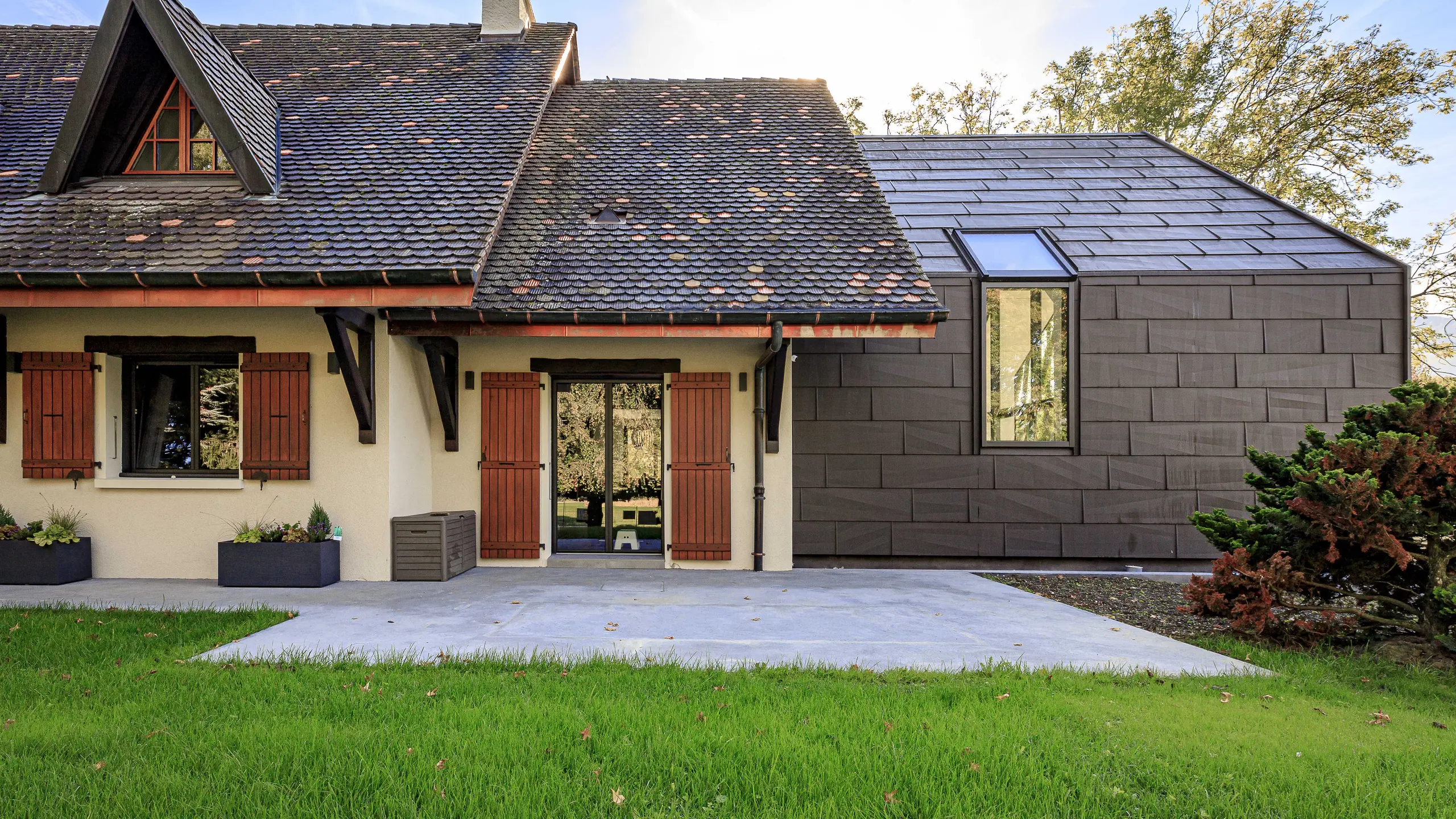
A PREFA aluminium façade is designed as a rear-ventilated façade (RVF), fully or self supported, which means there are hardly any limits to design options – especially during a renovation. Here, you can give free rein to your creativity and turn an old façade into a modern, individual work of art. PREFA offers numerous options for designing your facade exactly according to your needs:
- Wood look or stone look: With our aluminium panels in various surface textures, you can imitate the natural appearance of wood or stone without their drawbacks, such as maintenance requirements or susceptibility to weather.
- Flexible layout: Design the surfaces of your façade as you desire – whether horizontal, vertical or diagonal. This freedom enables you to set unique design accents.
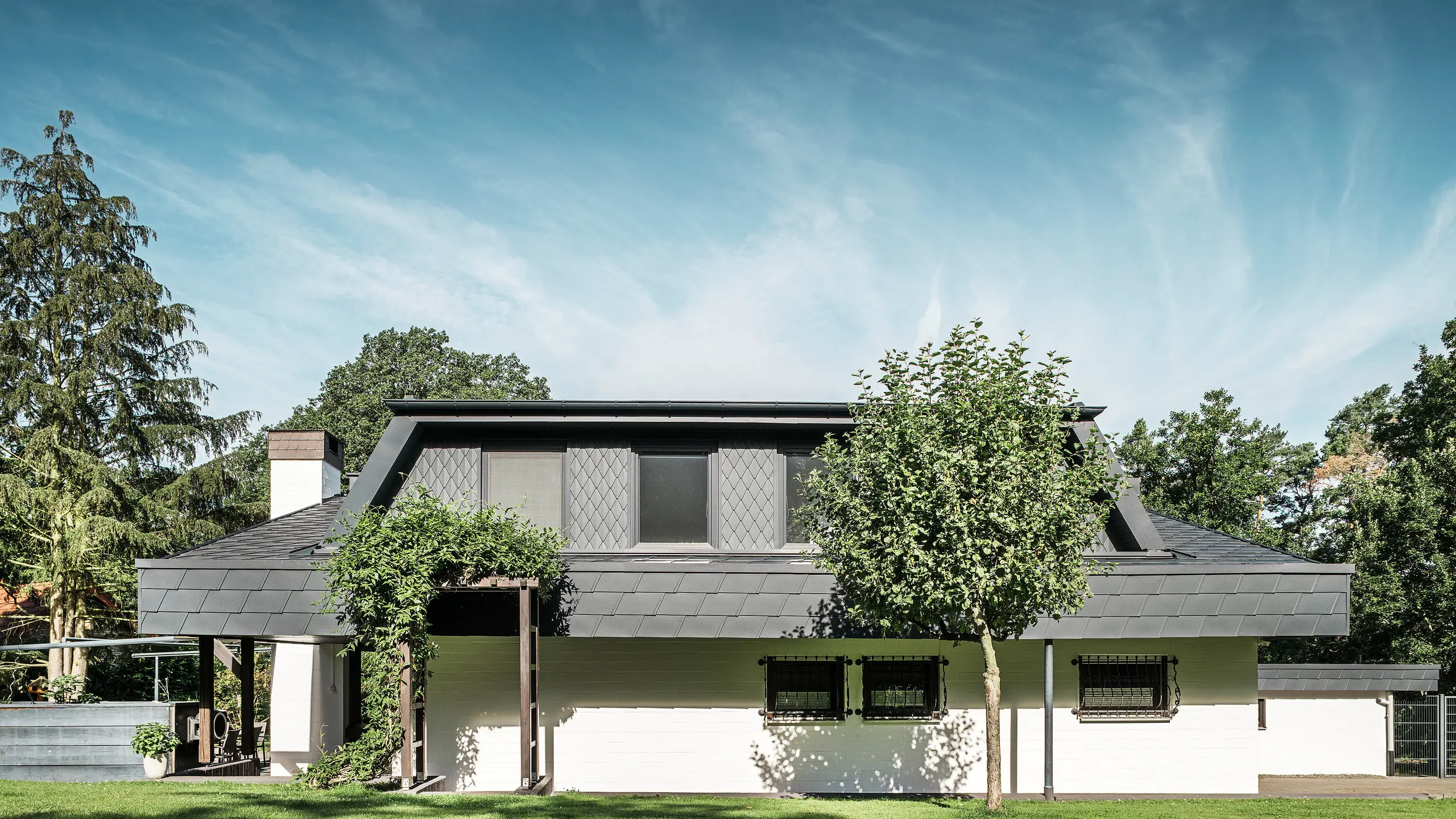
- System combinations: Combine different PREFA systems such as sidings and roof tiles to create exciting contrasts and individual accents.
- Exact adaptation to your style: Choose the colour, shape and surface of the façade panels to match the style of your house, thereby creating a harmonious connection between modernity and tradition.
Thanks to these diverse design options, your façade renovation with PREFA will not only be functional but also a unique visual highlight.
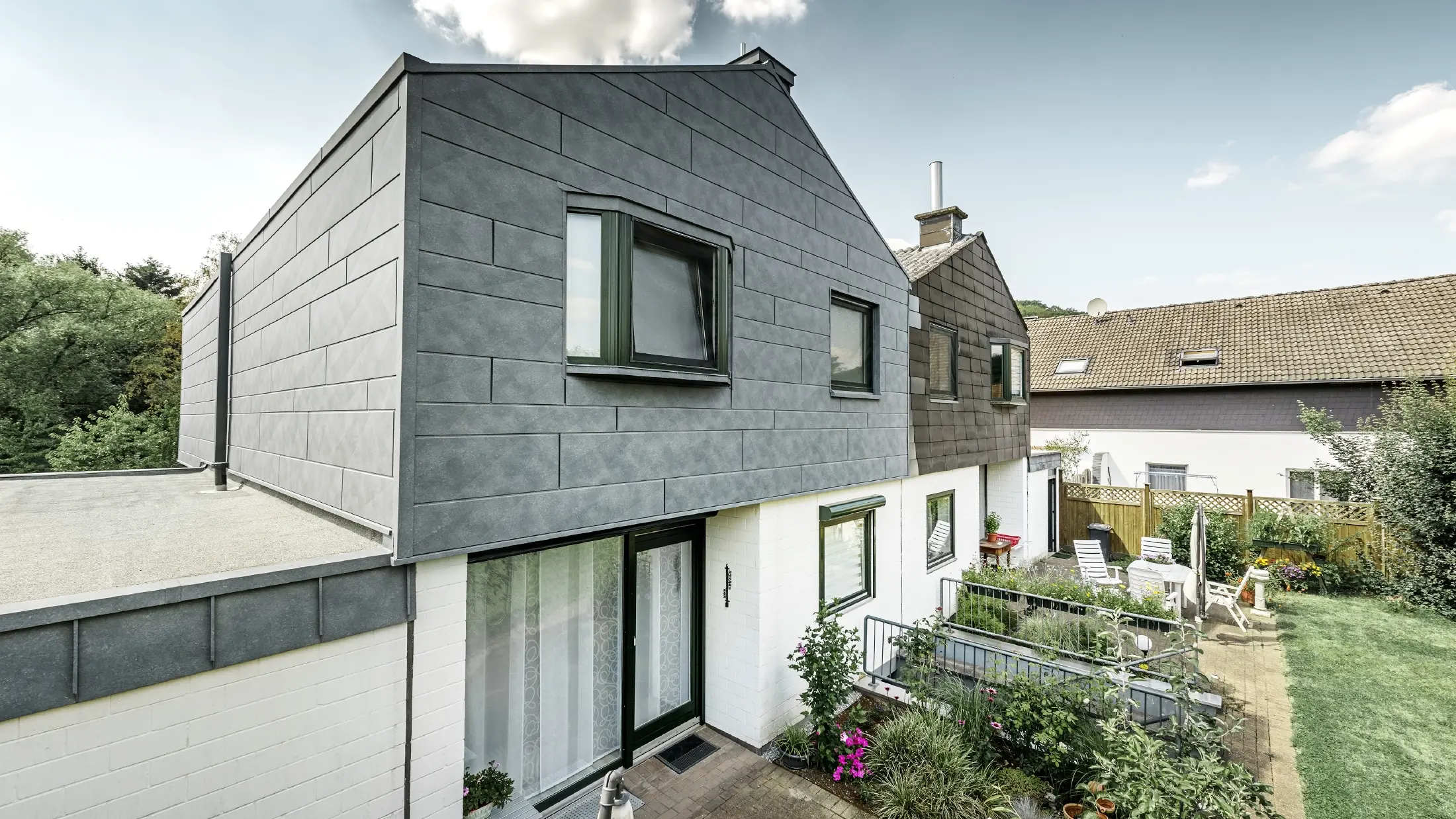
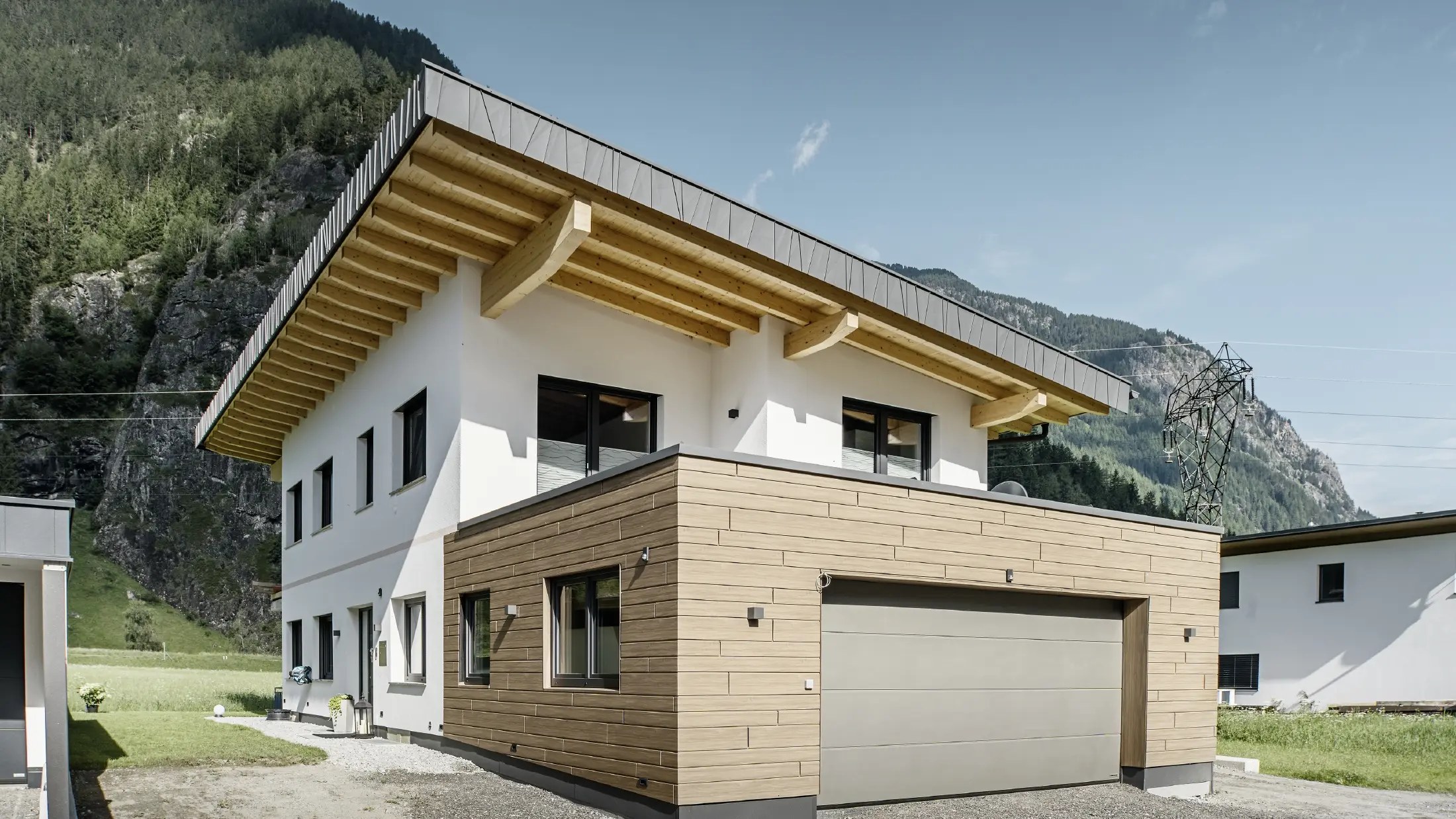
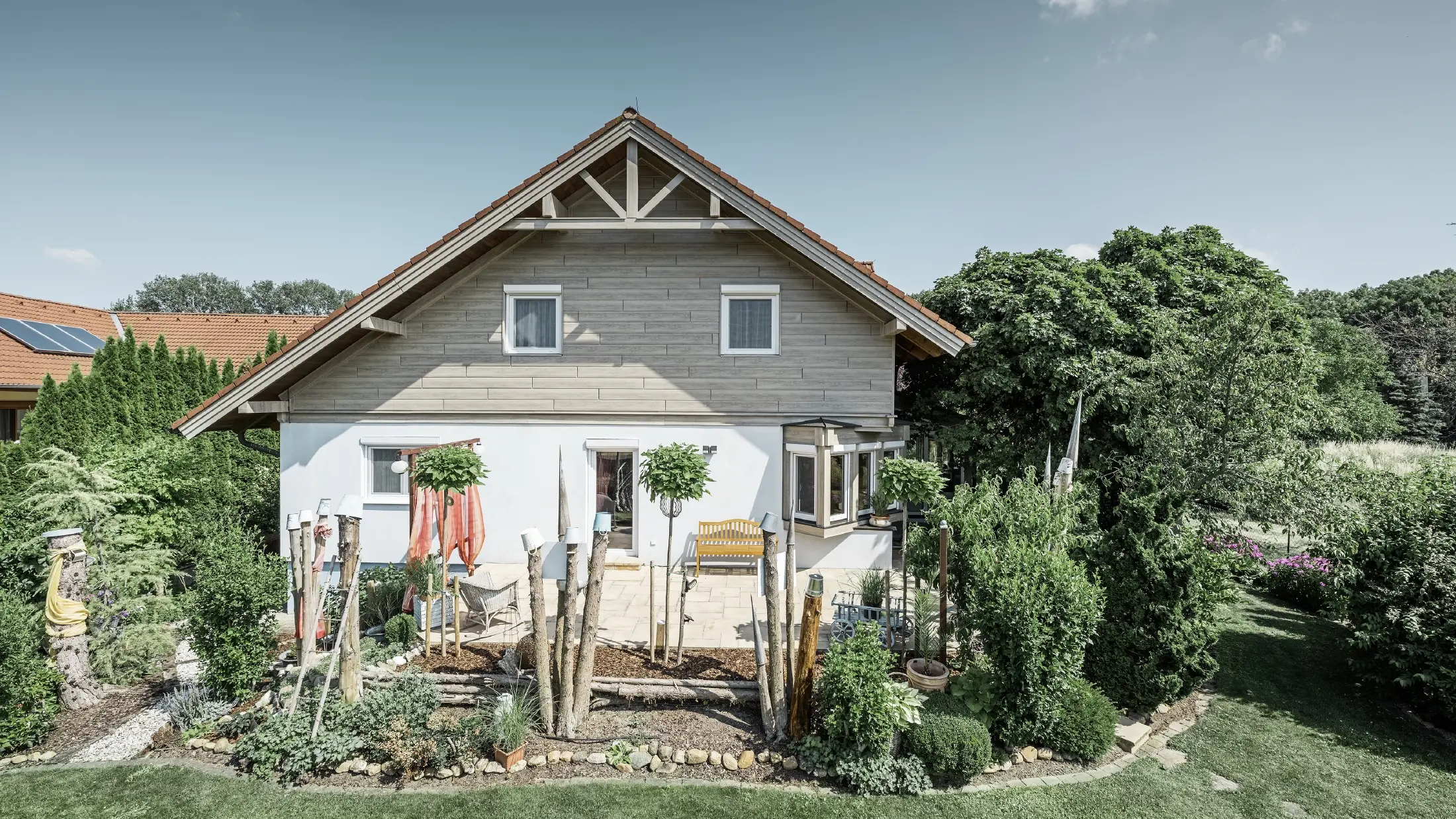
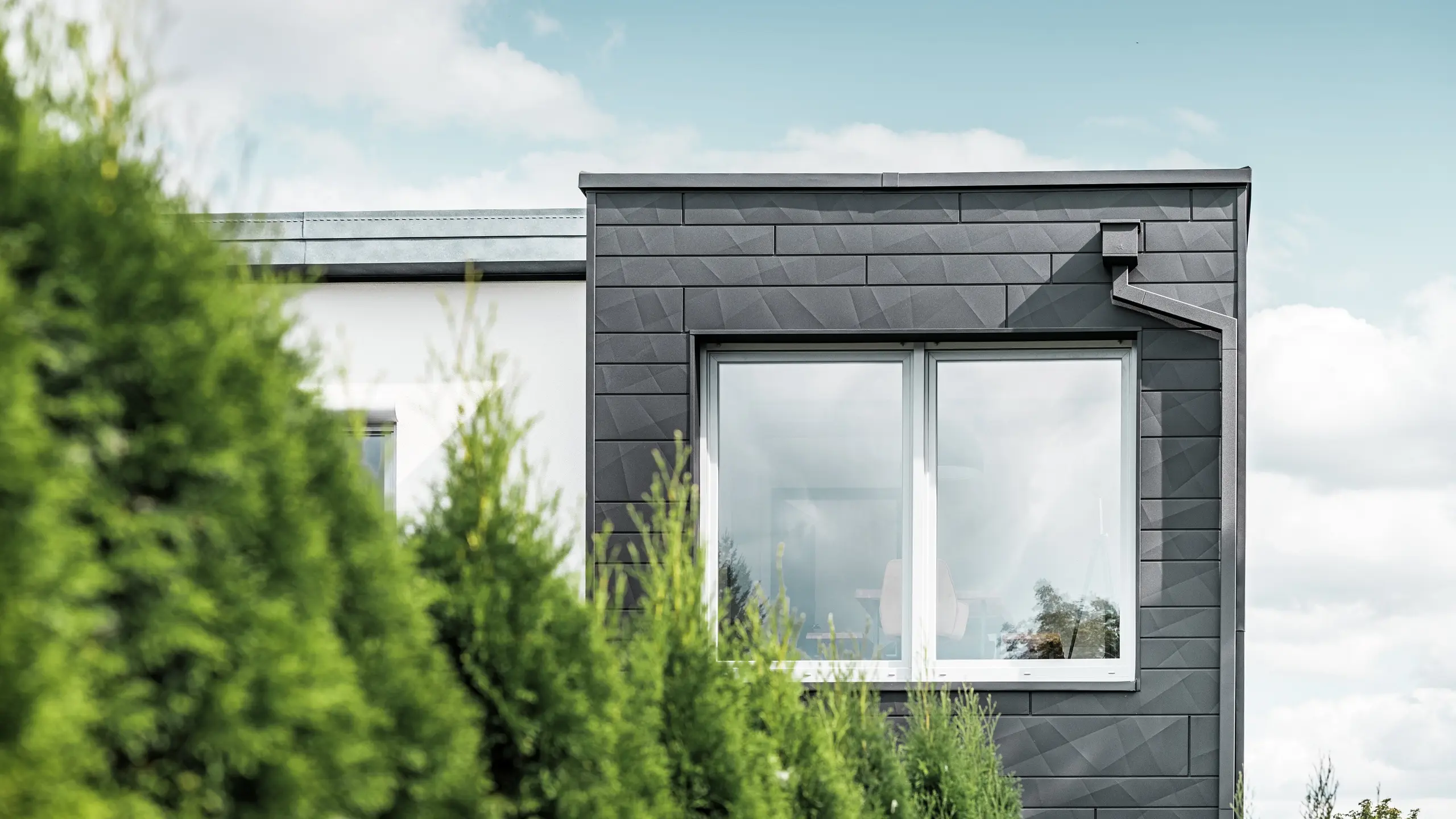
Here, you will find a selection of houses protected by a PREFA façade. You will find even more inspiration in our Reference Gallery.
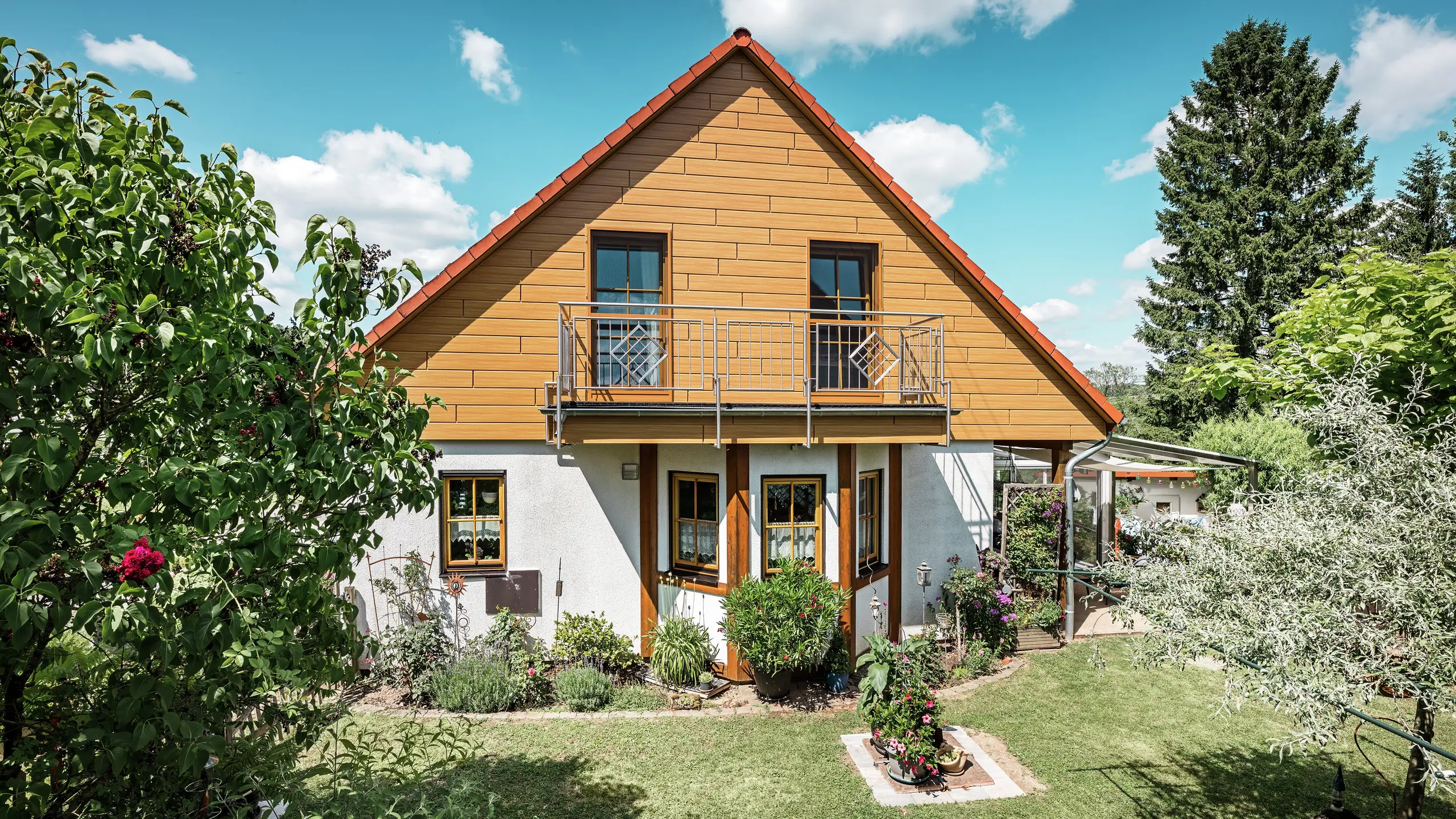
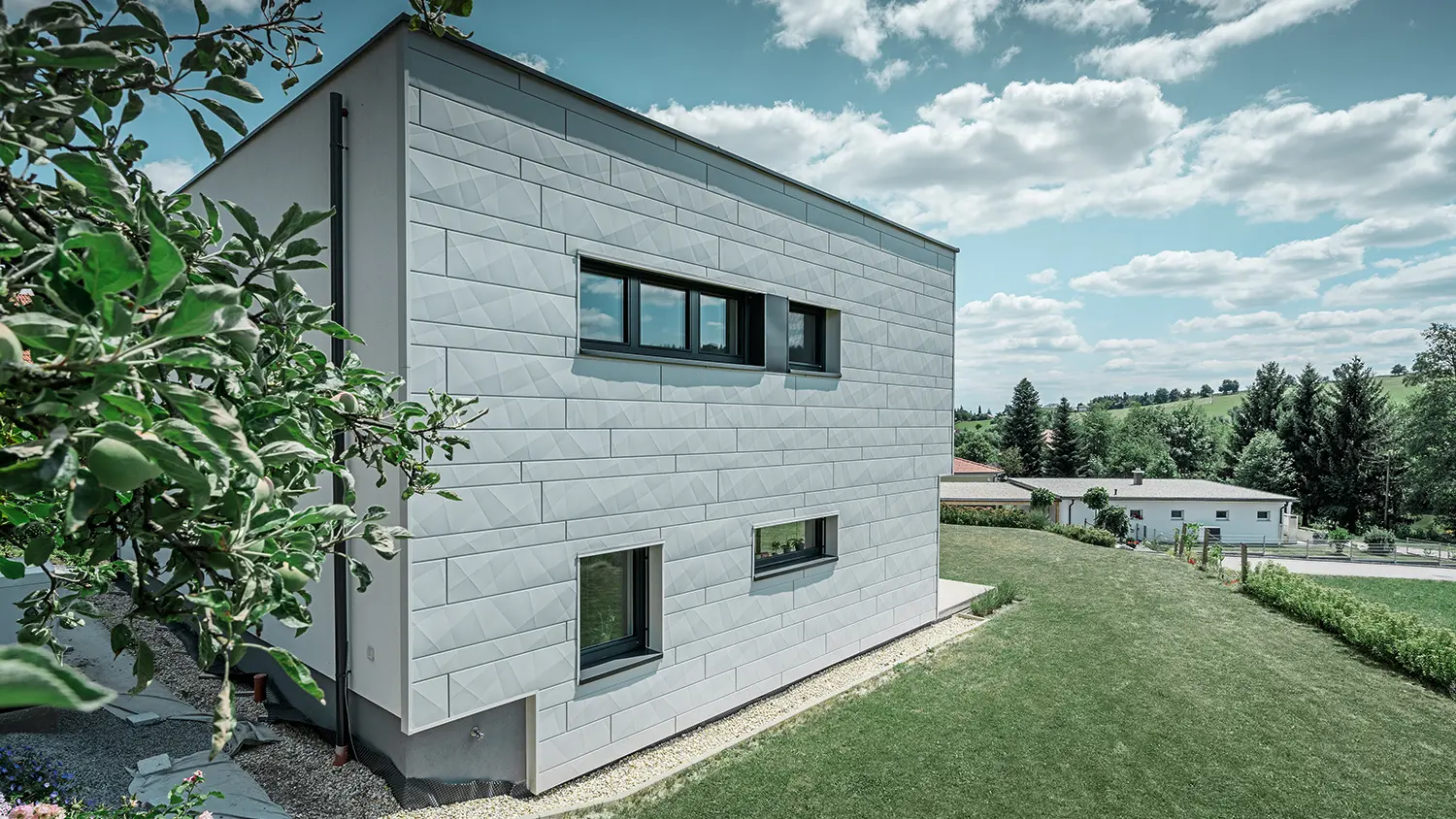
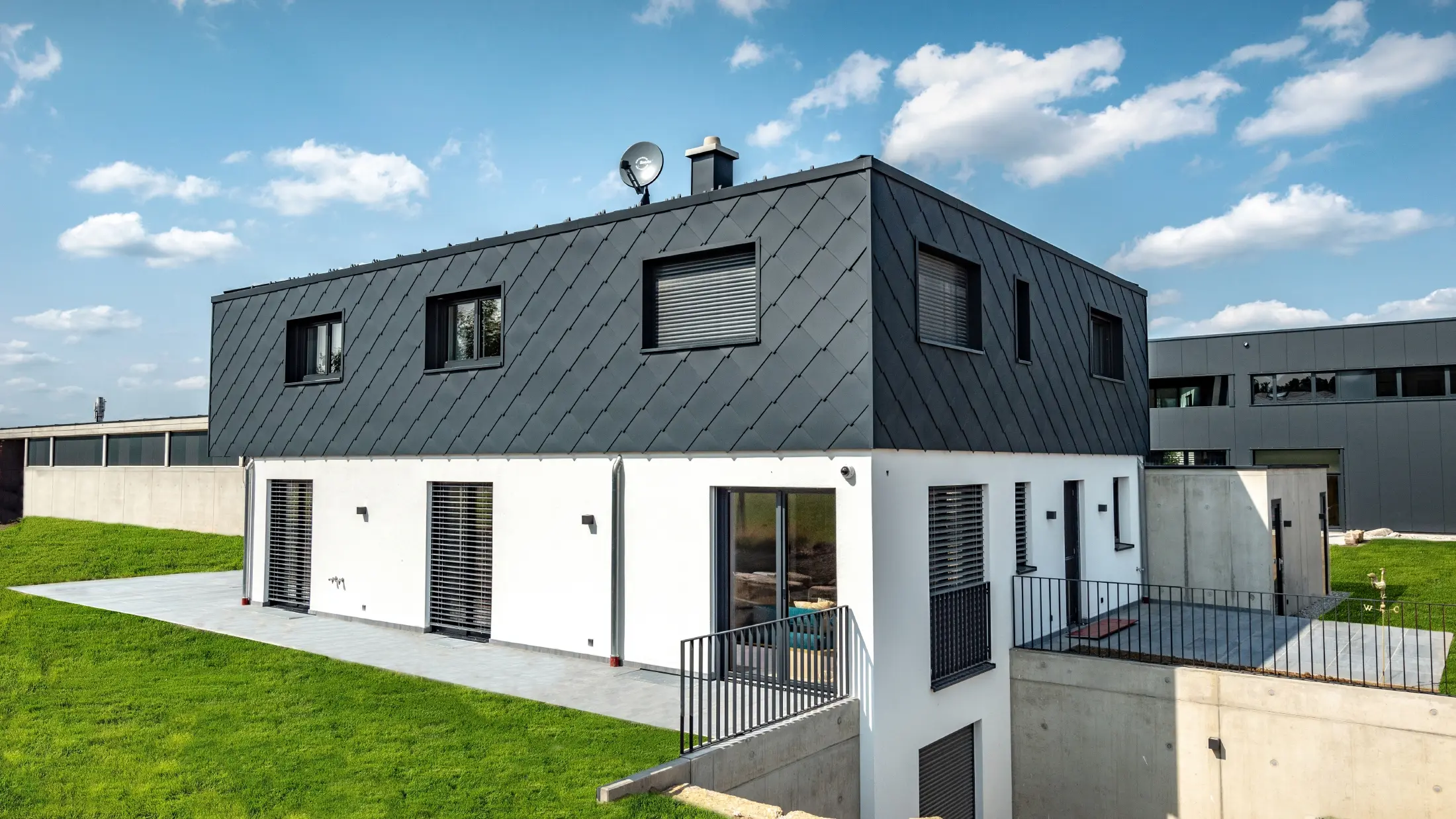
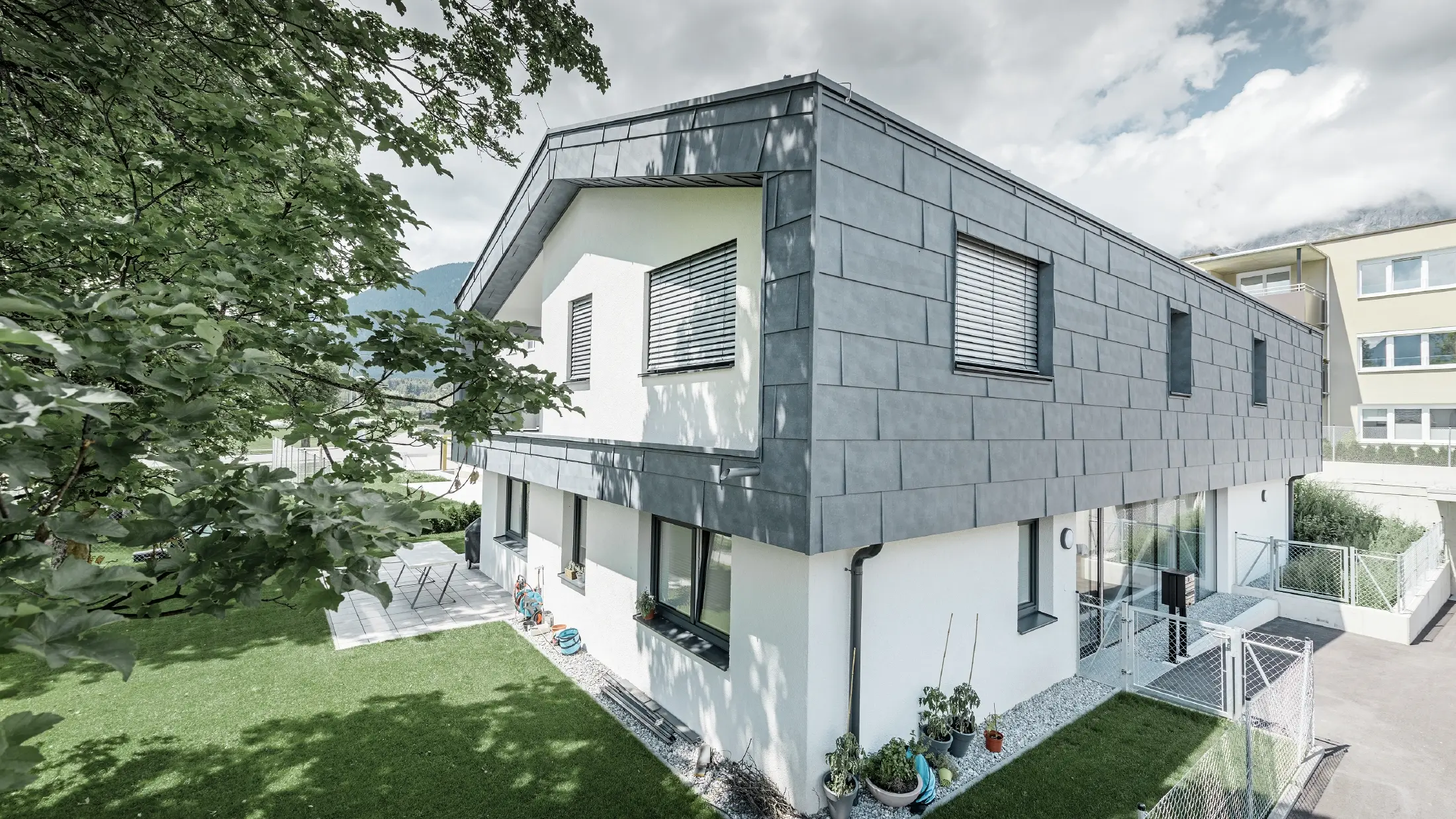
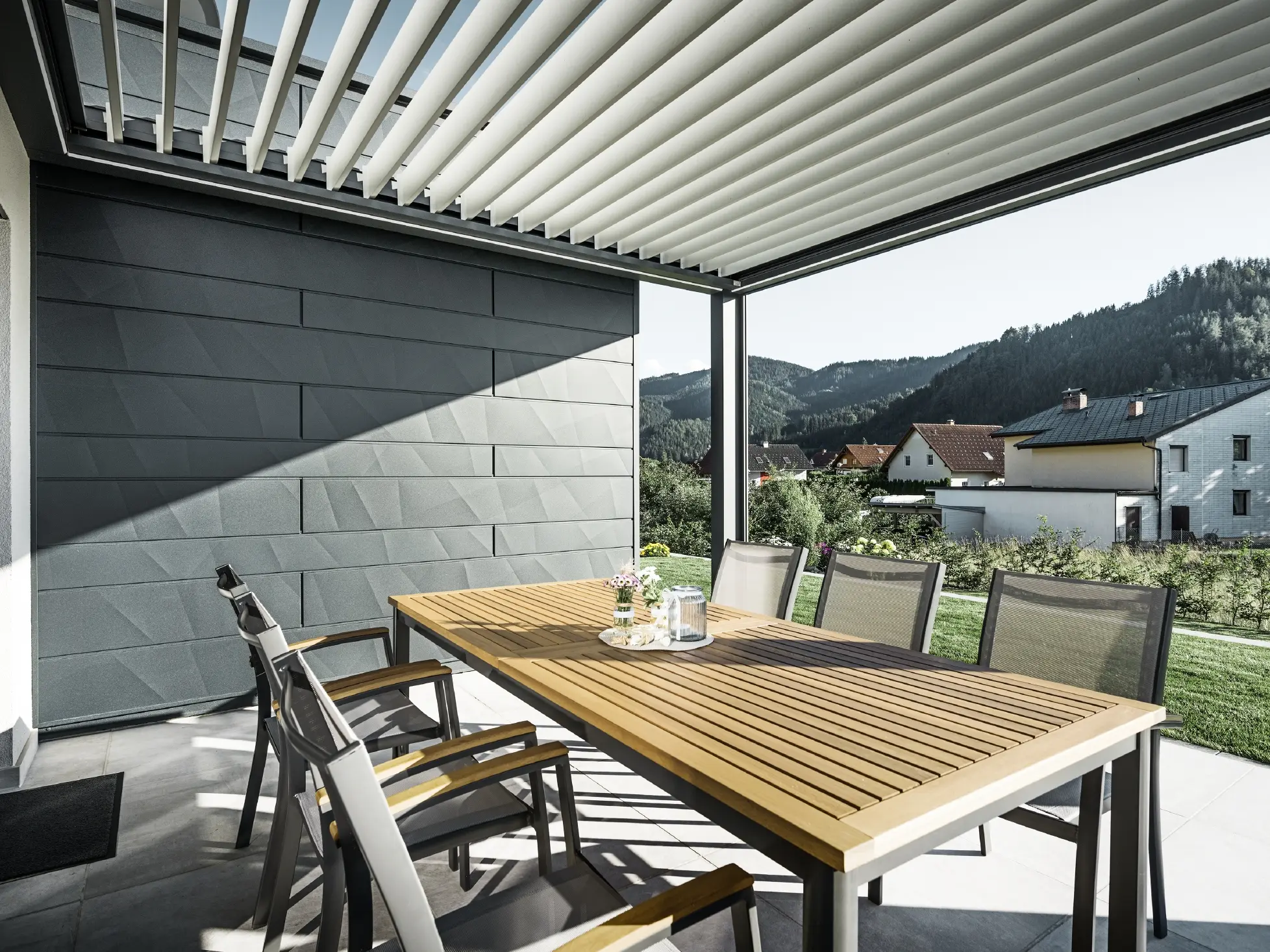
Partial façade with PREFA FX.12 façade panel in P.10 stone grey
Parts of the building that are particularly exposed to the weather can cause discoloration over time and, in the worst case scenario, damp spots in the masonry. A weather-resistant aluminium façade from PREFA ideally protects your house from all weather conditions and remains beautiful as a result.
Get advice now – your façade renovation starts with a consultation
Would you like to renovate your house façade, protect it from damage and implement an appealing design at the same time? Then talk to us – free of charge and without any obligation. Our colleagues will be happy to help you, advise you on design options and arrange suitable craftsmen for you from the region.
Get inspired: Visualisation aids from PREFA
Renovating your exterior façade is one of the best ways to sustainably enhance the value and appearance of your building. With these innovative tools from PREFA, you have everything you need to turn your renovation vision into reality.
- Configurator – Design multiple building types with all product and colour combinations
- Photo service – Upload a photo of your house and we will create a customised photo montage
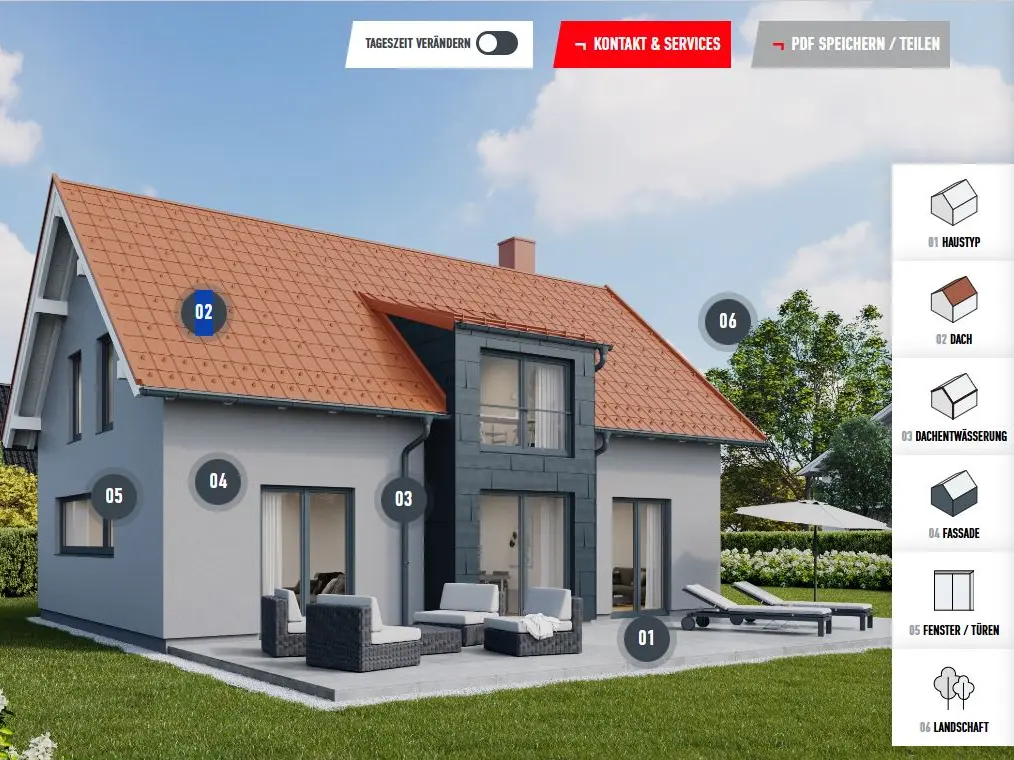
PREFA configurator
Our PREFA configurator enables you to design your desired façade directly on the screen. Choose from a variety of products, materials and colours and see instantly how your façade could look in the future. Try out different combinations and find the perfect solution for your building – simple and completely free.
PREFA photo service
Would you like to see what your house would look like with a PREFA façade? Our graphic designers would be happy to create a free photomontage of your project and send it to you. Simply click through our photo service form step by step and you will receive your customised design proposal within a short period of time.