
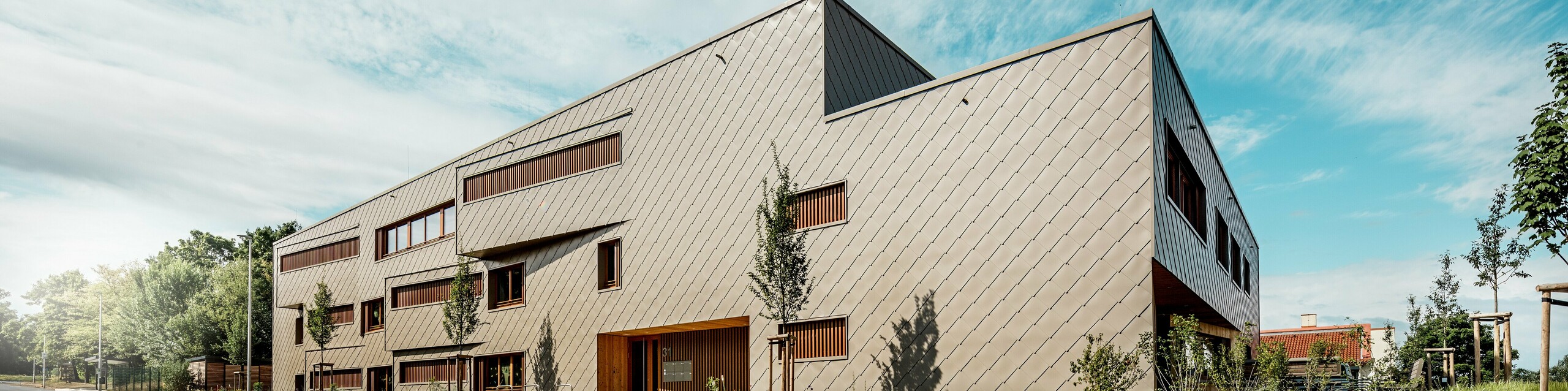
A daycare centre with a bronze-coloured coat
The Lower Franconian town of Alzenau is known for its vineyards and Alzenau Castle, one of the most important late Gothic buildings in Franconia. Proud of its historical heritage, this tradition-conscious town on the edge of the Spessart hills strives to harmoniously combine the past and the future through responsible and sustainable urban development. Every new construction project is critically examined for its ecological and urban planning added value. This was also the case with the new municipal daycare centre, which was successfully realised by Härtner Architekten from Stuttgart.
Hybrid building for generations
The new daycare centre was not only intended to provide a needs-based meeting place for the youngest members of the community, but also adequate living space for the employees of the nearby hospital. ‘We think it's good when multiple functions are combined, but funding logic, award procedures and the expectations of local decision-makers often prove to be persistent challenges,’ say Theo and Claudia Härtner. This challenge was tailor-made for the architect couple, as they specialise not only in the construction of new daycare centres, primary schools and educational institutions, but also in solution-oriented dialogue and discourse with those responsible.

Suitable for grandchildren thanks to wood and recycled concrete
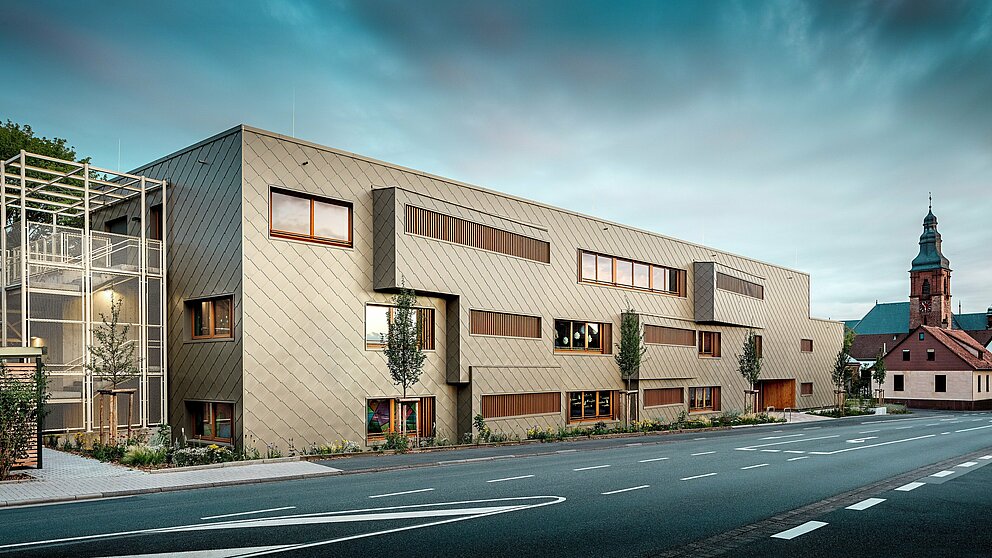
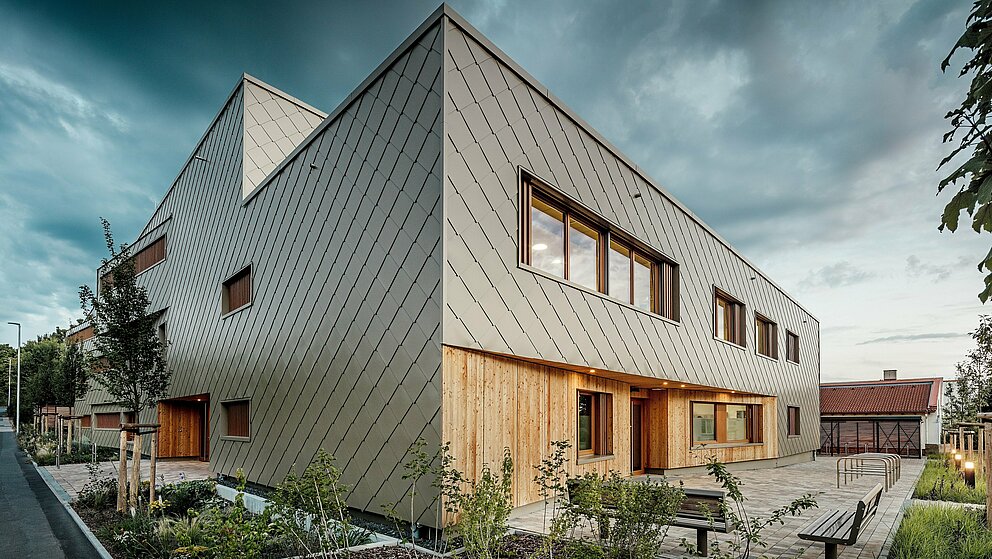
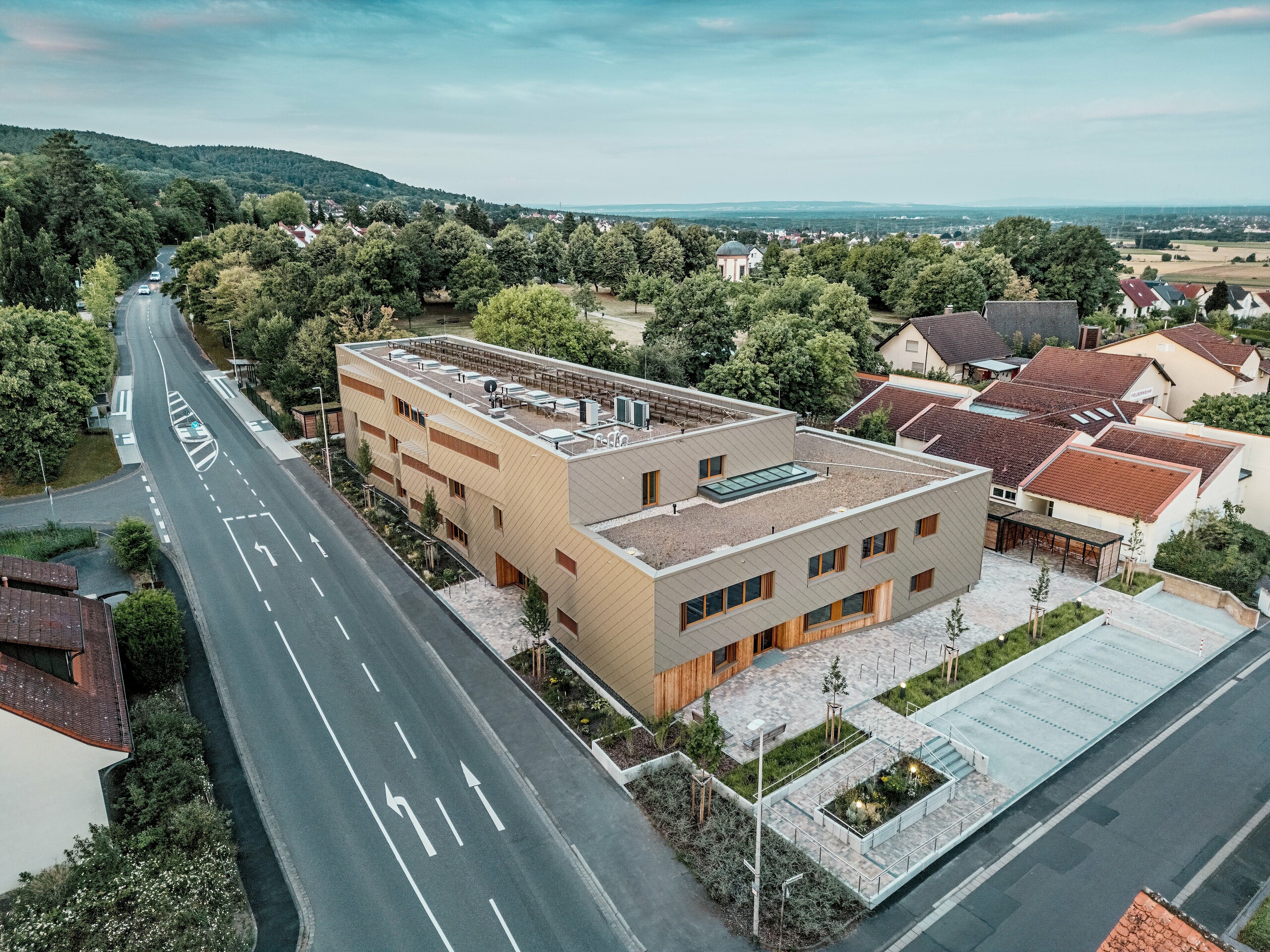
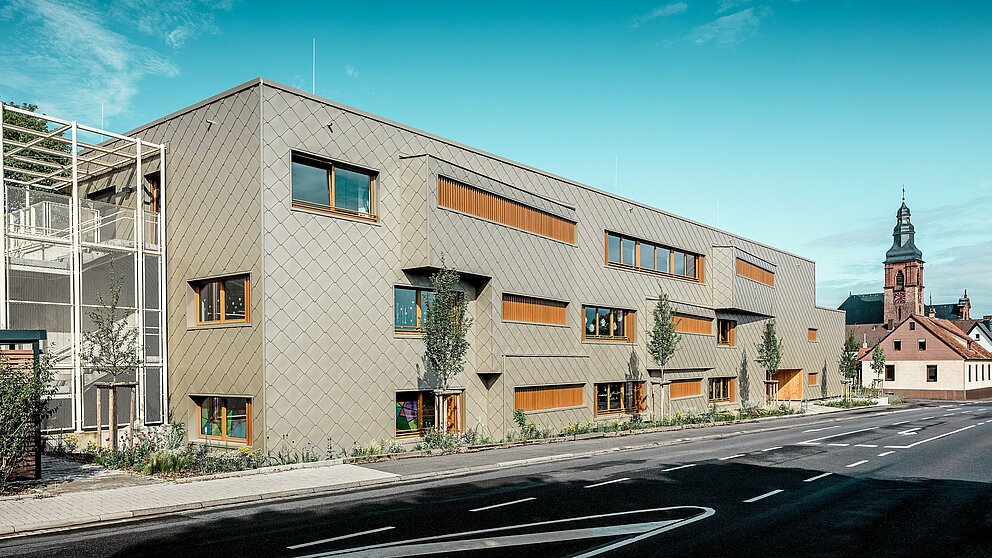
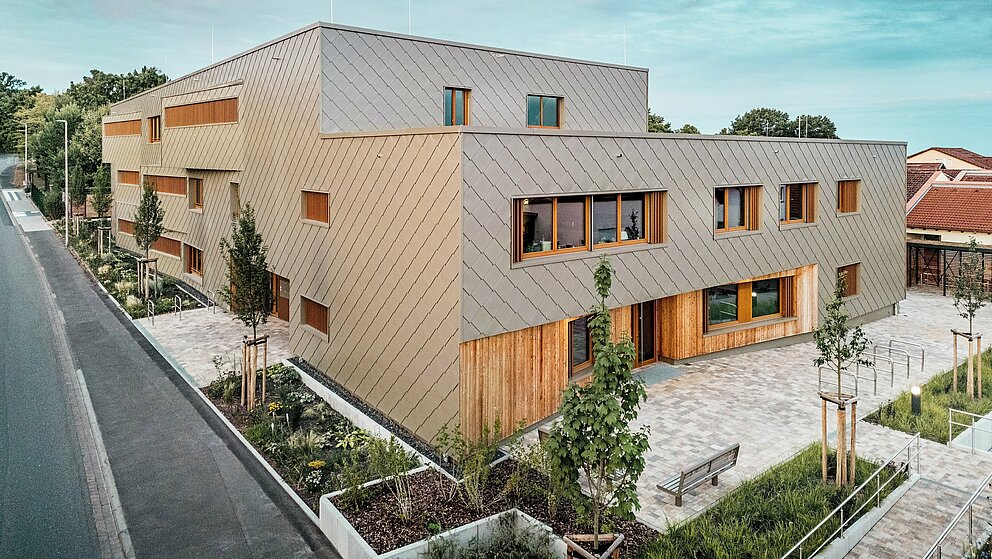
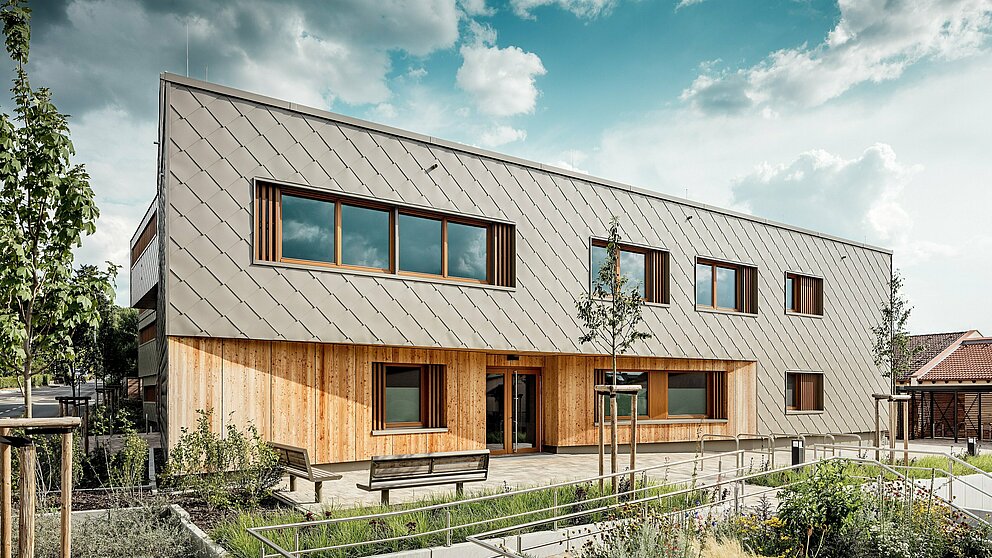
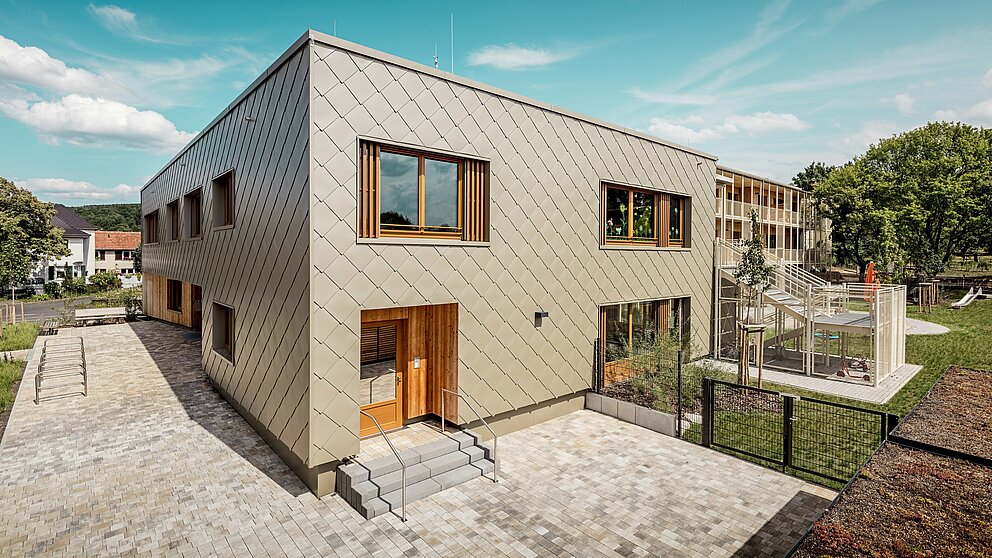
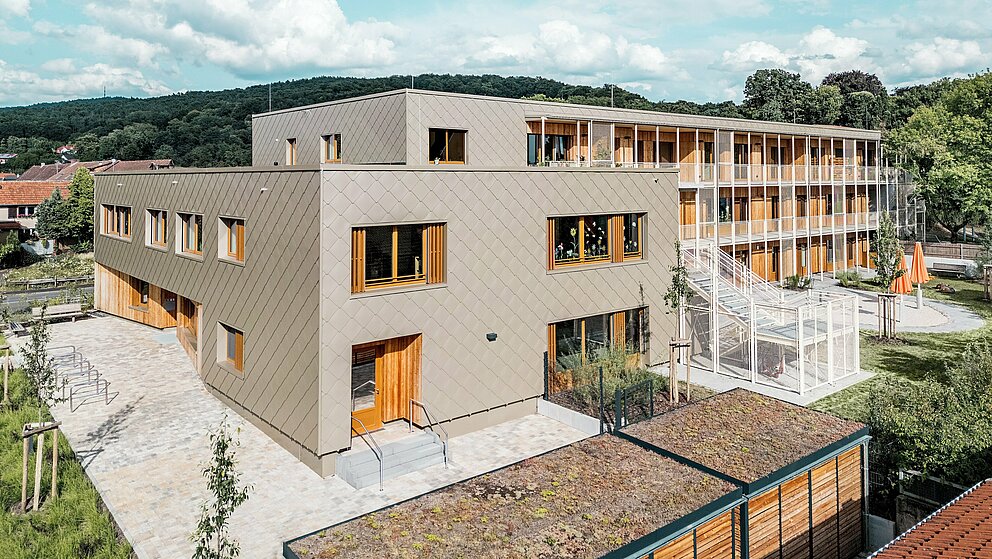
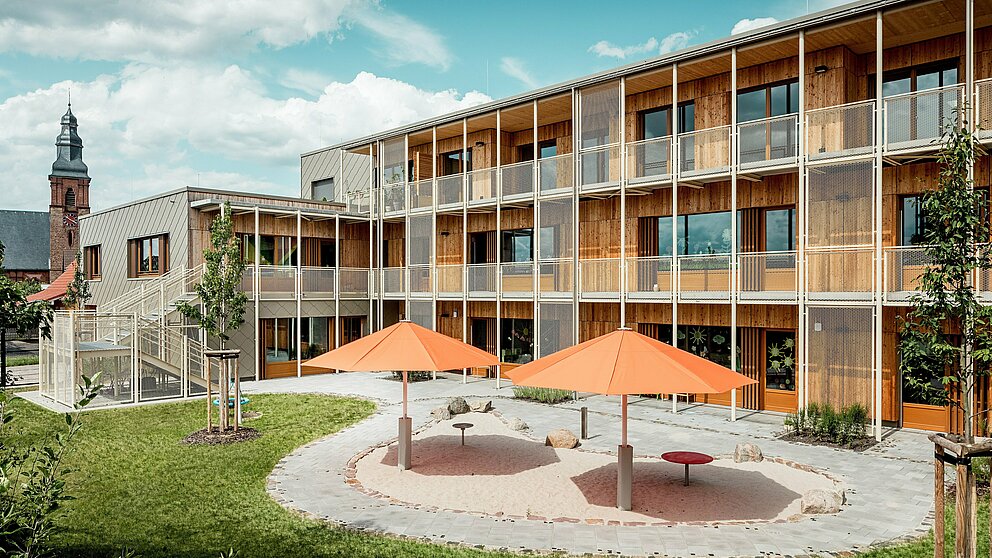
The architectural design envisaged an L-shaped building complex as a solid recycled concrete construction with a sloping exterior wall, complemented by a staggered storey with six apartments in solid wood construction. In the internal space of the two-storey daycare centre, there are seven group rooms for different age groups plus a multi-purpose room, play areas in the hallway and well-lit and ventilated sanitary facilities. By combining two solid construction methods, a curtain wall aluminium façade and minimal technical equipment, the design meets modern sustainability standards.
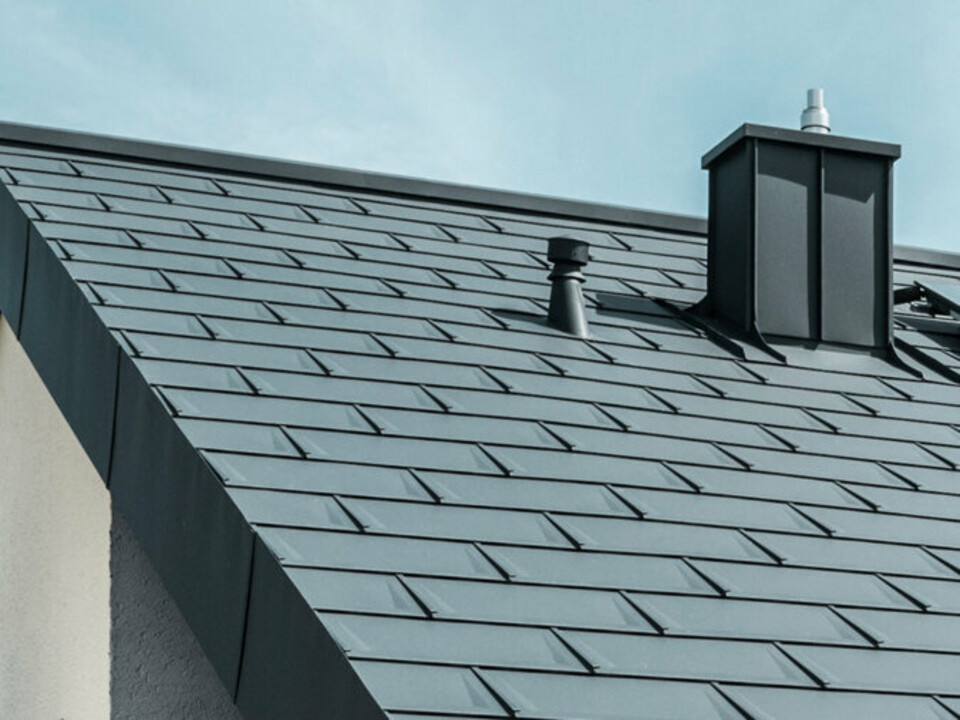
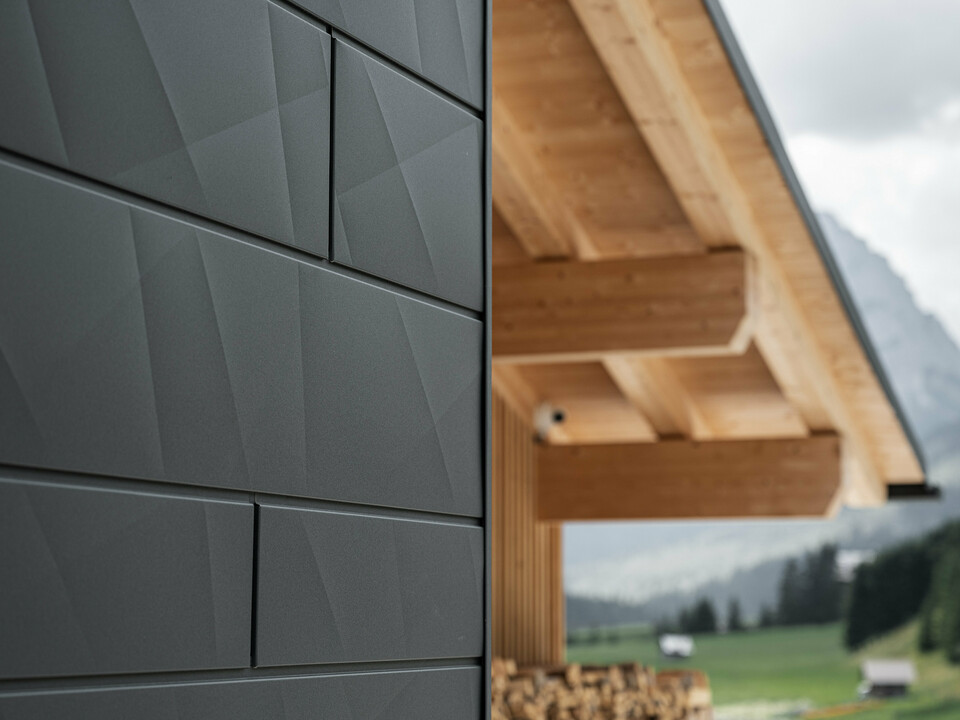
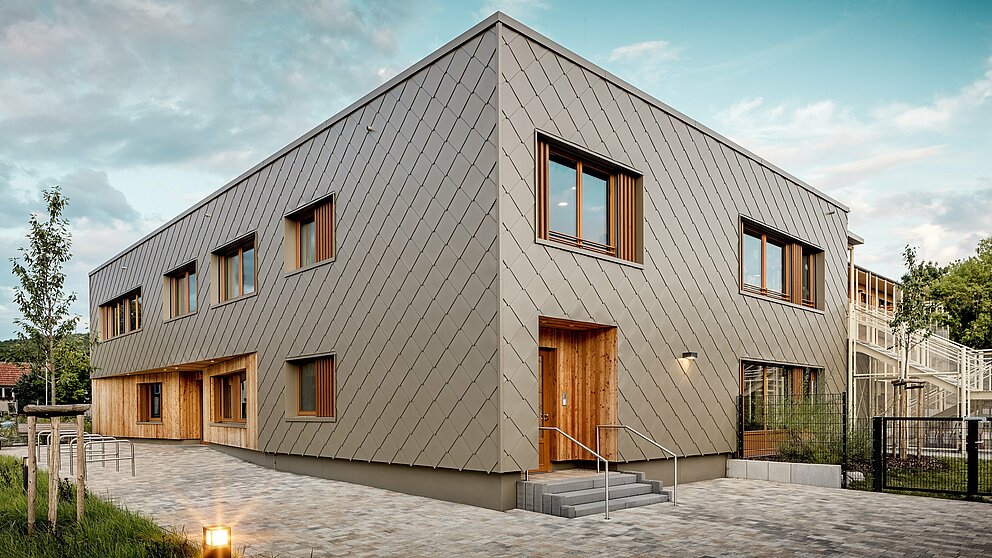
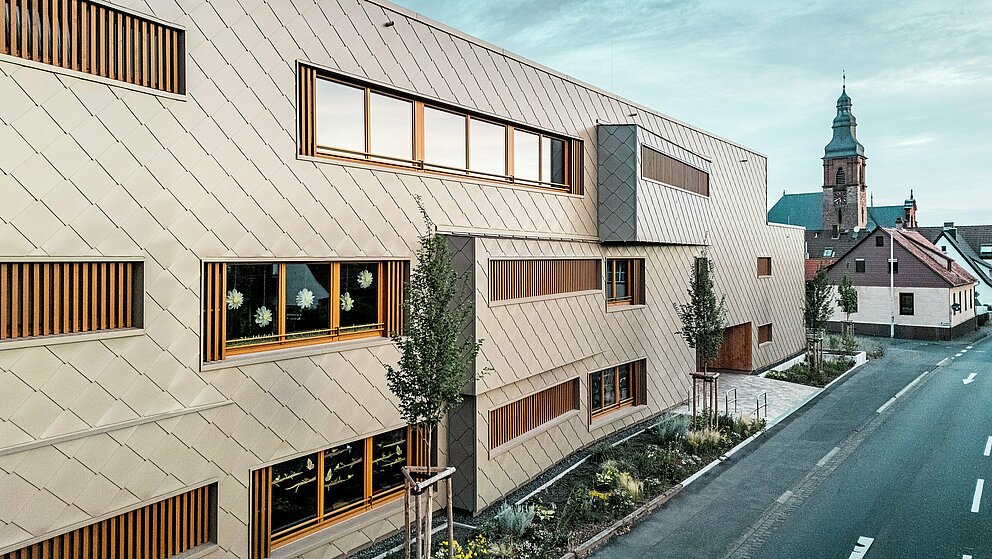
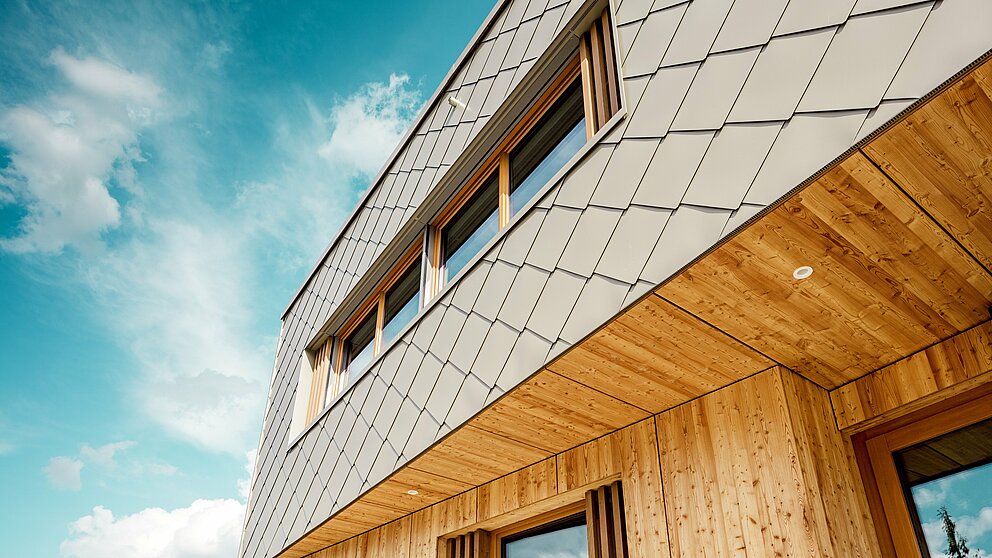
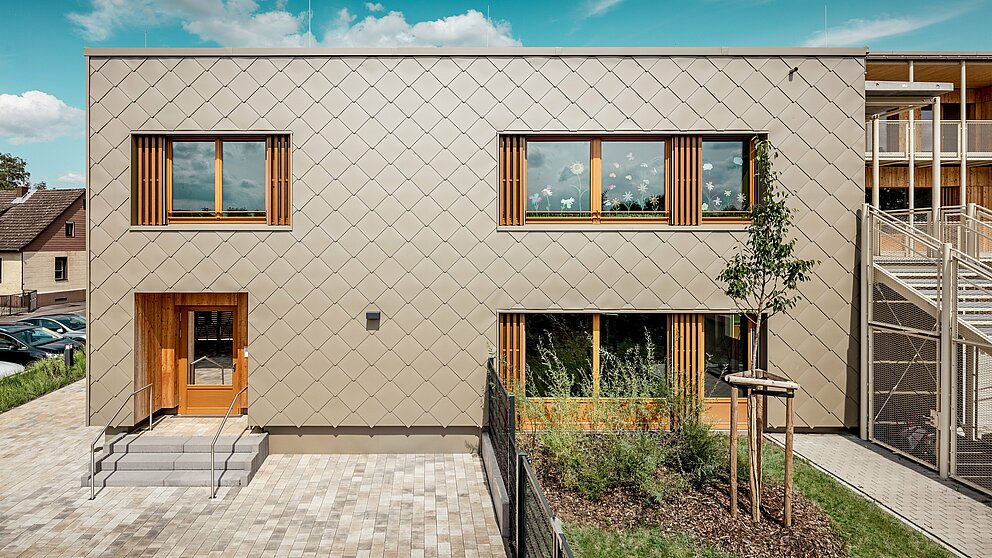
The different floor plan geometries and static grids, various pipe routes and the load transfer via the lower floors posed a challenge. The curtain wall aluminium façade made of PREFA rhomboid façade tiles 44 × 44 in bronze was intended to visually combine the different functional areas of the hybrid building into a harmonious whole. ‘When you look at the entire life cycle, PREFA is simply ahead in terms of energy consumption and recyclability,’ says Claudia Härtner, praising the façade system – well aware of the ecological value of resource-saving and climate-active building materials, which is always relevant to the specific location of use.
Craftsmanship made in Franconia
The bronze-coloured aluminium cladding was installed around the building by Spenglerei ASA Schüßler. This long-established Franconian company has now successfully completed its second PREFARENZEN project in Alzenau. Around 3,500 of the 44 × 44 centimetre PREFA rhomboid façade tiles in bronze were installed for the hybrid building – each individually concealed with PREFA grooved nails on the fully supported wooden substrate. The numerous building corners and reveals are fitted with channel profiles and standard corner brackets.
This required a delicate touch and expertise. For project manager Marcel Schmidt and operations manager Siegmar Fried, the challenges lay particularly in the critical points where the small roof areas of the bay windows taper off to nothing and merge into the façade. Their rhomboid façade tiles meet PREFALZ standing seam metal sheets. These metal sheets had to be installed in such a way that natural water drainage was ensured and at the same time the result was visually appealing.

Further information
Material: rhomboid façade tile 44 × 44, standing seam roof PREFALZ, bronze
Photo credit: PREFA / Croce & Wir