
Schwarzenberg, in the heart of the Bregenzerwald, is famous for its centuries-old building tradition and its listed farmhouses. Strict building regulations protect the original character of one of the oldest places in the region. The owners and operators of the Hotel Hirschen, Pia and Peter Fetz, were well aware of this responsibility when they commissioned the Vorarlberg architects from NONA to design a new wellness bathhouse with saunas, relaxation areas and an outdoor pool. It was a far-sighted decision, which was rewarded in 2025 with the State Prize for Architecture in the “Tourism and Leisure” category.

Harmonious trilogy
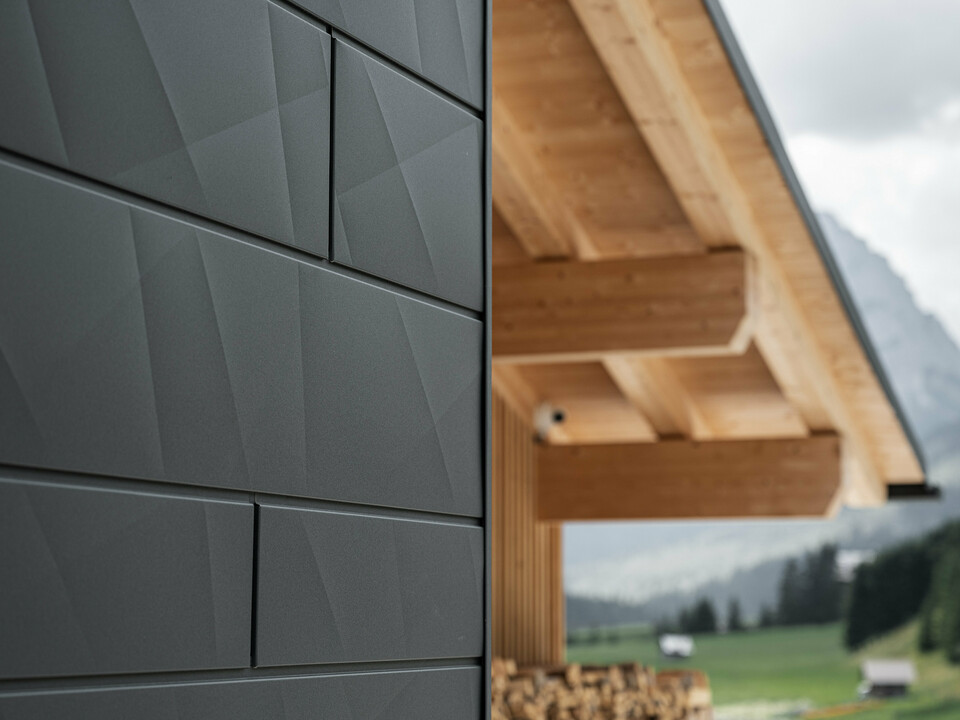
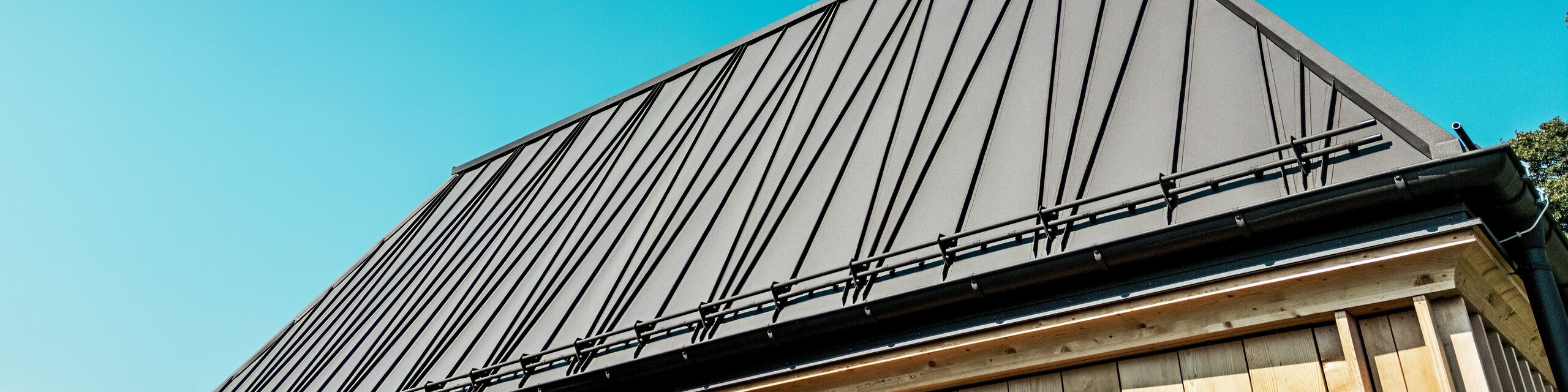
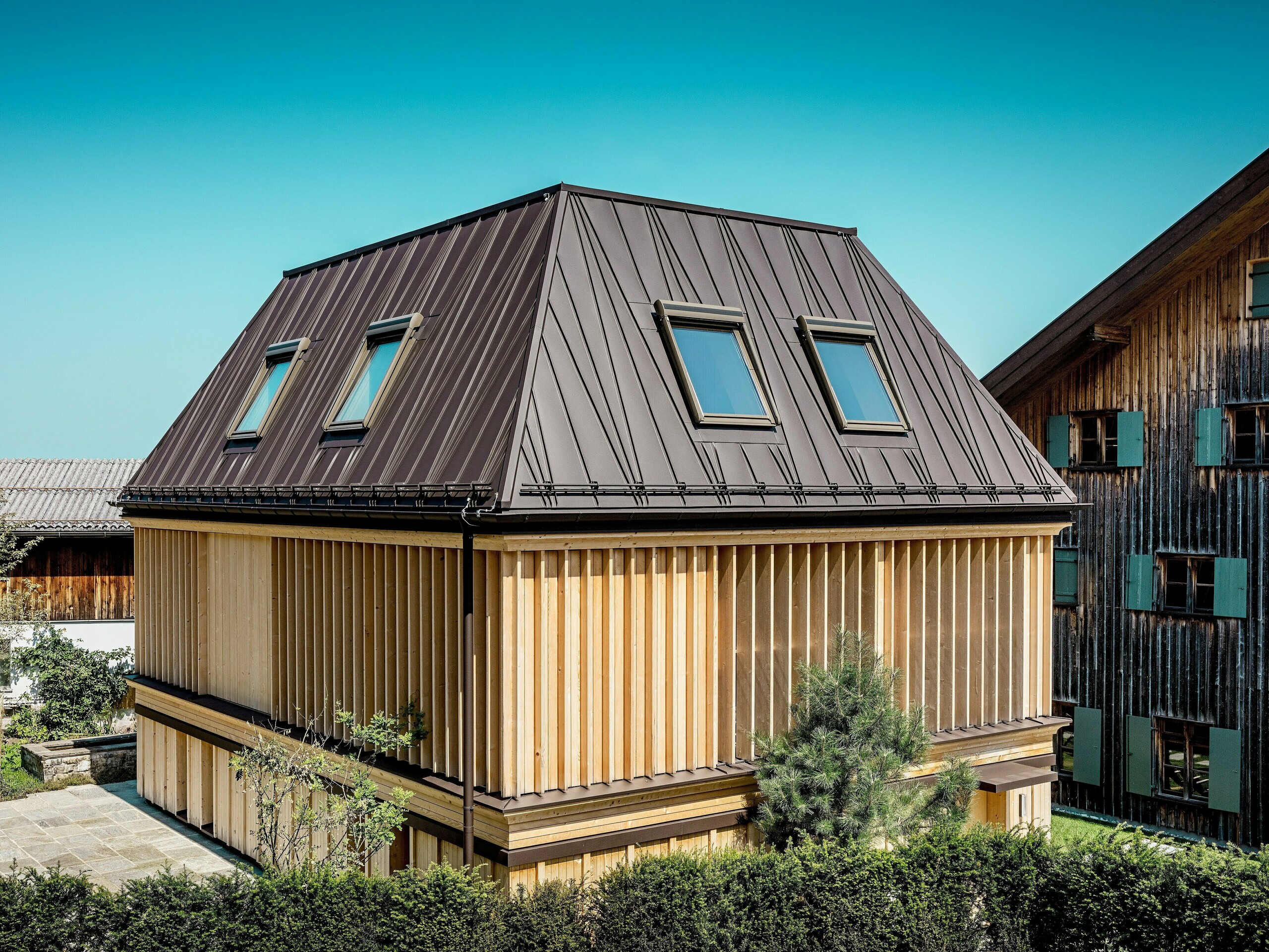
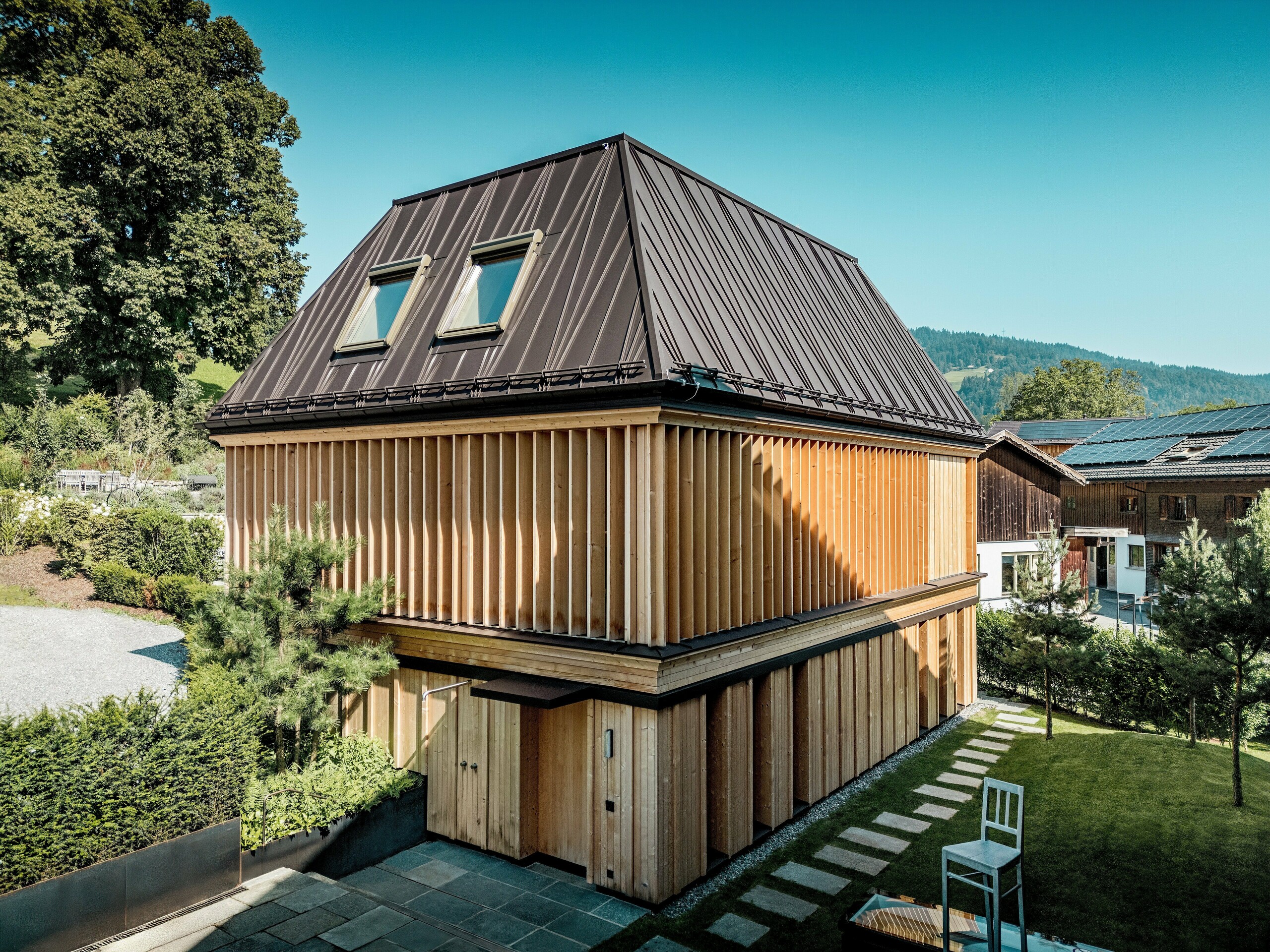
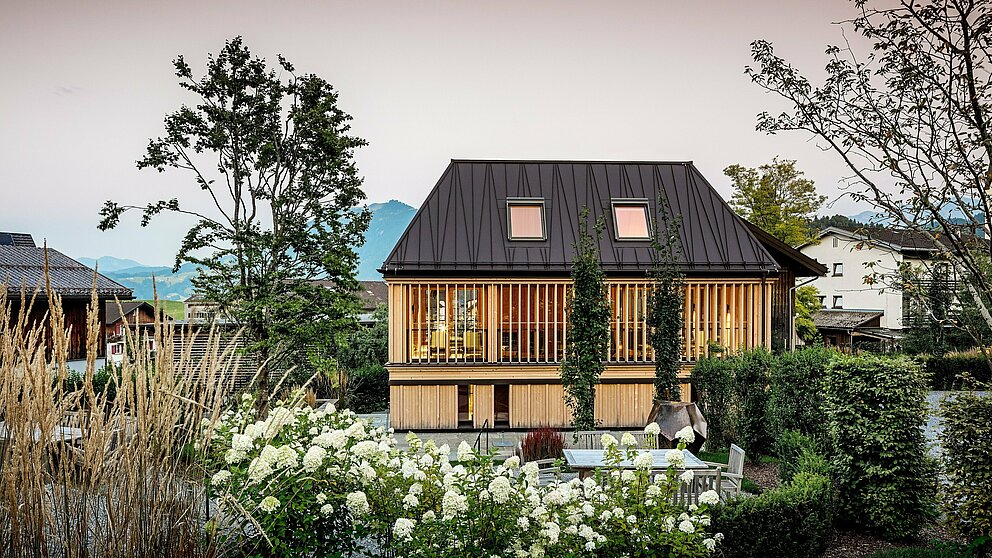
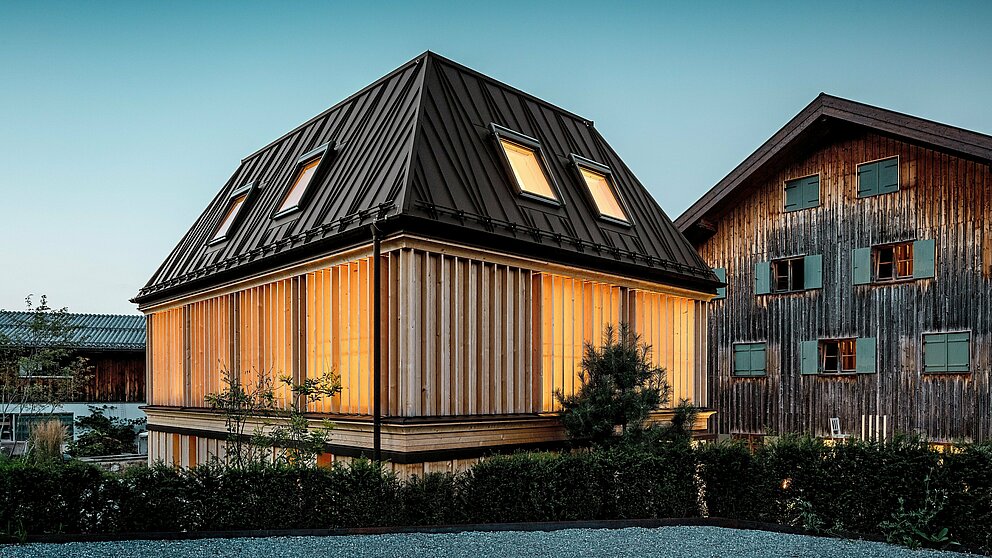
The architects' goal was to harmoniously complete the hotel's trilogy of buildings. As the third building, the ‘bathhouse’ was to correspond harmoniously with tradition, topography and the area, and innovatively adapt the characteristics of the Bregenzerwald house. Well aware of the prominent visibility of the roof in the historic village centre, NONA developed its own vision: ‘We definitely wanted this roof for the building,’ says architect Anja Innauer about her concept of a 60-degree sloped PREFA standing seam roof with atypical standing seams, some of which run diagonally across the roof surface. It was a bold idea that was initially met with scepticism. However, the architects, together with their site managers Flatz & Jäger, were able to inspire the builders, residents and craftsmen with their courageous reinterpretation of traditional design language in an open dialogue.
Homage in wood
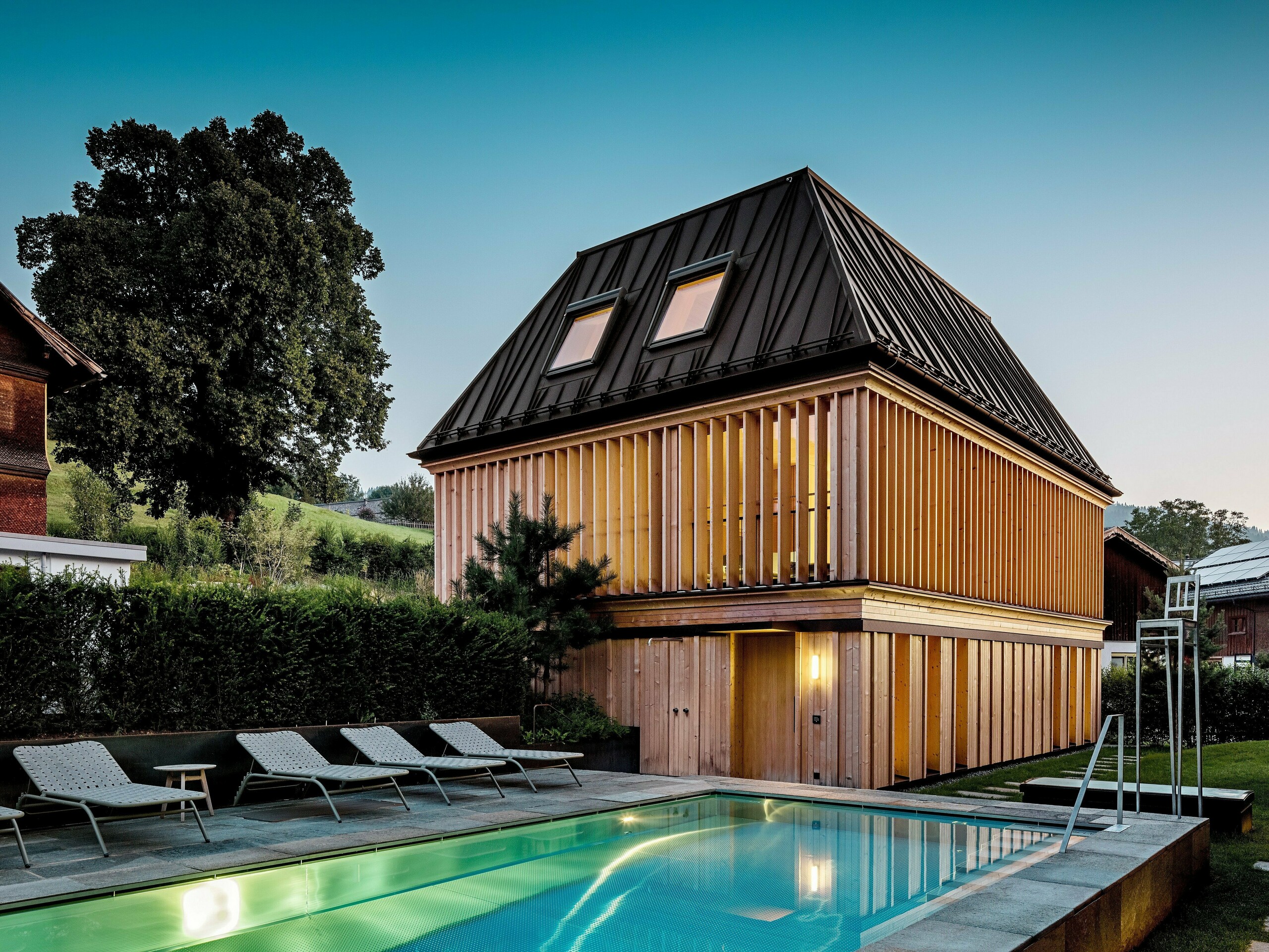
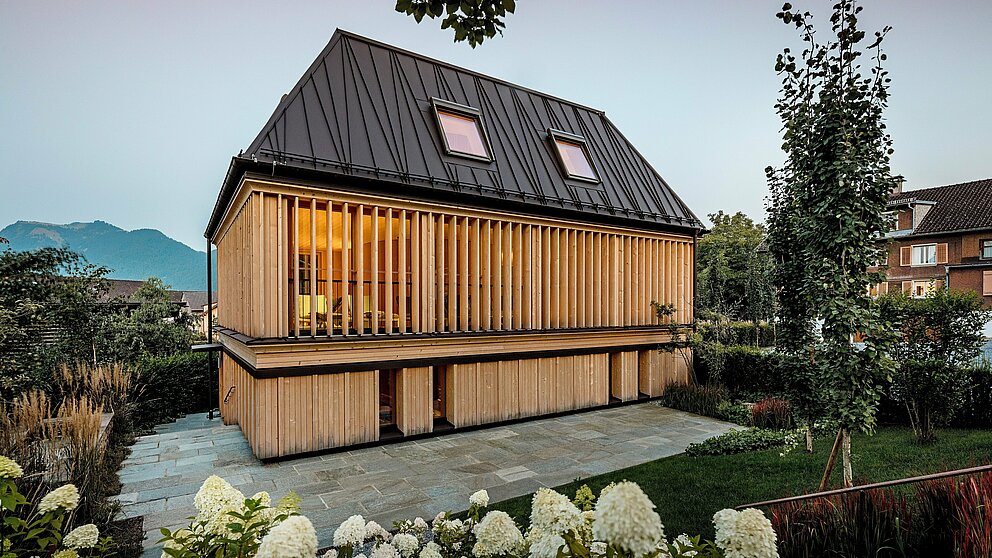
Even under the iconic hipped roof, NONA reimagined old building traditions: instead of using the wooden shingles typical of the Bregenzerwald region, the architects created a striking façade with vertical, floor-to-ceiling wooden slats that can be controlled manually via a mechanical system. Wood also dominates the internal space of the three-storey ‘bathhouse’ with its aesthetic minimalism. The open-plan outdoor area with a pool, without fences or hedges, rounds off the overall concept.
Unconventional implementation
‘The “Badehaus” is so iconic for the town, so visible, that its roof simply had to be special,’ says Michael Sieber, managing director of the local Spenglerei Peter. He recalls the technical challenges of a hipped roof that was to have pointed folds instead of parallel sheets.
To achieve this, the roofer and his team split and folded the PREFALZ sheets diagonally and opted for a cover strip to avoid inseparable joints and to avoid having to fold the folds. The installation on the roof with its steep 60-degree slope also required unconventional solutions: the tinsmiths attached ladders to the formwork so that they could work on the panels step by step from the bottom to the top.
Further information
Material: standing seam roof PREFALZ, P.10 nut brown
Photo credit: PREFA / Croce & Wir